
The Genesis of the Transformer
In 2017, a paper titled "Attention Is All You Need" was published by researchers at Google. This paper introduced the Transformer architecture, a novel neural network model that fundamentally changed the landscape of Natural Language Processing (NLP). Before the Transformer, recurrent neural networks (RNNs) and convolutional neural networks (CNNs) dominated NLP tasks. RNNs processed sequences step-by-step, suffering from vanishing gradients and slow training times, especially for long sequences. CNNs, while faster, struggled with capturing long-range dependencies. The Transformer proposed a radical departure, relying entirely on attention mechanisms.
Understanding the Attention Mechanism
The core innovation of the Transformer is its self-attention mechanism. Unlike RNNs that maintain a hidden state passed sequentially, self-attention allows the model to weigh the importance of different words in the input sequence when processing a particular word. This is akin to how humans read: we don't just process words in isolation; we understand their meaning in context by considering other words in the sentence or even paragraph. The self-attention mechanism computes a weighted sum of values, where the weights are determined by the similarity between a query vector (representing the current word being processed) and key vectors (representing all other words in the sequence). This enables the model to focus on relevant parts of the input, regardless of their distance.
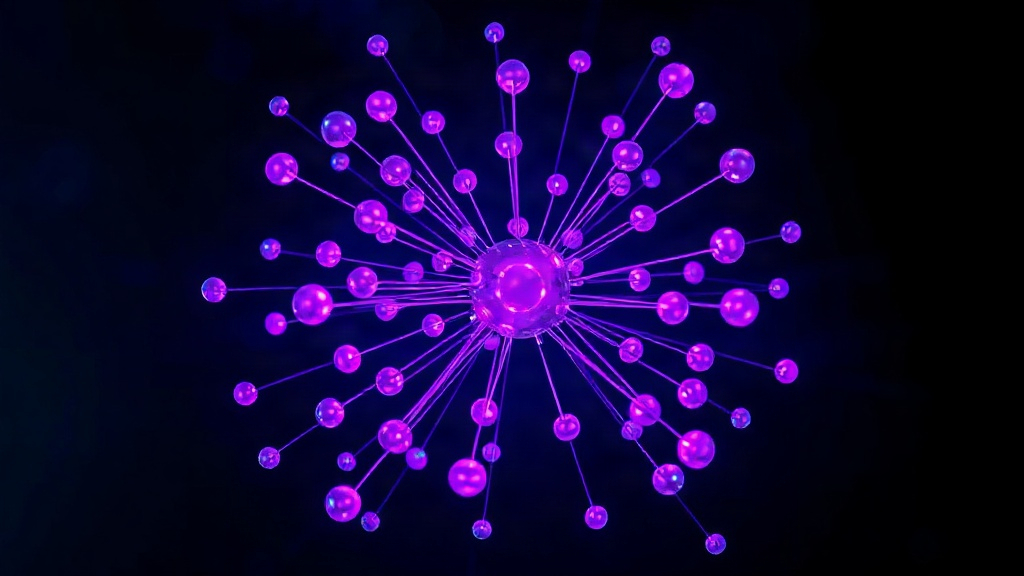
The Transformer Architecture: Encoder-Decoder Structure
The Transformer model consists of an encoder and a decoder, both built using stacked layers of identical sub-layers. Each encoder layer has a multi-head self-attention mechanism followed by a position-wise fully connected feed-forward network. The decoder layers have a similar structure but also include a third sub-layer that performs attention over the output of the encoder stack. This encoder-decoder structure is particularly effective for sequence-to-sequence tasks like machine translation. The self-attention in the encoder helps it build a rich representation of the input sequence, while the attention in the decoder allows it to focus on relevant parts of the encoded input when generating the output sequence. Crucially, the Transformer dispenses with recurrence and convolutions entirely, relying solely on attention mechanisms to draw global dependencies between input and output.
Positional Encoding: Adding Sequence Information
Since the Transformer does not process data sequentially like RNNs, it lacks an inherent understanding of word order. To compensate for this, positional encodings are added to the input embeddings. These encodings provide information about the relative or absolute position of tokens in the sequence. The paper uses sine and cosine functions of different frequencies to generate these positional encodings, allowing the model to learn to attend to relative positions effectively.
Impact and Legacy
The "Attention Is All You Need" paper has had a profound and lasting impact on NLP and beyond. The Transformer architecture became the foundation for virtually all state-of-the-art NLP models, including BERT, GPT-2, GPT-3, and T5. These models have achieved remarkable performance on a wide range of tasks, from text generation and translation to question answering and sentiment analysis. The parallelizability of the Transformer also enabled training on much larger datasets and models, leading to the era of large language models (LLMs). The concept of attention has also found applications in computer vision and other domains, demonstrating its versatility.
The Unanswered Question: Scalability Limits
While Transformers have proven incredibly powerful, their quadratic complexity with respect to sequence length (due to the self-attention mechanism) poses a significant challenge for processing very long sequences efficiently. Although many research efforts are focused on creating more efficient attention variants (e.g., sparse attention, linear attention), the fundamental scaling challenge remains. What will be the next architectural paradigm shift when sequence lengths exceed what even optimized Transformers can handle practically and affordably?
Beyond NLP: A Universal Architecture?
The success of the Transformer in NLP has led to its adoption in other fields. Researchers have adapted the architecture for computer vision tasks, creating models like Vision Transformers (ViT) that treat image patches as sequences. This suggests that the attention mechanism, and the Transformer architecture more broadly, might represent a more universal building block for deep learning models than previously thought. The ability to learn context-aware representations by attending to relevant parts of an input, irrespective of its modality, is a powerful concept.
The Human Element: Who Was Behind It?
It is crucial to remember that this seminal work was the product of human ingenuity. The authors were Ashish Vaswani, Noam Shazeer, Niki Parmar, Jakob Uszkoreit, Llion Jones, Aidan N. Gomez, Łukasz Kaiser, and Illia Polosukhin. Their collaborative effort, building upon years of research in neural networks and sequence modeling, culminated in a paper that has reshaped an entire field. The spirit of open research and the desire to push the boundaries of what's possible in AI are evident in their work.