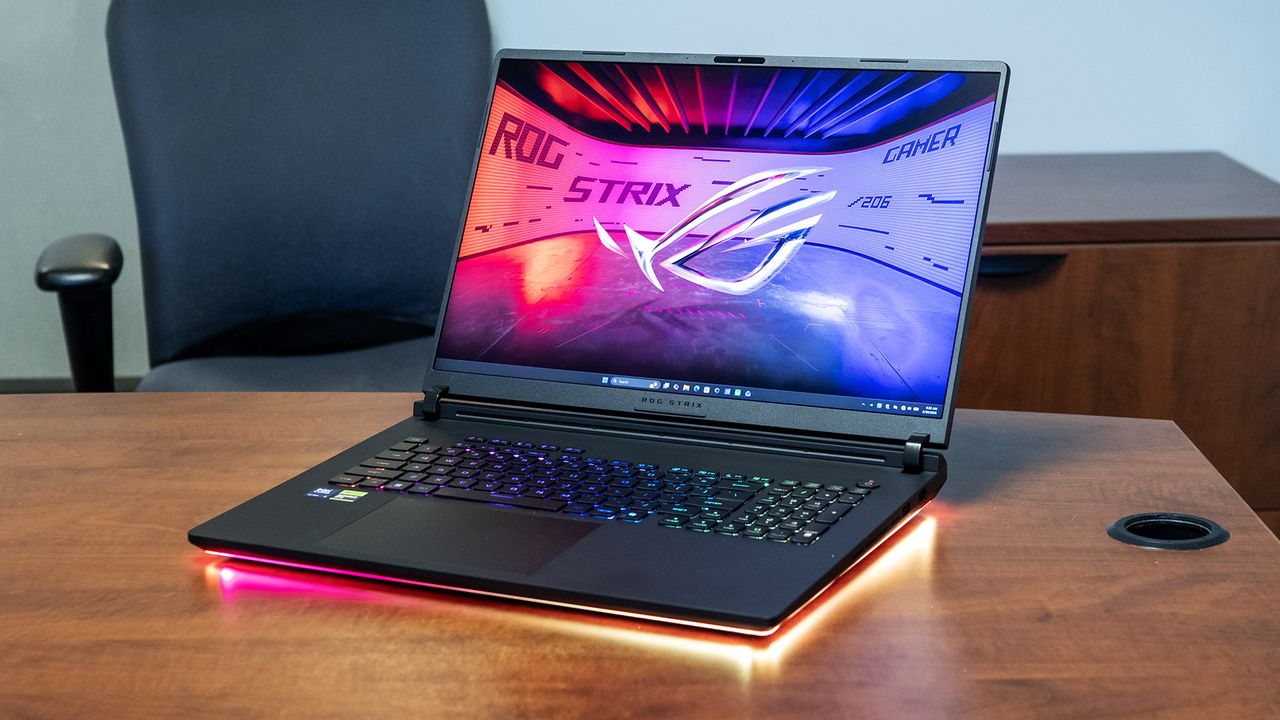
Developer ImpactDevelopers integrating with the Scar 18's storage will find PCIe 4.0 speeds adequate for most tasks, but should be aware that PCIe 5.0 SSDs will not reach their maximum potential. The dual-channel RAM limitation might impact memory-intensive applications or high-performance computing tasks, suggesting that developers running such workloads should benchmark carefully. The robust port selection offers flexibility for external devices and multi-monitor setups. Building applications that leverage high-dynamic-range (HDR) content will benefit immensely from the Mini-LED display's capabilities.
Security AnalysisThe Asus ROG Strix Scar 18 (2026) does not introduce any new, publicly known security vulnerabilities based on this review. However, as with any high-performance system, maintaining up-to-date drivers and firmware is critical. The presence of advanced networking like Wi-Fi 7 necessitates robust network security practices. Users should ensure their operating system and all installed software are patched to mitigate general OS and application-level threats. The focus on performance means thermal management is key; ensuring adequate ventilation prevents hardware stress that could indirectly lead to instability.
Founders TakeFounders targeting the premium gaming hardware market will see the ROG Strix Scar 18 as a strong competitor, particularly with its Mini-LED display. However, the missed opportunities in storage and RAM bandwidth highlight potential areas for differentiation. Competitors can gain an edge by offering PCIe 5.0 support and potentially quad-channel memory configurations. The pricing strategy will be crucial, as the Scar 18's slightly compromised specs might make it vulnerable to more aggressively spec'd or better-priced alternatives. The success of such a device hinges on its ability to justify a premium price point through its standout features.
Creators InsightsCreators will find the Mini-LED display on the ROG Strix Scar 18 exceptionally well-suited for photo and video editing, offering superior color accuracy and contrast for HDR content. The serious muscle ensures smooth performance in demanding creative applications. However, the lack of PCIe 5.0 storage means raw file transfer speeds for massive datasets might not be as rapid as on systems with the latest NVMe drives. The dual-channel RAM could be a bottleneck for very large project files or complex 3D rendering tasks. The extensive port selection is beneficial for connecting external drives and professional peripherals.
Data Science PerspectiveFor data scientists and ML engineers, the ROG Strix Scar 18 offers substantial GPU and CPU power, beneficial for local model training and inference. The PCIe 4.0 limitation means datasets that are frequently loaded from storage might experience slightly longer I/O wait times compared to PCIe 5.0 systems. The dual-channel RAM could become a bottleneck when working with extremely large datasets that exceed available memory, potentially forcing more frequent disk swapping. Benchmarking performance on specific AI workloads is essential to understand the practical impact of these component choices on research and development cycles.