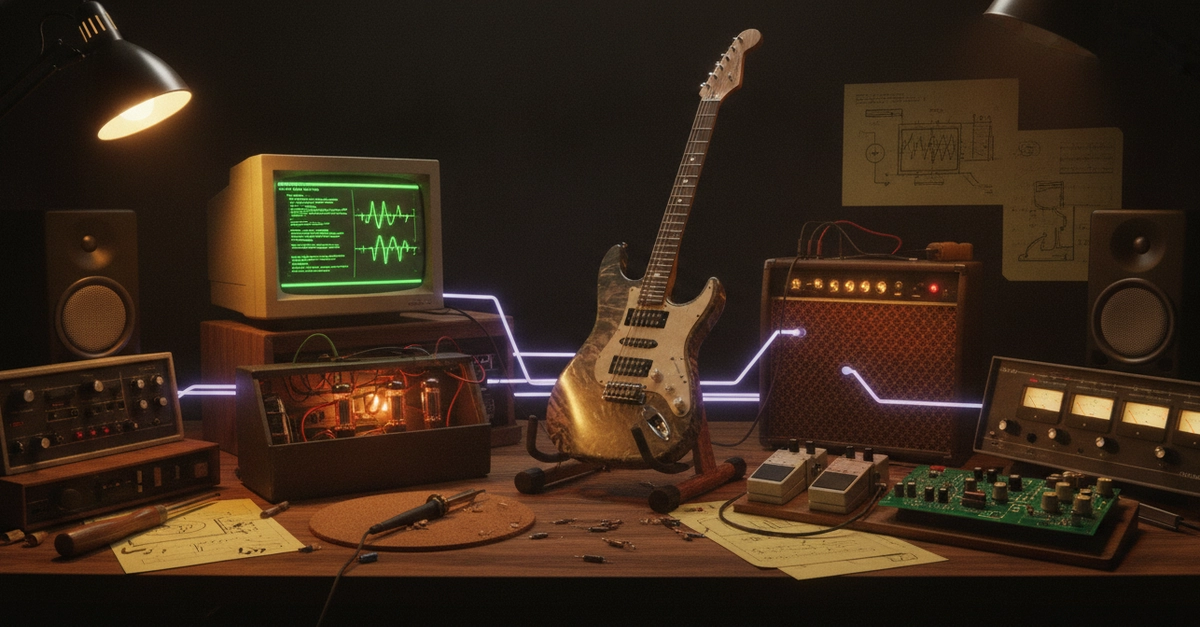
The False Dichotomy of Tech and Art
For a long time, many professionals in the technology sphere operated under a perceived separation between their technical skills and their creative pursuits. This often manifested as distinct "rooms" in one’s mind: one dedicated to the rigors of software engineering, web development, systems architecture, game engines, infrastructure, electronics, security, and tools; the other reserved for music, songwriting, guitars, sound design, storytelling, visual design, worldbuilding, and the sheer joy of creating for its own sake. The internal struggle was real: Am I a software engineer who dabbles in music, or a musician with a knack for coding? Is the professional work the "serious" technical endeavor, while creative output is a mere "side project"?
This internal conflict, however, is based on a flawed premise. The realization that emerges is that these domains were never meant to be separate. Technology, far from being just a tool for creative expression, has become deeply intertwined with identity itself. The very act of building, designing, and problem-solving in technology often mirrors the creative process in art. The elegance of a well-architected system can be as aesthetically pleasing as a perfectly composed piece of music. The iterative nature of software development, with its cycles of prototyping, testing, and refining, is not dissimilar to the artistic process of sketching, drafting, and revising.
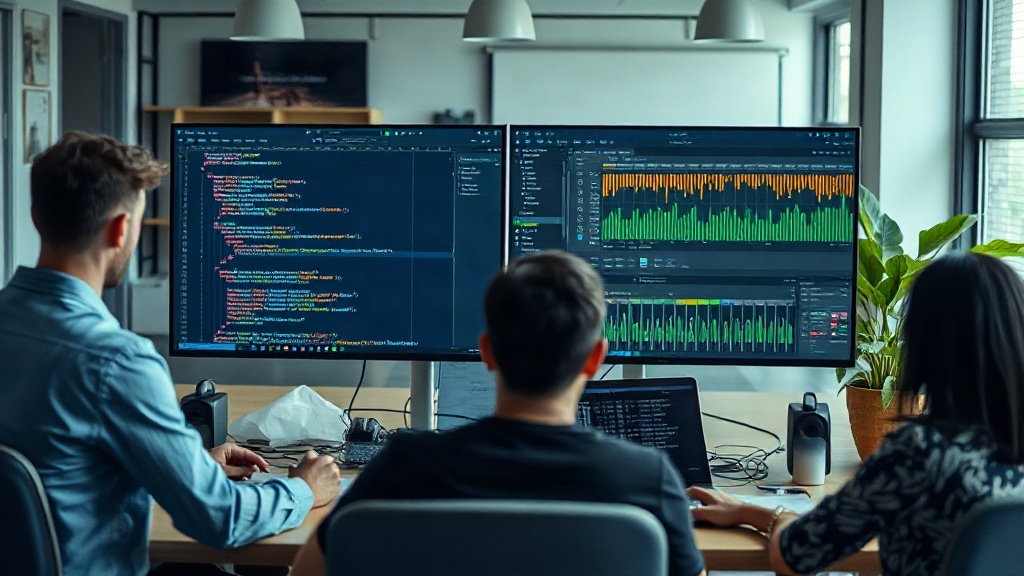
Technology as an Evolving Identity
The journey from viewing technology and creativity as separate entities to understanding their symbiosis is a critical one for many. It involves dismantling the artificial boundaries that society, education, and even personal ambition can impose. The initial impulse might be to categorize oneself strictly: "I am a developer," or "I am an artist." Yet, as one dives deeper into the nuances of modern work and personal fulfillment, this binary classification often feels inadequate. The tools of technology are not merely utilitarian; they are increasingly expressive. A programmer crafting a novel algorithm is, in a sense, composing. A designer using sophisticated software to create a visual masterpiece is engaging in a form of engineering. The lines blur, and the identity expands.
Consider the rise of generative art, AI-assisted music composition, or interactive storytelling platforms. These fields are inherently interdisciplinary, demanding proficiency in both technical execution and artistic vision. They represent a future where the most compelling work will arise from individuals who can seamlessly bridge these perceived divides. The "artist" is not just picking up the reins of technology; they are recognizing that technology has always been a part of their creative palette, and their identity as a creator has always informed their technical approach.
The Integration of Creative and Technical Workflows
This integration is not just an abstract philosophical concept; it has tangible implications for how work is approached and executed. When the technical and creative sides are seen as complementary, workflows become more fluid and innovative. A musician might leverage their understanding of systems architecture to build custom audio processing tools, leading to unique soundscapes. A game developer might draw upon their storytelling skills to create more immersive and emotionally resonant player experiences. A security professional might use their design thinking to develop more intuitive and user-friendly security interfaces.
The realization that one can be both a technologist and an artist is liberating. It frees individuals from the pressure of choosing a single path and encourages them to explore the rich intersections between disciplines. This holistic approach can lead to greater job satisfaction, more novel solutions, and a more authentic expression of self. The question shifts from "Which one am I?" to "How can these parts of me work together to create something new and meaningful?" This perspective shift is crucial for fostering a more dynamic and inclusive tech industry, one that values the full spectrum of human talent and ingenuity.
Beyond the Binary: A New Paradigm
The traditional view that technology is purely functional and art is purely expressive is a relic of a bygone era. In the 21st century, technology is a medium for expression, and art often requires sophisticated technical execution. The developer who finds joy in composing music is not an anomaly; they are an early adopter of a new paradigm. Similarly, the musician who masters coding to create interactive installations is not a coder who makes art, but an artist who uses code as their medium. This blurring of lines is not a compromise, but an expansion of potential.
The implications extend to how we educate, mentor, and even structure teams. Educational institutions and companies that recognize and foster this interdisciplinary approach will be better positioned to attract and retain talent. They will cultivate environments where innovation thrives because individuals are encouraged to bring their whole selves to their work. The "artist taking the reins" is not about abandoning technical rigor for artistic flair, but about understanding that the most profound creations often emerge when technical mastery is infused with creative vision, and artistic ambition is empowered by technological capability. This integrated identity is not just a personal revelation; it is the future of innovation.