Macs Reimagined for the AI Era
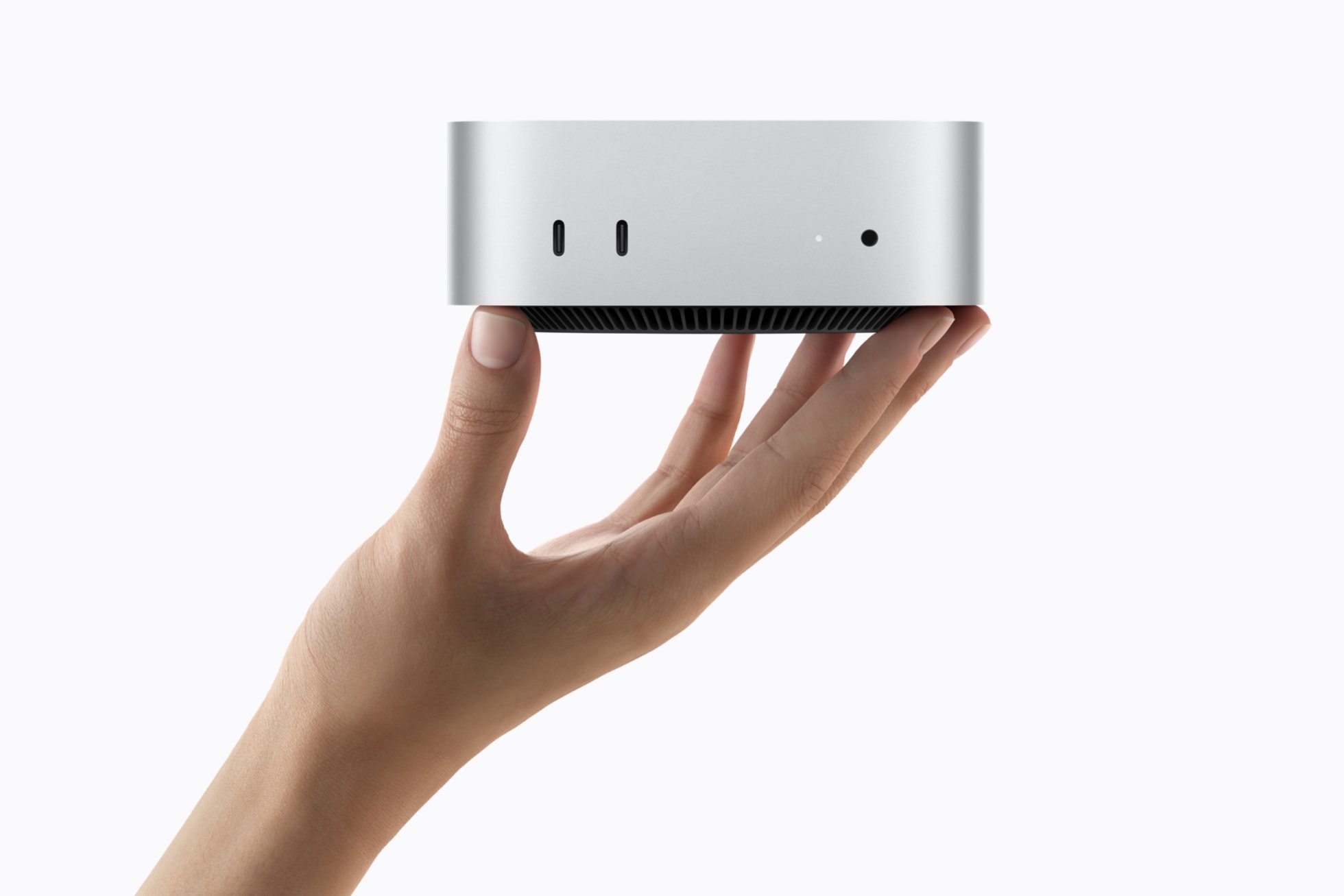
Apple has launched its latest generation of desktop computers, the Mac Studio and Mac Mini, with a clear focus on empowering local artificial intelligence development. This refresh introduces the all-new M6 and M5 Pro chips, meticulously engineered to accelerate AI inference and training tasks directly on the user's machine. The move signifies Apple's deepening commitment to the AI ecosystem, moving beyond its traditional strengths in creative workflows to capture a growing segment of developers and researchers focused on on-device AI.
For years, the Mac community has found creative ways to leverage Apple's hardware for AI tasks, often resorting to daisy-chaining multiple machines or relying on cloud-based solutions. This new hardware iteration directly addresses those workarounds. The M6 chip, in particular, appears to be a significant leap forward, promising substantial gains in neural processing capabilities. This isn't just about faster everyday computing; it's about enabling complex AI models to run efficiently and privately on a desktop, a crucial step for many developers concerned with data privacy and latency.
M6 and M5 Pro: The Engine for On-Device AI
The core of this update lies in the new silicon. The M6 chip is positioned as the flagship processor for the Mac Studio, offering unprecedented performance for demanding AI workloads. While specific benchmarks are still emerging, early indications suggest a dramatic improvement in the Neural Engine's efficiency and raw power compared to previous generations. This enhanced Neural Engine is designed to handle the complex matrix multiplications and parallel processing that are the backbone of modern machine learning models, from large language models (LLMs) to computer vision algorithms.
Complementing the M6 is the M5 Pro chip, which finds its way into the updated Mac Mini. While perhaps not reaching the absolute peaks of the M6, the M5 Pro still represents a substantial upgrade for AI development, particularly for those who need a more accessible entry point. The M5 Pro offers a compelling balance of performance and cost, making powerful local AI development more attainable for a wider audience. Both chips benefit from Apple's unified memory architecture, allowing the CPU, GPU, and Neural Engine to access the same data pool with minimal latency. This shared memory is critical for AI, as it reduces the need to copy large datasets between different processing units, significantly speeding up training and inference cycles.
Mac Mini: A $899 Gateway to AI Development
The new Mac Mini, starting at $899, is positioned as the most accessible entry point into Apple's AI-focused desktop lineup. The base model comes equipped with 256GB of storage and 16GB of RAM. While 16GB of RAM might seem modest for some heavy-duty AI training, it's a significant amount for an entry-level configuration and sufficient for many inference tasks and smaller model development. For developers requiring more memory, configurations with higher RAM capacities will undoubtedly be available, though pricing details for those are yet to be fully disclosed.
This aggressive pricing strategy for the Mac Mini is a deliberate play to attract developers who might have previously considered more expensive workstations or relied entirely on cloud resources. The ability to run AI models locally offers tangible benefits: reduced operational costs compared to cloud GPU rentals, enhanced data privacy as sensitive training data never leaves the machine, and zero latency once a model is deployed. The Mac Mini, with its compact form factor and now AI-centric processing power, becomes an attractive option for individual developers, students, and small teams looking to experiment and build AI applications without breaking the bank.
Mac Studio: Professional Power for Serious AI
The Mac Studio, equipped with the M6 chip, is aimed squarely at professionals and researchers who require the utmost performance for their AI endeavors. This machine is built for those who push the boundaries of what's possible with on-device AI, tackling larger models, more complex datasets, and more computationally intensive tasks. The increased memory bandwidth and the sheer processing power of the M6 chip are designed to shave hours, if not days, off training times and enable the deployment of more sophisticated AI capabilities directly to the Mac.
While Apple has historically been tight-lipped about the exact specifications of its custom silicon beyond core counts and memory configurations, the focus on AI development suggests a significant scaling up of the Neural Engine's capabilities. This could manifest as a higher number of AI cores, increased clock speeds, and architectural improvements designed to maximize parallel processing. The Mac Studio, in this context, is not just a powerful computer; it's a dedicated AI workstation that competes directly with high-end Windows PCs and specialized Linux-based AI development rigs. The advantage for Mac users lies in the integrated hardware-software experience, where macOS and Apple's frameworks like Core ML are optimized to take full advantage of the M6's AI accelerators.
The Ecosystem Advantage: Software and Frameworks
Beyond the hardware, Apple's investment in its software ecosystem is crucial. Frameworks like Core ML, Metal Performance Shaders, and the broader Swift for TensorFlow initiative (though its future is debated) provide developers with the tools to leverage the M6 and M5 Pro chips effectively. The unified memory architecture is particularly well-suited for these frameworks, allowing for seamless integration between traditional programming tasks and AI computations. Developers can build applications in Swift or Python, utilize libraries like TensorFlow or PyTorch (with appropriate backend support for Apple Silicon), and have the underlying hardware efficiently manage the AI workloads.
This integrated approach aims to simplify the development process. Instead of wrestling with complex driver installations or disparate hardware configurations, developers can work within a cohesive environment. The ability to train, test, and deploy AI models all on the same machine streamlines the entire workflow. This is a significant advantage for developers who value efficiency and a smooth user experience. The question remains, however, how readily third-party AI frameworks will adopt and optimize for these new chips, and whether Apple will offer more granular control over the Neural Engine's operation for advanced users.
What This Means for the Future of Local AI
Apple's aggressive push into local AI development with the M6 and M5 Pro chips signals a broader trend: the decentralization of AI computation. As models become more efficient and hardware more powerful, the need for constant cloud connectivity for AI tasks diminishes. This has profound implications for privacy, security, and the accessibility of AI technologies. By making powerful AI development tools available at consumer and prosumer price points, Apple is democratizing access to cutting-edge AI capabilities.
Competitors in the PC space, particularly those offering Windows-based machines with discrete GPUs, will need to respond by highlighting their own AI acceleration capabilities and potentially offering more integrated software solutions. The battleground for AI development is no longer solely in the data center; it is increasingly on the developer's desk. Apple's strategy here is clear: to make its Macs the go-to platform for developers who want to build and deploy AI, all while keeping the processing power — and the data — local.