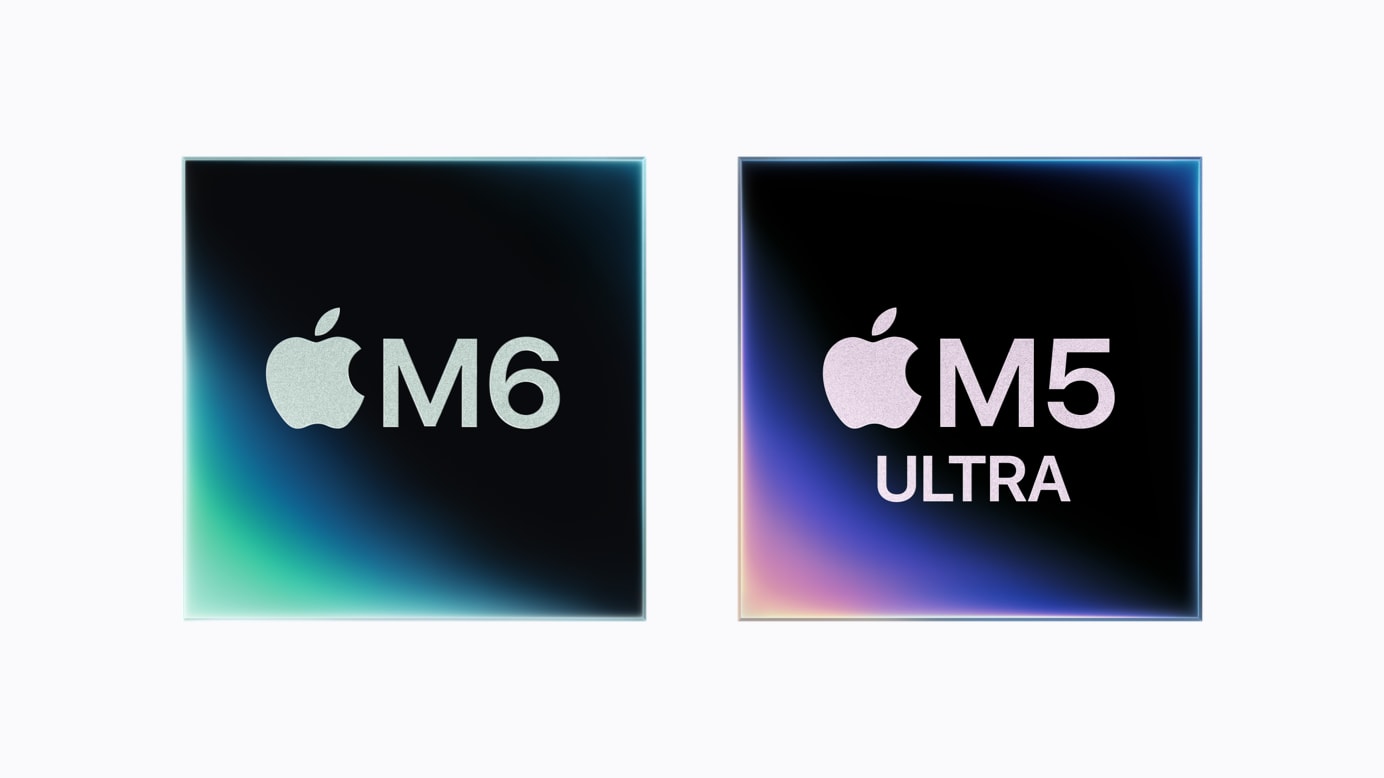
Apple Unleashes M5 Ultra and M6 Processors
Apple has officially launched its next-generation M5 Ultra and M6 System-on-Chips (SoCs), positioning them as its most powerful processors to date. These new chips are integrated into updated versions of the Mac Mini and Mac Studio, signaling a significant leap in performance for Apple's professional desktop and workstation lines. The company claims these processors deliver unprecedented speed and efficiency, designed to tackle the most demanding creative and technical workloads.
The M5 Ultra, positioned as the flagship for the new lineup, is engineered for extreme performance. While Apple has not disclosed specific core counts or clock speeds, the announcement suggests a substantial increase in CPU and GPU capabilities compared to previous generations. This jump is crucial for professionals working with high-resolution video editing, complex 3D rendering, large-scale data analysis, and advanced machine learning tasks. The M6, likely a more accessible but still powerful option, complements the M5 Ultra by offering robust performance for a wider range of professional users.
The integration of these new chips into the Mac Mini and Mac Studio suggests Apple's continued commitment to its professional desktop ecosystem. The Mac Mini, historically a more budget-friendly entry point into the Mac ecosystem, now offers workstation-class performance, potentially blurring the lines between its consumer and pro-oriented offerings. The Mac Studio, already a powerhouse for creative professionals, receives a significant boost, further solidifying its position as a go-to machine for demanding visual effects, animation, and software development environments.
This move by Apple is not just about raw power; it's about the integrated experience. The M5 Ultra and M6 chips are built on Apple's custom silicon architecture, designed to optimize performance and power efficiency through tight integration with macOS. This unified approach allows for features like unified memory, which provides a single pool of high-bandwidth, low-latency memory accessible by the CPU, GPU, and Neural Engine. This is particularly beneficial for large datasets and complex models that would typically bog down systems with separate memory pools.
Performance Metrics and Architectural Advancements
While Apple remains characteristically tight-lipped about granular technical specifications, the company has highlighted key performance improvements. Early indications from Apple's internal benchmarks suggest that the M5 Ultra can offer up to 40% faster CPU performance and up to 60% faster GPU performance compared to the M4 series. These figures, if accurate in real-world scenarios, represent a substantial generational leap. The Neural Engine also sees a significant upgrade, potentially doubling its performance for AI and machine learning tasks, which is critical for features like advanced image processing, voice recognition, and predictive text in creative applications.
The architectural advancements likely include a more refined manufacturing process, potentially moving to a 3nm or even a 2nm node, enabling higher transistor density and improved power efficiency. This means more performance can be packed into the same thermal envelope, or existing performance levels can be achieved with less power consumption. This efficiency is key for Apple's entire product line, from laptops to desktops, allowing for sustained performance without excessive heat or fan noise. For the Mac Studio, this translates to a quieter, more powerful workstation capable of handling intensive tasks for extended periods.
One of the most anticipated aspects of these new chips is their enhanced media engine. Pro-grade video codecs, such as ProRes and H.265, are expected to see hardware acceleration improvements, allowing for faster encoding and decoding of high-resolution video formats. This is a direct benefit for video editors, colorists, and motion graphics artists who rely on efficient video processing. The ability to edit multiple streams of 8K video in real-time without dropped frames or performance degradation is a key selling point for these updated machines.
Updated Mac Mini and Mac Studio: A Pro Ecosystem Refresh
The Mac Mini and Mac Studio are the first machines to feature the M5 Ultra and M6 processors. The updated Mac Mini now offers configurations with the M6 and the M5 Ultra, providing a significant performance upgrade over previous Intel-based or M-series Mac Minis. This makes the Mac Mini a viable option for professionals who previously needed a more expensive Mac Pro or iMac Pro for their workflows. The base configurations are expected to start with the M6, with the M5 Ultra available as an upgrade option, alongside increased RAM and storage capacities.
The Mac Studio receives a more substantial overhaul, exclusively featuring the M5 Ultra chip. This positions the Mac Studio as the undisputed performance leader in Apple's desktop lineup below the Mac Pro. With the M5 Ultra, the Mac Studio is poised to excel in tasks such as rendering complex scenes in Blender, compiling large codebases, or processing massive datasets in scientific simulations. Apple has also likely improved thermal management in the Mac Studio to accommodate the increased power output of the M5 Ultra, ensuring sustained performance during peak loads.
The inclusion of these powerful chips in these form factors raises questions about the future of Apple's higher-end professional machines. With the M5 Ultra now available in the Mac Studio, the differentiation between it and the Mac Pro becomes even more critical. Apple will need to clearly articulate the unique advantages of the Mac Pro, likely focusing on expandability, specialized I/O, and potentially even higher-tier chip configurations or modularity that the Mac Studio cannot match. For users, this refresh provides more choice and power at different price points within the professional Mac ecosystem.
Implications for the Professional Creative Landscape
The debut of the M5 Ultra and M6 chips, and their integration into the Mac Mini and Mac Studio, has significant implications for the professional creative industry. Developers building applications that leverage GPU acceleration, machine learning frameworks, or advanced media encoding will find a more powerful and efficient platform. This could spur innovation in areas like real-time ray tracing for graphics, on-device AI processing for creative tools, and more efficient video production workflows.
For users, this means the ability to handle larger, more complex projects with greater speed and responsiveness. A video editor can scrub through 8K footage with ease, a 3D artist can render scenes faster, and a data scientist can train models more quickly. The performance uplift directly translates to reduced project turnaround times and the potential to take on more ambitious creative endeavors. The continued focus on unified memory also simplifies development for applications that handle large datasets, as developers don't need to worry as much about memory management overhead.
The surprising detail here is not just the raw performance increase, but how Apple continues to push the boundaries of integrated silicon. By controlling both the hardware and software, Apple creates an ecosystem where performance gains are consistently delivered across its product line. This integrated approach often leads to a smoother, more reliable user experience, especially for demanding professional applications. Competitors in the high-performance computing space will need to respond to Apple's continued advancements in silicon design, particularly in areas of performance-per-watt and specialized media processing.
What nobody has addressed yet is the long-term impact on the software development landscape. As Apple's silicon becomes more capable, developers will be incentivized to build applications that specifically take advantage of these unique architectural features, potentially leading to a divergence in performance between macOS and other operating systems for certain types of professional workloads.