
Xcode 27.1 Beta: A New Era for Foldable Development
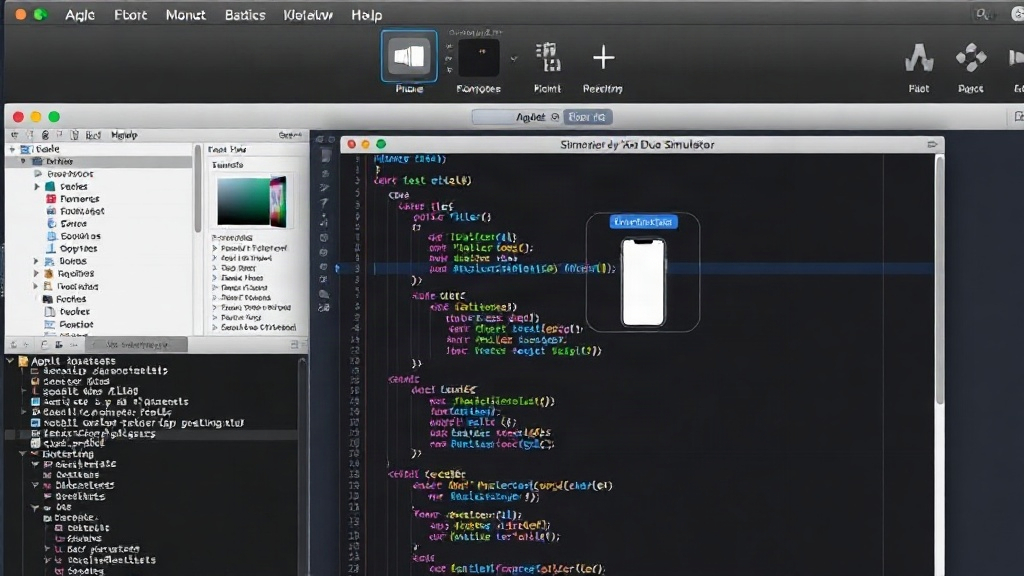
Apple has released Xcode 27.1 beta, a significant update for developers targeting iOS and iPadOS. The star feature is the introduction of a new iPhone Duo simulator, designed specifically to aid development for foldable and dual-screen devices. This simulator allows developers to test their applications across two distinct screen configurations simultaneously, mimicking the experience on devices like the upcoming iPhone Fold (hypothetical) or other foldable form factors that may emerge.
The iPhone Duo simulator is more than just a visual mockup. It provides developers with the tools to accurately test UI layouts, app states, and user interactions as they transition between the folded and unfolded states of a device. This is crucial for creating seamless user experiences, ensuring that content reflows correctly and that interactive elements remain accessible regardless of the screen configuration. Developers can now debug how their apps handle dynamic type changes, multitasking features, and even edge-to-edge displays without needing physical hardware, which is still nascent in the Apple ecosystem.
This simulator is built upon the existing framework of Xcode's device simulators, offering a familiar yet enhanced development environment. The ability to preview and test app behavior on a dual-screen setup directly within Xcode streamlines the development workflow considerably. Previously, developers relied on more abstract testing methods or guesswork for dual-screen interactions, often leading to post-launch adjustments. The Duo simulator aims to catch these issues early in the development cycle.
Key Updates and API Enhancements in Xcode 27.1 Beta
Beyond the headline-grabbing Duo simulator, Xcode 27.1 beta includes a host of other improvements. Release notes detail enhancements to Swift compilation times, particularly for large projects. Apple has also refined the Swift Package Manager, improving dependency resolution and build performance for projects utilizing external libraries. This addresses a common pain point for developers working with complex dependency graphs.
Several new APIs and updates to existing frameworks are also present. While specific details are still emerging from the developer community, early indications suggest improvements in areas such as Metal for graphics rendering, Core ML for on-device machine learning, and SwiftUI for declarative UI development. These updates are designed to offer developers more powerful tools and greater efficiency in building sophisticated applications.
For instance, Metal performance optimizations could translate to smoother animations and more graphically intensive applications, from games to augmented reality experiences. Similarly, Core ML updates might enable more advanced on-device AI features with reduced power consumption and improved accuracy. SwiftUI continues its rapid evolution, with this beta likely introducing new modifiers, layout options, and state management capabilities that further simplify the creation of adaptive UIs.
Performance and Debugging Improvements
Apple consistently focuses on developer productivity, and Xcode 27.1 beta is no exception. The release notes highlight significant performance gains in the integrated debugger. Developers should experience faster breakpoints, more responsive variable inspection, and quicker memory graph analysis. These incremental but critical improvements can save developers hours of cumulative time on larger projects.
The Instruments tool, Xcode's profiling suite, also receives updates. New templates and improved data collection capabilities are expected to offer deeper insights into app performance, energy usage, and responsiveness. This is particularly relevant for optimizing applications for the new foldable form factors, where power management and smooth transitions are paramount.
Furthermore, the beta includes updated static analysis tools and improved code completion, aiming to reduce the likelihood of common coding errors and accelerate the writing process. For developers migrating codebases or adopting new language features, these tools are invaluable.
What This Means for the Ecosystem
The introduction of the iPhone Duo simulator signals Apple's clear intention to embrace foldable and flexible display technologies. While Apple has historically been slower to adopt new hardware form factors compared to some Android manufacturers, this simulator suggests they are preparing for a future where such devices are mainstream. Developers can now proactively build and optimize their applications for these new paradigms, ensuring a robust app ecosystem when Apple eventually launches hardware that leverages these capabilities.
For developers, this beta is an opportunity to get ahead of the curve. Understanding how to design for adaptable screen sizes and dual-pane interfaces will become increasingly important. The performance enhancements and API updates in Xcode 27.1 beta also provide tangible benefits, enabling the creation of more sophisticated and performant applications across the entire Apple platform.
The broader implication is a potential shift in how iOS and iPadOS applications are designed and interacted with. As developers leverage the Duo simulator, we can expect to see more innovative app architectures that take full advantage of multitasking and flexible screen real estate. This could lead to richer user experiences, especially on the iPad, where multitasking has long been a key selling point.
The release of Xcode 27.1 beta underscores Apple's commitment to providing developers with cutting-edge tools. The focus on foldable device simulation, coupled with ongoing performance and API improvements, positions the platform for future hardware innovations and ensures that developers have the resources they need to build the next generation of applications.