
The Bottleneck Shifts: From Building to Managing
Shipping ten apps in four months sounds like a success story, and it is. For developers leveraging AI-assisted coding and streamlined workflows, the journey from idea to App Store submission can now take mere days, or even hours. This rapid development cycle, however, reveals a new bottleneck: the post-launch management of these applications. What was once a manageable task for a single app becomes a significant operational challenge when managing a portfolio. This is the problem Dragos Roua's new tool, App Store Release Agent, aims to solve.
Managing a single app involves a constant stream of tasks: updating metadata, tweaking screenshots, responding to reviews, monitoring ratings, refining keywords, analyzing conversion rates, planning cross-promotions, tracking build statuses, handling rejections, preparing new releases, updating privacy policies, and crafting promotional text. For a portfolio of apps, this overhead grows exponentially, demanding significant time and attention that detracts from new development.
Introducing App Store Release Agent
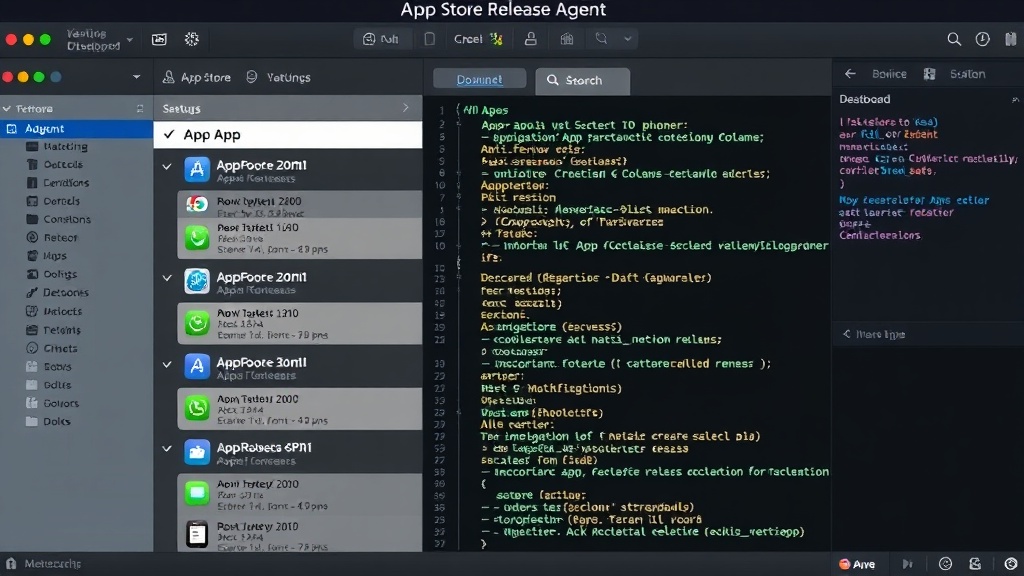
App Store Release Agent is designed to automate these repetitive, time-consuming post-launch tasks. Roua developed the tool out of necessity, facing the administrative burden of managing his own growing portfolio of apps. The agent acts as a central hub, providing a unified interface to manage the lifecycle of multiple applications on the Apple App Store.
The core functionality focuses on simplifying and automating the release pipeline. This includes handling the creation and submission of new builds, managing metadata updates across different app versions, and streamlining the process of responding to App Store rejections. By consolidating these operations, developers can regain valuable time and reduce the cognitive load associated with app maintenance.
Key Features for Pipeline Automation
App Store Release Agent offers several key features aimed at automating the App Store pipeline:
- Unified App Management: A single interface to view and manage all your apps, regardless of their status or version. This eliminates the need to navigate the App Store Connect portal repeatedly for different applications.
- Automated Release Submissions: The agent can automate the process of uploading new builds and submitting them for review. This includes pre-submission checks and metadata association, reducing manual steps.
- Metadata Management: Tools to efficiently update app descriptions, keywords, promotional text, and other metadata. The agent can facilitate A/B testing of metadata or bulk updates across similar apps.
- Review and Rejection Handling: Features designed to help developers quickly address App Store review feedback. This might include templated responses or guided workflows for common rejection reasons.
- Build Status Monitoring: Real-time tracking of build statuses, from upload to review completion, providing timely notifications for any issues or approvals.
Why This Matters for Developers
The value proposition of App Store Release Agent is clear: it tackles the operational drag that often follows a successful product development phase. As AI continues to lower the barrier to entry for app creation, the ability to efficiently manage a portfolio will become a critical differentiator. Developers who can automate the maintenance and release processes will have a distinct advantage, allowing them to scale their app businesses more effectively.
Consider the alternative: manual management. For a developer managing five apps, each requiring a minor metadata update or a new build submission every few months, this can easily consume several hours per week. For a developer with twenty apps, this task becomes a significant part of their workload, akin to running a small, demanding operational team. App Store Release Agent aims to reduce this operational overhead to minutes, allowing developers to focus on innovation and growth.
The tool also addresses the psychological toll of constant app maintenance. The feeling of being bogged down by administrative tasks can lead to burnout and stifle creativity. By offloading these responsibilities to an automated agent, developers can maintain a healthier work-life balance and a more sustainable development practice. This is particularly relevant for indie developers and small teams where resources are already stretched thin.
Roua’s own experience highlights the critical need for such a tool. Shifting from a focus on rapid prototyping and development to the realities of sustained product ownership requires a paradigm shift in workflow. App Store Release Agent represents a step towards enabling that shift, making the management of a successful app portfolio a less daunting prospect.
The Future of App Management
As the app development landscape continues to evolve, with AI tools accelerating creation and more developers entering the market, the demand for efficient management solutions will only increase. Tools like App Store Release Agent are not just about convenience; they are about enabling scalability and sustainability in the app economy. They allow developers to transition from individual creators to portfolio managers without being crushed by the administrative weight.
The success of this tool will likely depend on its ability to integrate seamlessly with existing developer workflows and App Store Connect APIs, offering robust automation without sacrificing control or introducing new complexities. For developers who find themselves spending more time managing existing apps than building new ones, this agent could be a critical addition to their toolkit.
What remains to be seen is how broadly this approach to automating the App Store pipeline will be adopted. Will other developers create similar tools, or will Apple itself introduce more advanced management features within App Store Connect? For now, App Store Release Agent offers a compelling solution for those grappling with the operational realities of a growing app portfolio.