Detecting Volcanic Shockwaves with Consumer IoT and AI
Explosive volcanic eruptions generate powerful acoustic-gravity waves, known as Lamb waves, that propagate horizontally across the globe at the speed of sound. These waves can be detected thousands of miles from their source. A new study, published on ESS Open Archive, details how researchers are harnessing a network of consumer-grade Internet of Things (IoT) devices—specifically, 29,000 Netatmo home weather stations—and advanced AI to monitor and analyze these volcanic shockwaves. The project, operating within the Antigravity CLI environment and powered by Gemini AI agents, aims to create a rapid warning system for volcanic events.
The system continuously ingests weather data logged by Google Apps Script (GAS) from these distributed weather stations. This data is stored in Google Drive, providing a granular, real-time feed of atmospheric conditions. By analyzing this data, the researchers can identify the tell-tale signatures of Lamb waves, distinguishing them from background atmospheric noise. This approach transforms a network of devices primarily used for personal weather monitoring into a crucial component of a global geophysical sensing array.
Mapping Historical Eruptions
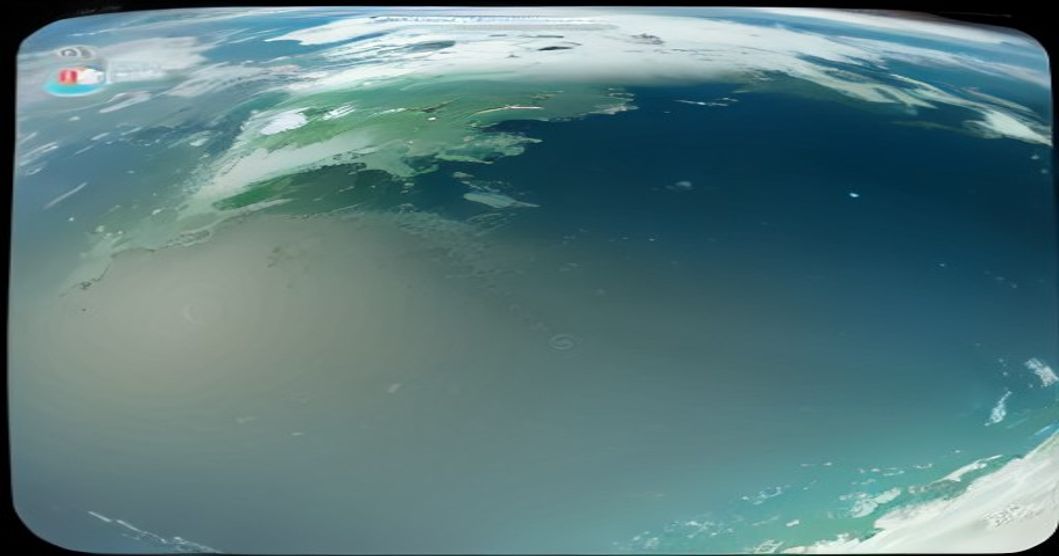
To validate their methodology, the team mapped two significant historical volcanic events: the 2018 phreatic blast at Mt. Kusatsu-Shirane and the 2018 magmatic explosion at Mt. Shinmoedake. Phreatic eruptions, driven by steam, and magmatic eruptions, involving molten rock, both generate distinct Lamb wave patterns. The Antigravity CLI environment, built on first-principles continuum mechanics, allows for sophisticated modeling of these wave phenomena. Gemini AI agents are employed to process the vast amount of incoming data, identify wave patterns, and potentially forecast their trajectory and intensity.
The ability to accurately map these past events using the new system provides strong evidence for its potential as a real-time monitoring tool. The critical advantage of this approach lies in its speed. Traditional seismic monitoring can provide warnings, but Lamb waves travel at the speed of sound, offering a much faster alert mechanism for areas potentially affected by ash plumes, pyroclastic flows, or other eruption hazards. The researchers aim to achieve a warning shield that can operate within a 15-minute window following an explosive event.
The Role of Gemini AI and Antigravity CLI
Gemini AI plays a pivotal role in sifting through the high-volume, high-velocity data stream from the weather stations. Its advanced pattern recognition capabilities are essential for identifying subtle Lamb wave signals amidst everyday atmospheric fluctuations. The AI agents are trained to distinguish between genuine volcanic acoustic signatures and other atmospheric events like thunderstorms or strong winds. This intelligent filtering is key to reducing false positives and ensuring the reliability of the warning system.
The Antigravity CLI provides the computational framework for this analysis. It allows researchers to define and run complex simulations based on the physics of wave propagation. This command-line interface enables the integration of the AI's findings with physical models, offering a more comprehensive understanding of the eruption's impact. The CLI's ability to handle large-scale data processing and complex calculations is fundamental to the system's operation. It acts as the engine that translates raw sensor data into actionable geophysical insights.
Transforming Consumer Tech into Scientific Instruments
This project highlights a significant trend: the repurposing of everyday consumer technology for advanced scientific research. Netatmo weather stations, typically used by homeowners to track local temperature, humidity, and air pressure, are now contributing to a global volcano monitoring network. The sheer density of these devices, spread across diverse geographical locations, creates an unprecedented sensing capability.
The surprising detail here is not just the scale of the network, but its reliance on consumer-grade hardware. Historically, such detailed atmospheric monitoring would require specialized, expensive meteorological equipment. By aggregating data from thousands of off-the-shelf devices, this project democratizes geophysical sensing. It demonstrates how distributed IoT networks, when coupled with powerful AI, can achieve scientific outcomes previously requiring dedicated infrastructure. This approach could serve as a blueprint for other citizen science initiatives in fields ranging from seismology to climate monitoring.
Future Implications and Unanswered Questions
The implications of this research are far-reaching. A 15-minute warning window for volcanic eruptions could significantly improve evacuation procedures and public safety. It could also provide critical data for aviation authorities, helping to reroute flights away from hazardous ash clouds. The system's ability to detect blast yields also offers new insights into the energy dynamics of volcanic explosions.
What nobody has addressed yet is the long-term sustainability and scalability of such a system. Relying on consumer devices means the network's integrity depends on individual users maintaining their equipment and their internet connectivity. Furthermore, the ethical considerations of using personal data, even anonymized weather readings, for scientific purposes will need careful navigation as the system expands. The potential for hardware failures or data corruption across such a vast, distributed network also presents an ongoing challenge.
The project's success hinges on robust data validation and the continuous refinement of the AI models. As more eruptions are captured and analyzed, the Gemini agents will become even more adept at identifying and interpreting volcanic signatures. The Antigravity CLI will continue to evolve, providing the necessary tools for increasingly sophisticated physical modeling. This convergence of AI, IoT, and geophysical science represents a powerful new frontier in understanding and mitigating natural hazards.