
The Reflect Dashboard: A Mirror to AI Integration
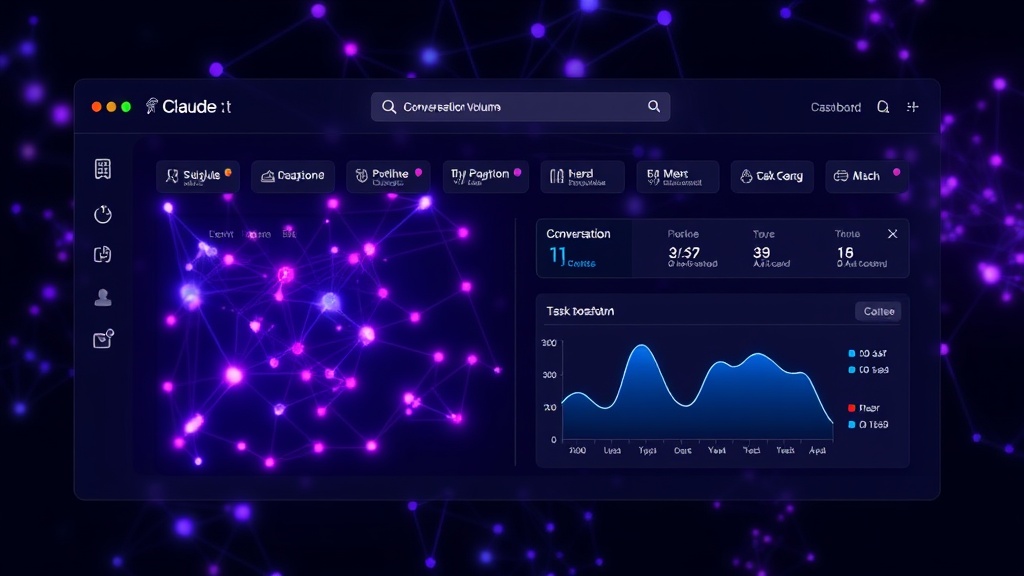
Anthropic's latest feature for its Claude chatbot, the Reflect dashboard, is more than just a usage analytics tool. It serves as a quiet, yet powerful, testament to how integrated AI assistants have become in our professional workflows. Instead of merely presenting data points, Reflect visualizes user interactions with Claude, offering insights into the frequency, types, and patterns of engagement. This subtle approach aims to demonstrate the value proposition of AI by showing users, rather than telling them, how much their productivity and task completion now hinge on the chatbot.
The dashboard's design prioritizes a non-intrusive presentation of information. It avoids the typical fanfare of feature launches, instead opting for a more organic integration within the user experience. This under-the-radar rollout suggests a strategic move by Anthropic to let the feature's utility speak for itself. By highlighting usage, Reflect implicitly answers the question of 'why should I use this AI?' by making the user's own behavior the evidence. It's akin to a fitness tracker showing you how many steps you've taken – the data itself becomes the motivator and the proof of engagement.
Visualizing AI's Footprint
Reflect offers a suite of visualizations designed to give users a clear picture of their Claude interaction. This includes metrics on conversation volume, the complexity of queries, and the types of tasks Claude assists with, such as drafting content, summarizing information, or brainstorming ideas. For instance, a user might see a breakdown of how many emails they've had Claude draft versus how many documents it has summarized in a given week. This granular view allows professionals to identify areas where Claude is a significant productivity multiplier.
The dashboard doesn't just show *how much* users are interacting with Claude, but also hints at *how* they are interacting. It could reveal patterns in prompt engineering, the types of creative or analytical tasks being offloaded, and the overall evolution of a user's reliance on AI for specific functions. This self-reflection is key to Anthropic's strategy: by making users aware of their own AI-driven workflows, the company reinforces the sticky nature of its product. It's a sophisticated form of user education, where the user is the primary teacher, and the dashboard is simply the textbook.
Beyond Analytics: A Subtle Sales Pitch
The true innovation of Reflect lies in its subtle salesmanship. In a market saturated with AI tools, differentiating and demonstrating value is paramount. Anthropic's dashboard eschews direct feature promotion in favor of user-centric data. It’s a strategy that banks on the idea that users will recognize and appreciate the AI's contribution to their work once it's quantified and visualized. This approach is particularly effective for a tool like Claude, which is designed to be a general-purpose assistant. The broader the range of tasks it assists with, the more indispensable it becomes.
Consider the competitive landscape. Many AI companies focus on launching new models or adding discrete features. Anthropic, with Reflect, is focusing on the user's experience and their evolving relationship with AI. This is a long-term play, building loyalty by demonstrating ongoing value rather than through aggressive marketing. The dashboard acts as a constant, gentle reminder of Claude's utility, making it harder for users to consider switching to competitors, especially if those competitors don't offer similar insights into AI integration. It turns usage data into a form of user-generated testimonial.
The Unanswered Question: Long-Term Impact on AI Literacy
While Reflect effectively highlights user dependence on AI, it raises an interesting question about the long-term impact on AI literacy. Does a dashboard that visualizes AI use encourage a deeper understanding of how these models work, or does it merely reinforce a reliance on them as black boxes? If users are primarily seeing how much Claude helps them complete tasks, will they be motivated to understand the underlying mechanisms, the ethical considerations, or the limitations of the technology? Anthropic's move is brilliant for retention, but the broader effect on user comprehension remains an open area.
The dashboard's success hinges on users internalizing the data presented. If a user sees they've spent 10 hours a week using Claude for writing tasks, the implication is clear: Claude is an essential tool for their writing. This realization can lead to increased adoption, further integration into workflows, and ultimately, a stronger commitment to the platform. It’s a form of behavioral economics applied to AI, nudging users towards greater reliance through self-awareness.
Implications for the AI Landscape
Anthropic's Reflect dashboard represents a shift in how AI companies might approach user engagement and retention. Instead of relying solely on feature updates or performance benchmarks, the focus is on demonstrating the integrated value of the AI within the user's existing environment. This user-centric approach, leveraging personal data to showcase utility, could become a benchmark for other AI providers. It’s a subtle but effective method for solidifying a product's place in the user's daily toolkit.
For developers and founders building AI-powered products, the lesson is clear: showcase the value your AI brings to the user’s life and work. Make the benefits tangible and visible. For users, the Reflect dashboard serves as a prompt to consider their own relationship with AI. Are these tools augmenting capabilities, or are they becoming crutches? Understanding this balance is crucial as AI continues its rapid integration into every facet of professional life.