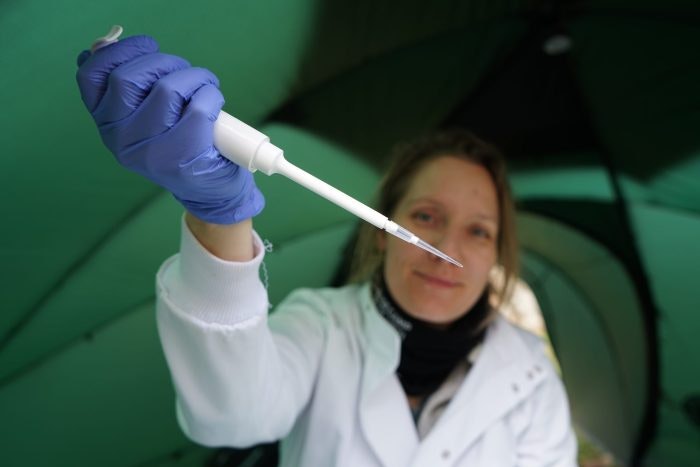
Anthropic's New Frontier in Scientific Research Automation
Anthropic, the AI safety and research company, has launched a suite of tools built around its new Claude 3.5 Sonnet model, signaling a significant push into automating scientific research. This move places European life sciences startups, and indeed the broader industry, on alert. The company's announcement details enhanced capabilities in code generation, analysis, and understanding complex scientific literature, all designed to accelerate the pace of discovery. This isn't just about faster text generation; it's about applying AI to the intricate workflows of scientific R&D.
The implications are far-reaching. For years, startups have been building specialized AI tools for drug discovery, materials science, and bioinformatics. Anthropic's entry, with a model trained on vast datasets and a focus on scientific applications, represents a potent challenge. They aim to provide foundational capabilities that many smaller companies have been painstakingly developing as their core product. This is akin to a major cloud provider suddenly offering a highly specialized, pre-built service that directly competes with a startup's niche offering.
Claude 3.5 Sonnet itself shows marked improvements in areas critical for scientific research. Anthropic claims it achieves near human-level performance on vision and transcription tasks, crucial for analyzing experimental data, reading scientific papers, and processing visual information from labs. The model's improved code generation capabilities are particularly relevant, as many scientific endeavors now rely heavily on custom software for data analysis, simulation, and experimental control. The ability to automate the generation and debugging of such code can drastically reduce development cycles.
The Competitive Landscape Shifts
The announcement has sent ripples through the startup ecosystem. Companies that have spent years cultivating expertise in AI-driven research are now facing a direct competitor backed by substantial resources. "This is a wake-up call for many," says one founder of a European biotech AI startup. "We've been building custom solutions for specific scientific problems, and now a generalist AI provider is offering a powerful, integrated platform that can do much of it out-of-the-box."
Anthropic's strategy appears to be providing a powerful, versatile AI assistant that can handle a wide range of scientific tasks, from hypothesis generation to data interpretation. This 'all-in-one' approach contrasts with the more specialized, deep-dive tools many startups offer. The surprising detail here is not just the ambition, but the speed at which Anthropic is moving to capture this market, which many assumed would remain the domain of niche players for longer.
Companies like DeepMind (with AlphaFold), Recursion Pharmaceuticals, and Insilico Medicine have already demonstrated the power of AI in scientific discovery. However, Anthropic's approach with Claude 3.5 Sonnet seems to be about democratizing these capabilities, making them accessible to a wider range of researchers and potentially accelerating the overall scientific process. This could lead to a consolidation of the AI research tools market, where startups might need to differentiate themselves by focusing on hyper-specialized applications or unique datasets that even large models cannot replicate.
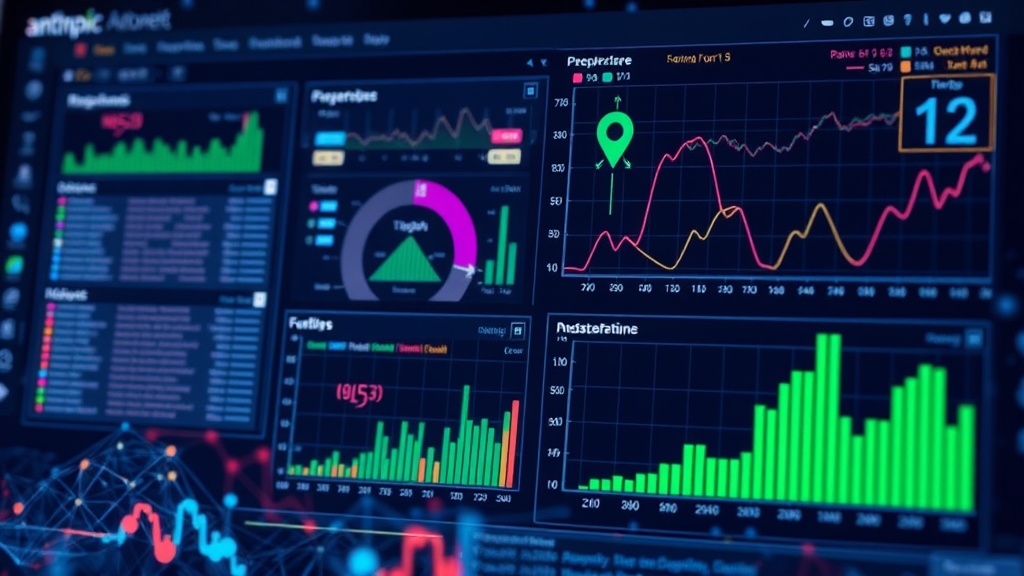
What This Means for Scientific Workflows
The impact on day-to-day scientific work could be profound. Researchers may soon have an AI assistant capable of summarizing dense research papers, identifying potential experimental flaws, suggesting novel hypotheses based on existing literature, and even generating preliminary code for analysis. This could free up scientists' time from tedious tasks, allowing them to focus on higher-level thinking, experimental design, and interpretation of results.
For instance, a pharmaceutical researcher might use Claude 3.5 Sonnet to rapidly sift through thousands of research papers on a specific disease pathway, identify potential drug targets mentioned across disparate studies, and even draft the initial code for a simulation to test the efficacy of those targets. This process, which could traditionally take weeks or months of manual literature review and programming, could potentially be reduced to days.
However, the reliance on a single, powerful AI model also raises questions about scientific reproducibility and the potential for AI-generated biases to creep into research. If the AI's underlying data or algorithms have blind spots, these could be amplified across numerous research projects. The challenge for startups is to demonstrate that their specialized, often more transparent, approaches offer unique value or a higher degree of trust and control for critical scientific endeavors.
The Road Ahead for AI in Science
Anthropic's move is a clear signal that foundational AI models are becoming increasingly capable of tackling domain-specific challenges. This trend is likely to continue, pushing the boundaries of what AI can achieve in fields like biology, chemistry, and physics. Startups in this space will need to innovate rapidly, perhaps by integrating their specialized knowledge into larger models or by developing entirely new paradigms for AI-assisted discovery that go beyond current capabilities.
The competition is no longer just about who can build the best AI model, but who can best apply it to solve the world's most complex scientific problems. The rapid advancement of models like Claude 3.5 Sonnet suggests that the era of AI-driven scientific acceleration is not just coming—it's already here, and the players who adapt quickly will define its future.