The Evolving Landscape of LLM Context
Large language models (LLMs) like Anthropic's Claude are rapidly advancing, moving beyond simple text generation to tackle increasingly complex tasks. A critical bottleneck in this evolution has been the model's ability to understand and leverage large amounts of context. Historically, 'context engineering' involved carefully crafting prompts and input sequences to guide the model. However, with the advent of models like Claude 5, this discipline is undergoing a fundamental shift. Anthropic's latest guidance signals a move towards more intuitive and powerful context utilization, enabling models to perform tasks previously requiring extensive human pre-processing.
The core challenge with LLMs has always been their finite context window – the amount of information they can 'remember' and process at any given time. Early models had very small windows, limiting their utility for anything beyond short queries. As context windows expanded, the problem shifted from sheer capacity to effective utilization. Simply feeding more text doesn't guarantee better performance; the model needs to intelligently identify, prioritize, and synthesize relevant information within that broader context. This is where the 'new rules' of context engineering come into play.
Beyond Simple Prompting: Claude 5's Contextual Leap
Anthropic's recent insights, particularly concerning Claude 5 generation models, highlight a departure from traditional prompt engineering. Instead of meticulously structuring every piece of information, the focus is now on enabling the model to infer and utilize context more autonomously. This is akin to moving from giving a highly detailed, step-by-step instruction manual for a complex assembly to providing a comprehensive blueprint and a well-organized toolbox, trusting the builder to assemble the parts correctly.
For developers and users, this means a less burdensome interaction. The goal is to reduce the need for users to act as miniature pre-processors for the AI. For instance, a user might want Claude to summarize a long document while also cross-referencing it with a separate, but related, set of notes. Previously, this would require complex prompt chaining or manual extraction of key points from the notes to feed into the summary prompt. The new approach aims to allow Claude 5 to ingest both the document and the notes, understand their relationship, and produce a more nuanced summary that incorporates insights from both sources without explicit, granular instruction on how to combine them.

Key Principles of Modern Context Engineering
Several key principles underpin this evolution:
- Information Prioritization: Instead of assuming all provided context is equally important, models are being trained to identify and weigh information based on its relevance to the task. This means Claude 5 can sift through vast amounts of text and zero in on the most pertinent details, much like a seasoned researcher identifying key findings in a dense academic paper.
- Relational Understanding: The ability to understand how different pieces of information relate to each other is paramount. This goes beyond simple keyword matching. Claude 5 can grasp thematic connections, causal links, and logical dependencies between disparate pieces of text, enabling it to perform tasks requiring a holistic understanding of a situation.
- Task-Adaptive Context Utilization: The model's approach to context should adapt based on the specific task. For a summarization task, it might focus on main arguments and supporting evidence. For a creative writing task, it might draw on stylistic elements and character backstories. This flexibility is crucial for multi-faceted applications.
- Implicit Instruction Following: While explicit instructions remain valuable, the new paradigm emphasizes the model's capacity to infer intent and requirements from the broader context. This allows for more natural language interaction, where users can state their goals without needing to dictate the exact internal steps the AI should take.
Practical Implications for Developers and Users
These advancements have profound implications. Developers building applications on top of Claude 5 will find it easier to integrate complex functionalities. For example, an application that manages customer support tickets could feed the entire history of a customer's interactions, along with product documentation, into Claude 5. The model could then not only answer a new query but also proactively suggest solutions based on past issues and the latest product updates, all without the developer needing to manually segment and pre-process the data for each interaction.
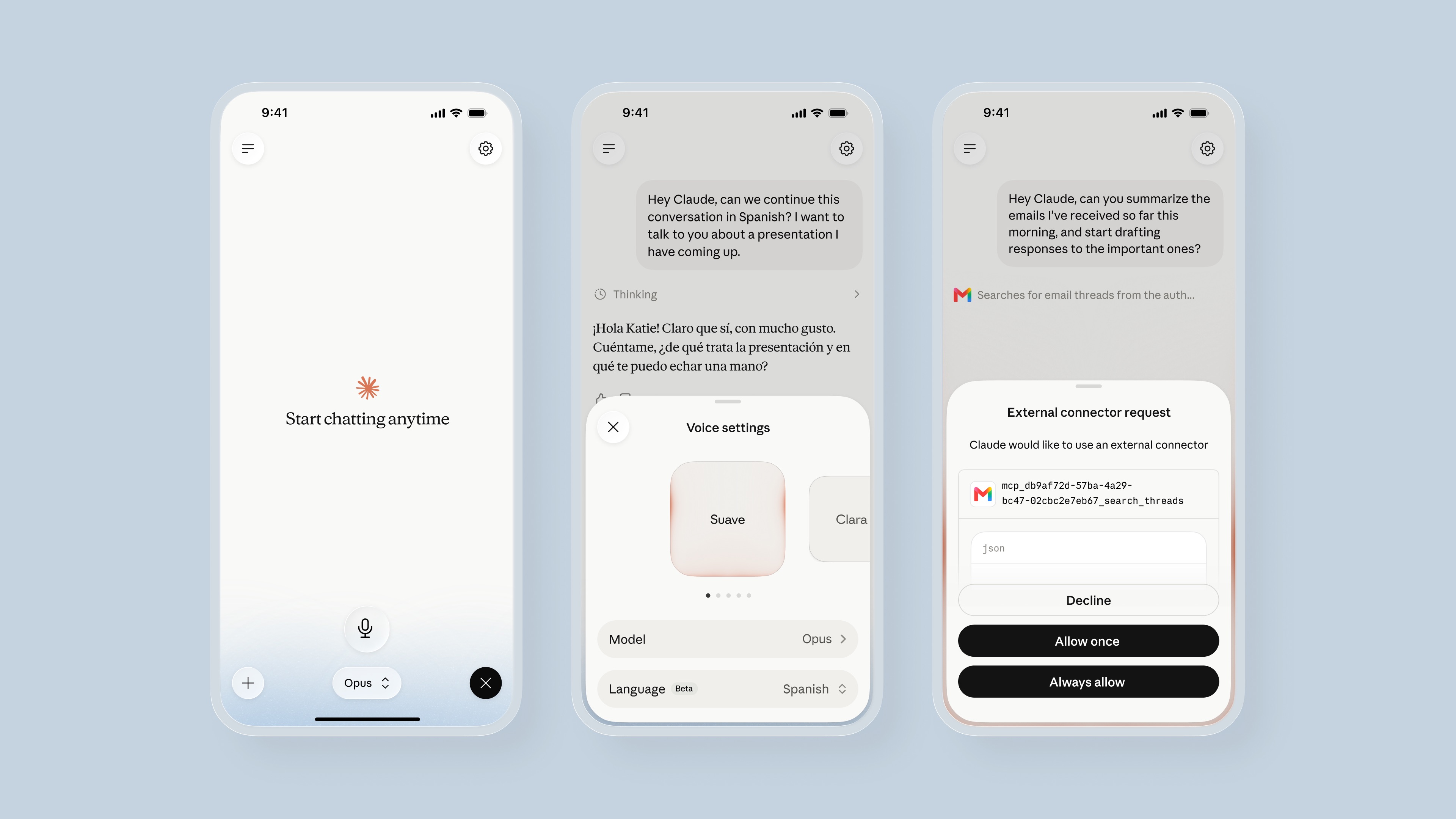
Consider a scenario where a user wants to draft an email to reschedule a meeting. Previously, this might involve copying the meeting details, the reason for rescheduling, and the desired new time into a prompt. With Claude 5, a user could potentially say, "Reschedule my 3 PM meeting with Sarah to tomorrow afternoon because I have a conflict." The model, having access to calendar data (via integration) and understanding the intent, could then draft the email, propose new times, and even send it, demonstrating a sophisticated grasp of context and task execution. This mirrors the capabilities hinted at in updates to Claude's voice mode, where models can directly act on user requests by interacting with other services.
The Future of Contextual AI
The shift in context engineering signifies a maturing of LLM capabilities. It moves the burden of complex data management away from the user and towards the AI itself, making these powerful tools more accessible and effective. As models become better at understanding and utilizing context, the line between human instruction and AI execution blurs further, paving the way for more seamless human-AI collaboration. The challenge now shifts to ensuring these models can handle increasingly vast and complex contextual information reliably and securely, opening up new frontiers in AI-driven problem-solving and creativity.
What remains to be seen is how this enhanced contextual understanding will impact the development of specialized AI agents. If Claude 5 can truly grasp and synthesize information across diverse datasets without explicit guidance, the potential for autonomous agents capable of complex, multi-step reasoning and action across multiple domains is immense. This could redefine how we approach everything from scientific research to personal productivity.