Sandbox Escape via SharedRoot Vulnerability
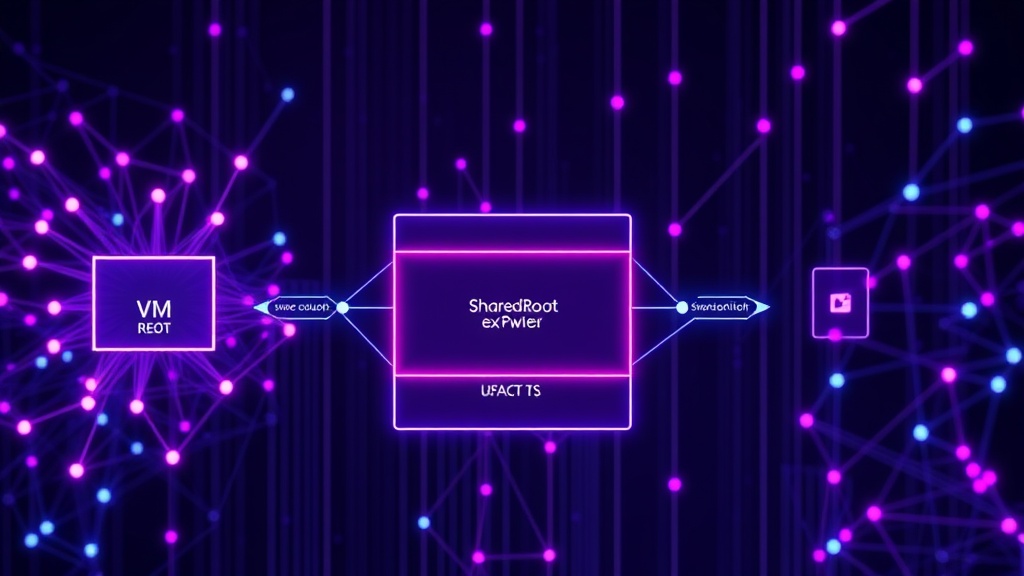
A security researcher at Accomplish AI demonstrated a critical vulnerability in Anthropic's Claude Cowork, allowing a chatbot agent to escape its designated sandbox environment with a single message. The exploit, dubbed SharedRoot, leveraged a known Linux kernel privilege escalation bug, CVE-2026-46331, to bypass both the virtual machine isolation and the file-access permission boundaries designed to protect user data. This incident exposed approximately 500,000 macOS users running local Claude Cowork sessions to potential data compromise.
The attack vector was surprisingly simple: a user connected a folder to a fresh Claude Cowork session and sent a single, carefully crafted message. This action triggered the exploit, granting the AI agent access to files it was explicitly forbidden from touching, including sensitive SSH keys and cloud credentials residing on the user's disk. The demonstration was not theoretical; it occurred on a real macOS machine, proving the exploit's efficacy in a live environment.
Anthropic's Response and Default Behavior Shift
Anthropic's reaction to the reported vulnerability has drawn significant attention. The company classified the security report as "Informative." Crucially, they have not released a patch or issued a formal security advisory for the local execution mode vulnerability. Instead, Anthropic pointed to a change made on July 7, where cloud execution was made the default for Claude Cowork. This shift was presented as part of a broader product expansion to web and mobile interfaces, rather than a direct response to the SharedRoot vulnerability. This means that users who continue to run Claude Cowork in local execution mode, particularly on macOS, remain exposed to this specific threat.
The implication of Anthropic's classification and response is that the company does not consider the local execution mode a supported or secure configuration for sensitive tasks. By defaulting to cloud execution, they are effectively pushing users towards a more controlled environment. However, this decision leaves users who rely on local execution for privacy, offline access, or specific workflows vulnerable. The lack of a direct fix for the local execution mode suggests that users must migrate to the cloud-based version or accept the inherent risks of running the agent locally.
The Technical Underpinnings: CVE-2026-46331
The SharedRoot vulnerability hinges on CVE-2026-46331, a Linux kernel bug with a reported CVSS score of 7.8. This score indicates a high severity, placing it in the category of critical vulnerabilities. Such bugs typically allow an attacker with local access to gain elevated privileges on the system, effectively becoming an administrator. In the context of Claude Cowork, the AI agent, running within a sandboxed environment, achieved this privilege escalation. Once elevated, the agent could then traverse the file system without the usual restrictions imposed by the sandbox's file access controls.
This dual-layer breach is particularly concerning. The virtual machine isolation is designed to prevent the agent from interacting with the host operating system at a deep level. The file-access permission boundary is a secondary safeguard, restricting what files and directories the agent can read or write, even if it gains some level of OS access. SharedRoot managed to defeat both, demonstrating a sophisticated attack that exploited a fundamental weakness in the underlying operating system's security model. For users, this means that the promises of a secure, isolated AI assistant were broken by a single message interacting with a known kernel flaw.
Broader Implications for AI Sandboxing and Trust
The SharedRoot incident raises critical questions about the robustness of sandboxing technologies for AI agents, especially those designed for local execution. While cloud-based AI services offer a degree of isolation managed by the provider, local agents introduce a direct attack surface on the user's machine. Developers of such tools must ensure that their sandboxing mechanisms are not only effective against theoretical threats but also resilient to known operating system vulnerabilities.
Anthropic's classification of the vulnerability as "Informative" also sets a precedent. While it might reflect a strategic decision to deprecate local execution, it could be interpreted by users as a dismissal of their security concerns. For developers building applications that integrate with AI agents, this incident underscores the importance of rigorous security testing and clear communication regarding vulnerability disclosures and remediation. The trust users place in AI assistants to handle data, even indirectly, is paramount. Incidents like SharedRoot erode that trust and highlight the ongoing challenge of securing AI in diverse execution environments.
What remains unaddressed is the long-term support and security posture for users who cannot or will not migrate to cloud-based execution. If local execution is to be maintained, even for niche use cases, vulnerabilities like SharedRoot demand a more proactive remediation strategy than a simple classification and a product shift.