
The Challenge of Data Quality in the Modern Enterprise
Data is the lifeblood of modern business, powering everything from AI models to critical business intelligence dashboards. However, as data volumes explode and data pipelines become increasingly complex, ensuring data quality has become a significant challenge. Traditional data quality tools often rely on pre-defined rules, which are brittle, time-consuming to maintain, and struggle to keep pace with the dynamic nature of data. This is where Anomalo steps in, offering an AI-driven approach to data quality monitoring.
Anomalo aims to solve the problem of silent data failures. These are errors in data that go unnoticed, leading to flawed analysis, poor decision-making, and the erosion of trust in data systems. Think of it less like a spreadsheet with a broken formula, and more like a vital organ in your business body slowly failing without anyone realizing until it's too late. The platform automates the process of understanding and monitoring data, flagging unexpected changes and potential issues before they impact downstream applications.
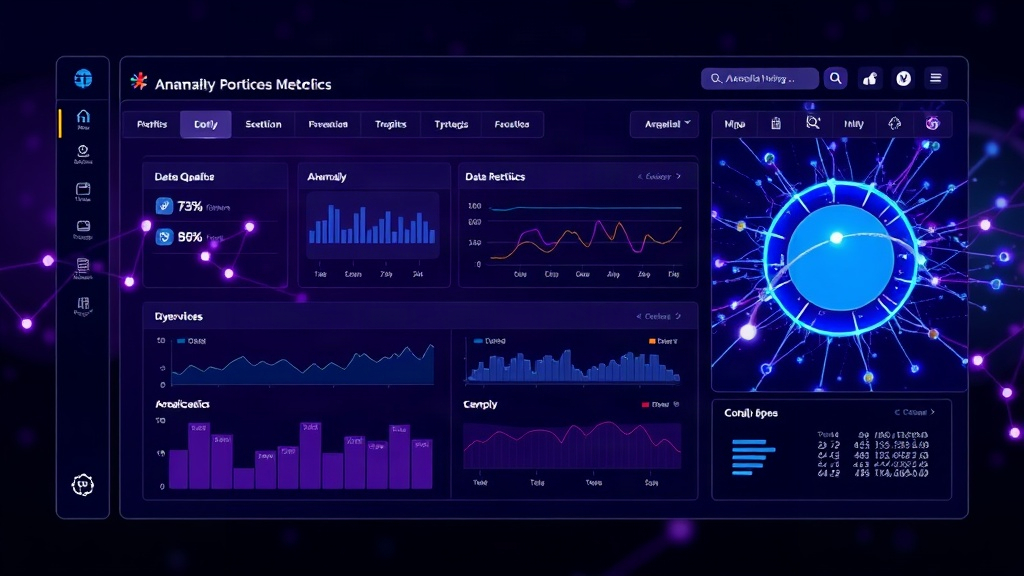
How Anomalo Works: AI-Driven Anomaly Detection
Anomalo leverages machine learning to automatically learn the expected patterns and distributions of your data. It connects to your data sources – databases, data warehouses, data lakes, and cloud storage – and begins profiling the data without requiring manual rule configuration. The system continuously monitors the data, looking for deviations from established norms. These deviations can include:
- Data Drift: Changes in the statistical properties of data over time, such as a sudden shift in the average value of a key metric or a change in the frequency of certain categories.
- Schema Changes: Unexpected modifications to the structure of the data, like new columns appearing, existing columns being removed, or data types changing.
- Data Integrity Issues: Violations of expected data constraints, such as duplicate records where they shouldn't exist, missing values in critical fields, or values falling outside an expected range.
- Outliers and Anomalies: Individual data points or small subsets of data that are statistically unusual compared to the rest of the dataset.
The AI models at Anomalo's core are designed to be adaptive. They don't just set static thresholds; they learn from the data's behavior. This allows them to detect subtle anomalies that rule-based systems would miss, and to reduce the number of false positives that plague traditional monitoring. The platform provides a centralized dashboard where users can visualize data quality trends, investigate detected anomalies, and set up alerts for critical issues.
Key Features and Benefits
Anomalo offers a suite of features designed to streamline data quality management:
- Automated Data Profiling: Anomalo automatically discovers and understands the structure, content, and relationships within your data. This eliminates the need for extensive manual data exploration.
- AI-Powered Anomaly Detection: Utilizes machine learning to identify deviations from normal data behavior, including drift, outliers, and integrity issues.
- Continuous Monitoring: Operates 24/7, ensuring that data quality is constantly overseen across all connected data sources.
- Root Cause Analysis: Provides tools to help users quickly understand why an anomaly was flagged, facilitating faster resolution.
- Integration Capabilities: Designed to integrate seamlessly with existing data stacks, supporting a wide range of data sources and destinations.
- Alerting and Notifications: Configurable alerts ensure that relevant teams are notified immediately when significant data quality issues arise.
The primary benefit of Anomalo is the proactive identification and resolution of data quality problems. By catching issues early, businesses can prevent them from propagating through their systems, saving time, resources, and avoiding costly mistakes. This leads to increased trust in data, more reliable analytics, and more effective AI/ML models.
Target Audience and Use Cases
Anomalo is built for data teams – data engineers, data scientists, analysts, and data platform managers. Any organization that relies on accurate and reliable data for its operations, analytics, or AI initiatives can benefit from Anomalo. Common use cases include:
- Ensuring Data for ML Models: Guaranteeing that the data fed into machine learning models is clean and representative, preventing model performance degradation due to poor data.
- Maintaining Data Warehouse Integrity: Monitoring data in data warehouses and data lakes to ensure its accuracy and consistency for business intelligence and reporting.
- Compliance and Governance: Helping organizations meet data governance requirements by identifying and rectifying data quality issues that could lead to compliance breaches.
- Real-time Data Quality: For applications requiring near real-time data accuracy, Anomalo can provide early warnings of quality degradation.
The platform's ability to automate complex data quality checks makes it particularly valuable for teams overwhelmed by the sheer volume and velocity of data. It frees up valuable engineering and data science time that would otherwise be spent on manual data validation, allowing them to focus on higher-value tasks.
The Future of Data Quality
Anomalo represents a shift towards more intelligent, automated data quality management. As data systems become more intricate and the demand for real-time, accurate data intensifies, tools like Anomalo will become indispensable. The surprising detail here is not the AI itself, but its application to a problem that has historically been solved with brute-force, manual rule-setting. This automation is key to scaling data quality efforts effectively.
What remains to be seen is how Anomalo will evolve to handle increasingly complex data relationships and multi-modal data sources. As data becomes more interconnected across different platforms and formats, the challenge of maintaining a holistic view of data quality will grow. Anomalo’s commitment to AI-driven anomaly detection positions it well to tackle these future challenges, ensuring that data remains a trusted asset rather than a liability.