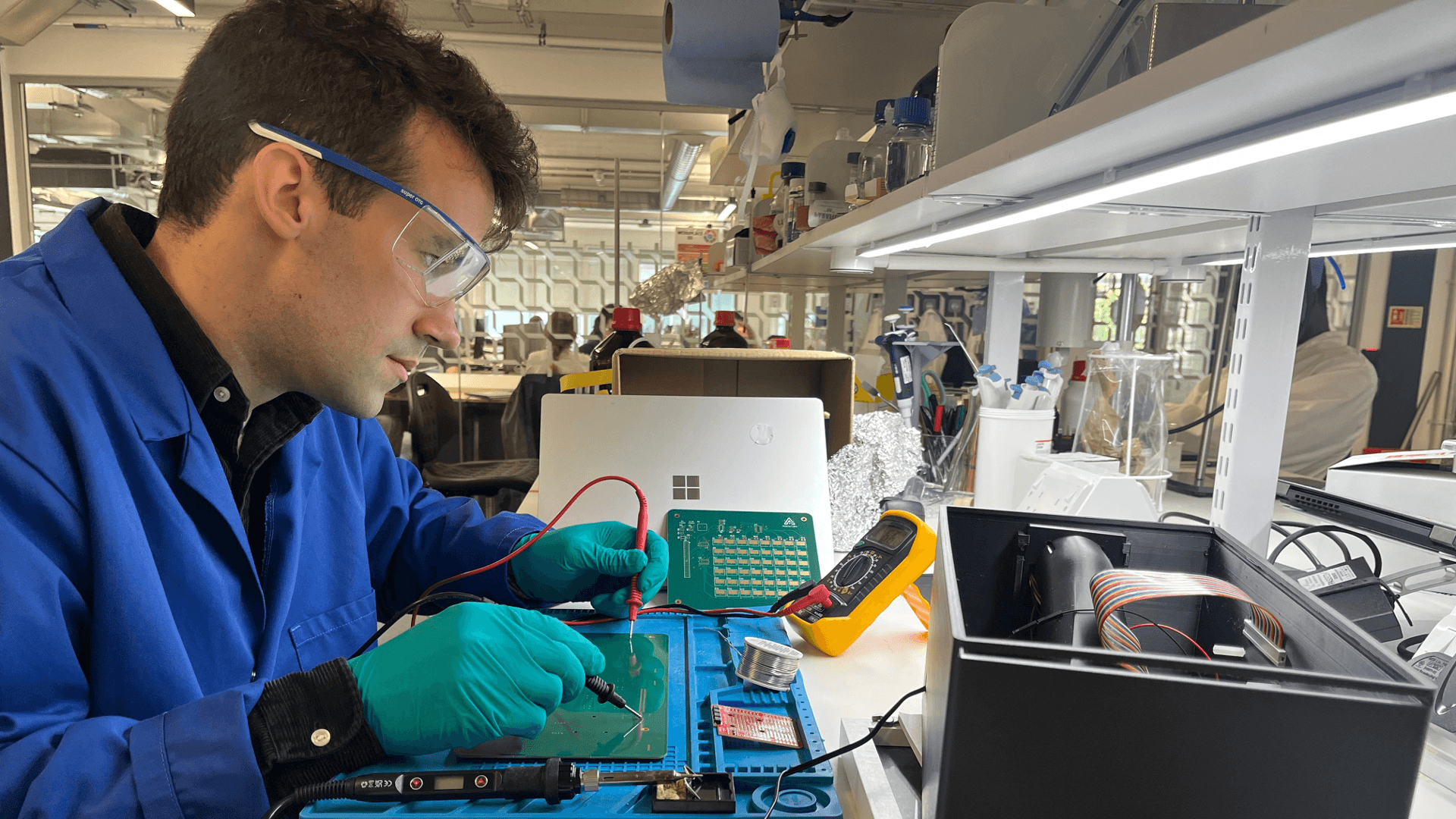
Anemo Labs Targets Disease Detection with AI Olfaction
Anemo Labs, a London-based deeptech startup, has secured £700,000 in pre-seed funding to advance its ambitious goal: giving artificial intelligence a sense of smell. The company aims to leverage AI to detect disease-related compounds by analyzing volatile organic compounds (VOCs), essentially creating an electronic nose capable of early disease diagnosis. This funding round was co-led by Zinc and SFC Capital, signaling strong investor confidence in the startup's novel approach to healthcare diagnostics.
The core of Anemo Labs' technology lies in its ability to train AI models on the complex patterns of odors associated with various diseases. Human smell, while incredibly sophisticated, can be subjective and prone to fatigue. Anemo Labs seeks to replicate and even surpass this biological capability with a digital system that offers objective, consistent, and potentially earlier detection of illnesses. This could fundamentally change how we approach diagnostic screening, moving towards non-invasive, rapid testing methods.
The Science Behind the Electronic Nose
The technology draws inspiration from the biological olfactory system, where specialized receptors in the nose detect specific molecules, sending signals to the brain for interpretation. Anemo Labs is developing a sensor array designed to capture a wide spectrum of VOCs emitted by the human body. These VOCs can be present in breath, sweat, or urine and often change in concentration or composition when a disease is present. For instance, certain cancers, metabolic disorders, and infections are known to alter the body's VOC profile.
Once the sensor array captures the VOC data, it is fed into Anemo Labs' proprietary AI algorithms. These algorithms are trained on vast datasets of VOC profiles from both healthy individuals and those with specific diseases. By identifying subtle but distinct patterns in the molecular signatures, the AI can flag potential health issues. Think of it less like a single-purpose diagnostic tool and more like a highly trained bloodhound, capable of sniffing out minute chemical trails that indicate a problem long before traditional symptoms manifest.
Applications and Future Potential
The potential applications for Anemo Labs' technology are vast and span multiple healthcare sectors. Early detection of diseases like Alzheimer's, Parkinson's, various cancers, and diabetes could significantly improve patient outcomes and reduce healthcare costs. The non-invasive nature of breath or sweat analysis makes it an attractive alternative to more burdensome diagnostic procedures. Furthermore, the system could be developed into portable devices for use in clinics, pharmacies, or even at home, democratizing access to early health screenings.
Beyond disease diagnostics, the underlying technology could also find applications in other fields. For example, monitoring air quality for specific pollutants, detecting spoilage in food products, or even identifying specific chemical signatures in industrial settings are all areas where an AI-powered sense of smell could prove invaluable. The flexibility of the AI models means they can be retrained for new detection tasks, making the platform highly adaptable.
Investor Confidence and Market Landscape
The £700,000 pre-seed funding is a crucial step for Anemo Labs, providing the capital needed for further research and development, team expansion, and the validation of their technology. Zinc and SFC Capital's involvement suggests a belief in the company's scientific foundation and market potential. This investment aligns with a broader trend of increasing interest in AI-driven healthcare solutions and novel diagnostic technologies.
While the concept of electronic noses has been explored for decades, advancements in AI and sensor technology are now making sophisticated olfactory diagnostics a tangible reality. Anemo Labs is entering a space that, while promising, requires rigorous scientific validation and regulatory approval. The company's success will hinge on its ability to demonstrate consistent accuracy, reliability, and clinical utility to healthcare providers and regulatory bodies. The surprising detail here is not the funding amount, but the rapid maturation of AI's ability to interpret complex biological signals previously thought to be solely within the domain of human biology.
Challenges and Next Steps
Despite the promising outlook, Anemo Labs faces significant challenges. Developing AI models that can reliably distinguish between the subtle VOC differences indicative of various diseases requires extensive, high-quality data. Ensuring the robustness and longevity of the sensor arrays in real-world conditions is another hurdle. Furthermore, navigating the complex regulatory landscape for medical diagnostics will be critical for market entry. The company plans to use the raised capital to build out its core team, refine its sensor technology, and begin pilot studies to validate its diagnostic capabilities.
The journey from a promising deeptech concept to a widely adopted diagnostic tool is long and arduous. However, with this initial funding secured, Anemo Labs is well-positioned to take significant strides toward realizing its vision of an AI-powered sense of smell that can revolutionize disease detection and contribute to a healthier future.