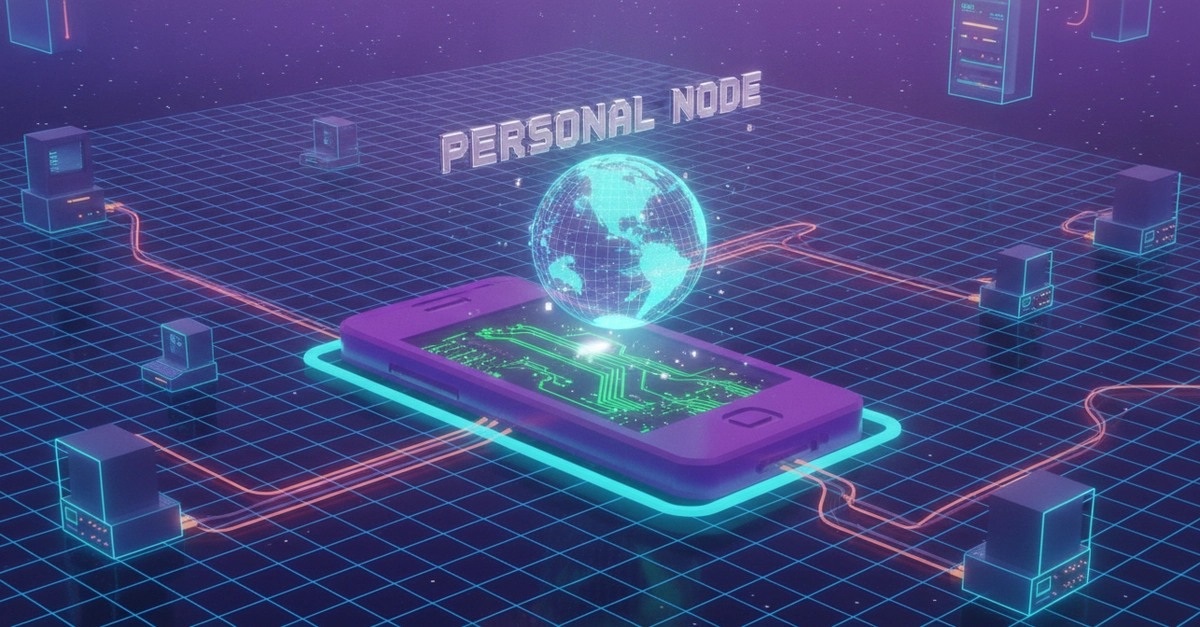
The Conventional Client-Server Model
Our smartphones typically function as clients. We use them to access information and services hosted elsewhere. Whether browsing the web, downloading files, or interacting with cloud-based APIs, the flow of data is usually unidirectional: Phone ">→
Phone → Internet → Server
This established paradigm treats mobile devices as endpoints for consumption, not distribution. However, a recent experiment explored a compelling alternative: what if a phone could temporarily step into the role of a server?
Rethinking the Phone's Role
The premise is not to transform a mobile device into a robust production server or a cloud replacement. Instead, the goal is to enable an ordinary Android phone to act as a small, local data node, offering useful information to devices in its immediate vicinity. Crucially, this transformation must occur without requiring any special privileges or modifications to the device.
The constraints for this experiment were clear: no root access, no custom ROMs, no jailbreaking, and no alterations to the base Android operating system. The objective was to leverage the device's standard capabilities to demonstrate its potential as a localized data source.
The Termux and Python Approach
To achieve this, the experiment utilized Termux, a powerful terminal emulator and Linux environment application for Android. Termux provides a command-line interface and allows users to install various packages, including programming languages and development tools.
Python was chosen as the programming language for developing the server-side logic. Its ease of use and extensive libraries make it an ideal choice for rapid prototyping and script development. By combining Termux with Python, the experimenter could create and run server applications directly on the Android phone.
The core idea was to build a minimal Python application that could listen for incoming network requests on the local network. This application would then serve pre-defined data or respond to simple queries from nearby devices. The phone, running this application, would effectively become a temporary, localized server.
Setting Up the Local Server Environment
The first step involved installing Termux on an ordinary Android phone. Once Termux was set up, Python could be installed using its package manager. This created a functional Python environment within the Termux sandbox.
The next phase involved writing a basic Python script. This script would typically:
- Import necessary modules (e.g., for networking and HTTP handling).
- Define a port number for the server to listen on. This port would need to be accessible on the local Wi-Fi network.
- Implement a simple web server (e.g., using Python's built-in `http.server` module or a lightweight framework like Flask).
- Define endpoints or routes that would serve data when requested. For this experiment, the data served could be static files, simple text messages, or basic JSON responses.
- Handle incoming connections and send back the requested data.
For instance, a script might be configured to serve a small HTML file or a JSON object containing device information when a request hits a specific URL. The phone's Wi-Fi connection would be essential, as it establishes the local network necessary for other devices to discover and connect to the phone-server.
Testing and Verification
Once the Python script was running within Termux, the experimenter could test its functionality. This involved using another device on the same local network (e.g., a laptop or another smartphone) to send HTTP requests to the IP address of the Android phone. The IP address of the phone on the local network could be found within Termux or the phone's network settings.
The requests would be directed to the specific port the Python script was listening on. If successful, the requesting device would receive the data served by the phone. This demonstrated that the phone was indeed acting as a local server, providing data to other clients on the network.
The success of this experiment hinges on the fact that standard Android devices are already equipped with the necessary hardware (Wi-Fi, processing power) and software (network stack) to participate in network communication as servers. Termux and Python simply provide the user-space tools to activate and configure this capability without needing to bypass system-level security or modify the OS itself.
Implications and Future Potential
While this experiment focuses on a very basic local data node, the implications are significant. It opens up possibilities for decentralized applications, local data sharing, and even ad-hoc networking scenarios where a phone could serve as a temporary information hub for a small group.
Consider scenarios like:
- Local File Sharing: A phone could temporarily host files for quick sharing within a small team or group without relying on cloud services.
- Offline Information Access: In areas with limited or no internet connectivity, a phone could serve as a local repository for essential information (e.g., maps, contact lists, event schedules) accessible to nearby devices.
- Decentralized Data Collection: For small-scale, localized data gathering, phones could act as collection points, aggregating data from nearby sensors or user inputs before syncing to a central location later.
- Gaming or Collaboration: Simple multiplayer games or collaborative tools could leverage phones as local servers for peer-to-peer interaction within a limited range.
The primary advantage is the ubiquity of smartphones. Most people carry a capable computing device with network connectivity. Enabling these devices to act as local servers, even in a limited capacity, democratizes the ability to distribute information and services, moving beyond the traditional client-server model that relies on centralized infrastructure.
The experiment highlights a shift from viewing phones solely as passive consumers of data to active participants in local data distribution networks. This approach requires no modification to the operating system, making it accessible to a broad range of users and devices. It's a subtle but powerful demonstration of the untapped potential within the devices we carry every day.
Unanswered Questions
What remains to be fully explored is the practical scalability and security model for such localized phone-based servers. While this experiment proves the concept for a single, trusted network, real-world applications would need robust mechanisms for authentication, authorization, and data integrity, especially if multiple untrusted devices were involved.