The Promise of Personalized AI Education
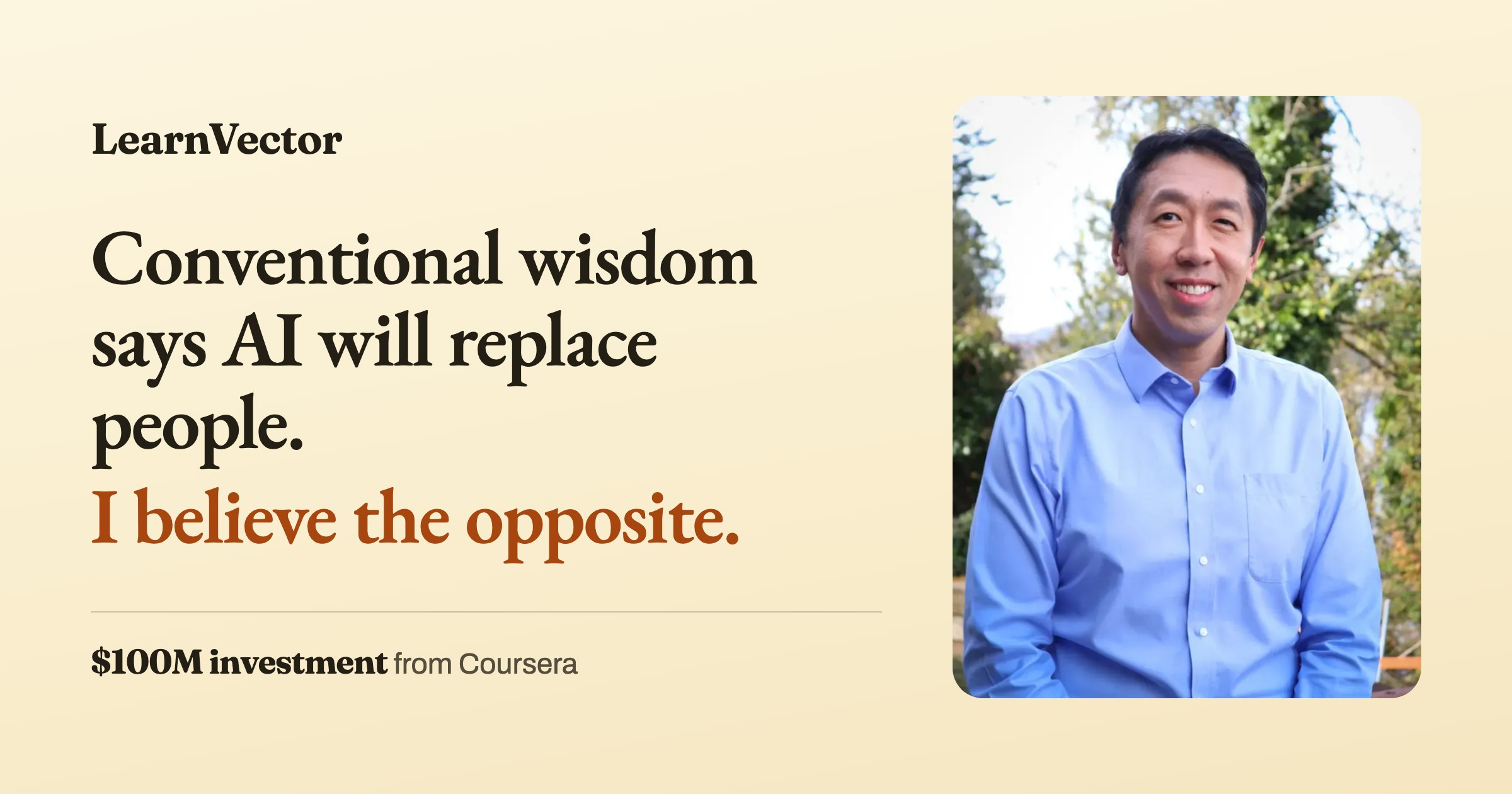
Andrew Ng, a towering figure in artificial intelligence, has co-founded LearnVector, a new company focused on delivering personalized, one-to-one learning experiences through AI. The platform aims to bridge the gap between traditional education and the growing demand for scalable, individualized instruction. In a world saturated with generic online courses, LearnVector seeks to offer a more engaging and effective approach by mimicking the benefits of a dedicated human tutor.
The core idea behind LearnVector is to leverage advanced AI to create adaptive learning paths. Unlike static online modules, LearnVector's system is designed to understand each student's unique pace, learning style, and knowledge gaps. It then tailors content, explanations, and practice problems in real-time. This dynamic adjustment is crucial for effective learning, ensuring that students are neither bored by material they already know nor overwhelmed by concepts they haven't grasped.
Ng's involvement signals a significant push into the EdTech space for AI. His previous work at Coursera and deep understanding of machine learning provide a strong foundation for this venture. The company's mission statement, as presented on their website, emphasizes building AI systems that can provide individualized instruction to millions, a scale rarely achievable with human tutors alone. This ambition is not just about delivering content; it's about fostering genuine understanding and skill development.
How LearnVector Delivers One-to-One Experiences
At its heart, LearnVector functions as an intelligent tutor. When a student engages with the platform, the AI assesses their current knowledge. This assessment isn't a one-off test; it's an ongoing process. As the student progresses through lessons, answers questions, and attempts exercises, the AI continuously monitors their performance. Key metrics include accuracy, speed, hesitation, and the types of errors made.
Based on this continuous feedback loop, LearnVector's AI dynamically adjusts the learning path. If a student struggles with a particular concept, the system might offer supplementary explanations, break down the problem into smaller steps, or provide simpler prerequisite material. Conversely, if a student demonstrates mastery, the AI can accelerate their progress, introduce more complex challenges, or offer advanced topics to maintain engagement and foster deeper learning.
The platform's approach to content delivery is also designed for personalization. Instead of a fixed curriculum, LearnVector can generate explanations and examples tailored to the individual learner's background and interests. For instance, a student interested in gaming might receive coding examples framed within game development contexts, making the material more relatable and motivating. This ability to contextualize learning is a significant departure from many existing online educational tools.
Furthermore, LearnVector aims to simulate the interactive nature of a human tutor. This includes asking probing questions to check for understanding, providing constructive feedback on errors, and offering encouragement. The goal is to create an environment where students feel supported and guided, fostering confidence and a willingness to tackle difficult material.
The Broader Impact on AI and Education
LearnVector's emergence highlights a critical trend in AI: its application to deeply human-centric problems. While AI has excelled in areas like data analysis and automation, its potential in education, particularly in providing nuanced, personalized support, is just beginning to be fully explored. The company's focus on one-to-one experiences suggests a future where AI tutors are not just supplementary tools but central components of a student's learning journey.
This approach has the potential to democratize high-quality education. Access to skilled tutors is often limited by cost and geography. By scaling personalized instruction through AI, LearnVector could make effective, tailored learning accessible to a much wider audience, including students in underserved communities or those with specific learning needs.
The development of such sophisticated AI also pushes the boundaries of machine learning research. Creating systems that can understand complex subjects, diagnose learning difficulties, and adapt their teaching strategies requires advancements in natural language understanding, pedagogical modeling, and reinforcement learning. The challenges are significant, but the potential rewards—a more educated global population—are immense.
What remains to be seen is how LearnVector will navigate the complexities of different educational domains and age groups. Adapting AI tutoring for advanced subjects like quantum physics versus foundational skills like early literacy presents distinct challenges. The platform's success will hinge on its ability to generalize its AI capabilities across a broad spectrum of knowledge and learning requirements, while also ensuring pedagogical soundness and ethical deployment.
Navigating the Future of Learning
LearnVector's ambition to provide one-to-one AI learning experiences at scale is a bold step forward in educational technology. By combining Andrew Ng's expertise with cutting-edge AI, the company is positioned to redefine how students learn and how educational content is delivered. The focus on personalization, adaptive learning, and simulated tutor interaction addresses key limitations of current digital learning platforms.
The implications for the future of education are profound. If successful, LearnVector could set a new standard for online learning, moving beyond passive content consumption to active, guided knowledge acquisition. The company faces significant technical and pedagogical hurdles, but the potential to unlock individual learning potential on a global scale makes this a venture worth watching closely.