The End of the Binary Keyboard
For decades, the mechanical keyboard operated on a simple, reliable principle: a physical contact closed a circuit, registering a keypress. This binary input system, a cornerstone of human-computer interaction, has been the de facto standard. However, recent market shifts, exemplified by the discounting of premium peripherals like Razer’s Huntsman V3 Pro, signal a fundamental change. This isn't just a sales cycle blip; it's the commoditization of analog keyboard technology. Analog switches, whether optical or Hall Effect, replace the discrete on/off state with continuous telemetry, measuring the precise depth of a keypress.
This transition from a simple 0 or 1 to a continuous spectrum of values introduces substantial engineering trade-offs. The Huntsman V3 Pro, for instance, employs infrared light beams and photodetectors to gauge keypress depth to tenths of a millimeter. This continuous tracking unlocks advanced features such as adjustable actuation points and rapid trigger functionality, where a key can be re-pressed before it fully returns to its resting state. While these features offer a more nuanced and responsive user experience, particularly for gamers, they come at a significant engineering cost.
Engineering Complexities of Continuous Telemetry
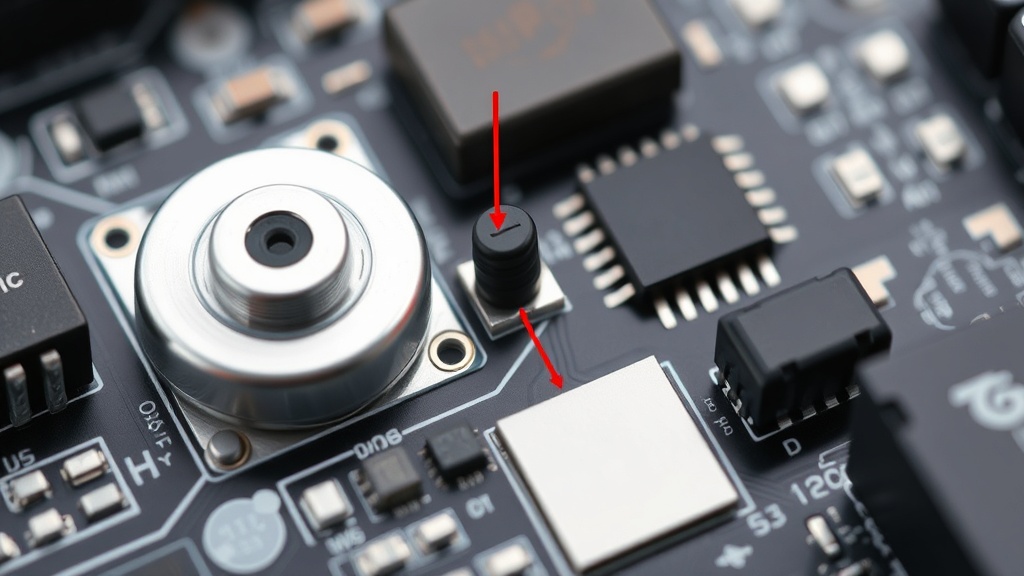
The core challenge lies in translating continuous physical input into usable digital data. Traditional mechanical switches are straightforward: detect contact, send interrupt. Analog switches require sophisticated sensing mechanisms. Optical switches use light interruption or modulation, while Hall Effect switches rely on magnetic field variations. Both demand precise calibration and robust sensor integration.
Consider the data processing pipeline. Instead of a simple interrupt, the keyboard controller must continuously sample analog sensor data. This data then needs to be interpreted, filtered, and mapped to game or application inputs. This requires more powerful microcontrollers, more complex firmware, and significantly more sophisticated algorithms than a binary system. The firmware must manage polling rates, debouncing (which is fundamentally different for analog inputs), and the mapping of analog values to logical actions. For example, implementing a variable actuation point means the firmware needs to track the key's position relative to a dynamically set threshold, not just a fixed physical contact point.
The engineering effort extends to the hardware itself. The switches themselves are more complex and expensive to manufacture. The printed circuit boards (PCBs) need to accommodate these new switch types, potentially requiring different trace layouts, power delivery considerations, and signal integrity management for the analog sensors. Furthermore, the increased data throughput from continuous sampling can strain the USB interface, necessitating optimized communication protocols to avoid bottlenecks and latency.
The Trade-offs: Performance vs. Cost and Reliability
The primary benefit of analog keyboards is enhanced control. Gamers can achieve variable input, akin to an analog joystick or gamepad trigger, allowing for nuanced actions like walking slowly by partially pressing a key or accelerating by pressing it further. Rapid Trigger functionality, where the key resets immediately upon upward travel, enables faster repeated inputs, crucial in fast-paced games. However, these advancements introduce several trade-offs:
- Cost: The more complex analog switches and the required supporting hardware (advanced microcontrollers, sensitive sensors, precise PCBs) drive up manufacturing costs. This cost is inevitably passed on to the consumer, making analog keyboards a premium product.
- Durability and Reliability: While mechanical switches are known for their longevity, the intricate analog components, particularly optical sensors and delicate magnetic field detectors, may be more susceptible to dust, liquid damage, or physical wear over time. The long-term reliability of these complex systems in demanding environments remains a concern.
- Firmware Complexity: The software side is equally challenging. Developing and maintaining firmware that accurately translates analog signals into desired actions, while also supporting features like per-key profiles and custom actuation points, requires significant engineering resources and expertise. Bug fixes and updates for such complex firmware can be more time-consuming and intricate.
- Standardization: The analog keyboard market is still nascent. Unlike the relatively standardized mechanical switch offerings (e.g., Cherry MX types), analog switches have varying implementations and performance characteristics across manufacturers. This lack of standardization can lead to confusion for consumers and fragmentation in software support.
The market discounting of premium analog keyboards suggests that consumers are not yet fully convinced the added cost and complexity justify the performance gains. It could indicate a saturation point in the enthusiast market for high-end peripherals, or perhaps a need for more compelling use cases beyond niche gaming applications.
The Broader Implications for HCI
The shift towards analog input in keyboards is part of a larger trend in human-computer interaction, moving away from purely digital, discrete commands towards more nuanced, continuous control. This parallels advancements in touchscreens, VR controllers, and even haptic feedback systems, all aiming to create more intuitive and expressive interfaces.
For developers and engineers, this paradigm shift necessitates a re-evaluation of input handling. Traditional event-driven models based on discrete key presses may need to evolve to accommodate continuous analog data streams. This could involve developing new frameworks for interpreting analog input, optimizing data processing pipelines, and considering the user experience implications of variable input sensitivity. The engineering cost is not just in the hardware; it's in the entire software stack that interacts with these new input devices.
The commoditization of analog switches, as indicated by market discounting, suggests that the technology is maturing. However, the engineering challenges remain substantial. The question is whether the industry can streamline manufacturing, improve reliability, and develop compelling, cross-application use cases to justify the continued investment and cost for the average user. If analog input is to become the norm, the engineering hurdles must be overcome to make it as accessible and reliable as the binary switches it replaces.