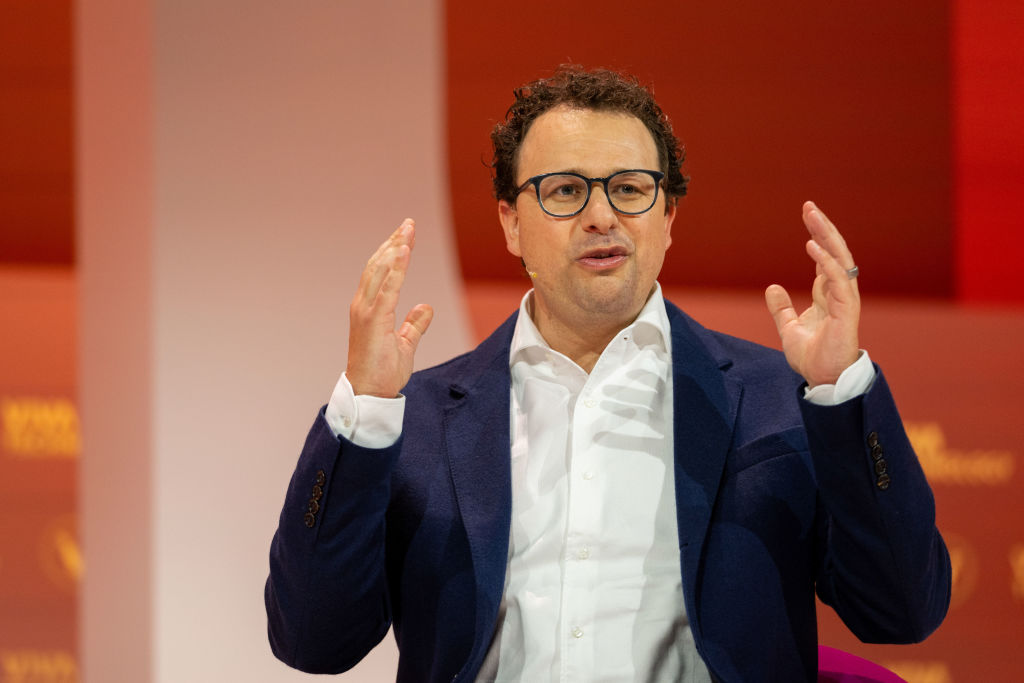
Amodei's Nuanced Stance on Open-Weight Models
Anthropic founder and CEO Dario Amodei has clarified his position on open-weight models, stating that he does not fundamentally oppose them. This statement comes amidst ongoing debates within the AI community about the risks and benefits of making powerful AI models freely accessible. Amodei's remarks suggest a pragmatic approach, acknowledging the potential for innovation and collaboration that open-weight models can foster. However, his perspective is not without caveats, as he carefully distinguishes between general open-weight development and specific geopolitical concerns.
The distinction Amodei draws is crucial. While the open-weight movement emphasizes democratization and rapid iteration, it also raises questions about control, safety, and the potential for misuse. Amodei’s apparent comfort with the concept, when viewed in isolation, indicates a belief that responsible development practices can mitigate many of these risks. This aligns with a segment of the AI research community that champions transparency and shared progress as key drivers of advancement. The ability for a wider array of researchers and developers to inspect, modify, and build upon existing models can accelerate discovery and identify vulnerabilities more effectively. Think of it less like a free-for-all and more like a public library of advanced tools, where the community collectively maintains and improves the collection.
Geopolitical Concerns: The China Factor
Amodei's primary concern, however, centers on the accelerating pace of AI development in China. He expressed apprehension about the speed at which Chinese AI capabilities are advancing, suggesting it poses a different category of risk compared to the general challenges of open-weight models. This concern is not about the models themselves being inherently dangerous, but rather about the potential for a geopolitical competitor to rapidly gain a significant technological advantage. The implications, in Amodei's view, extend beyond the typical safety and ethical discussions surrounding AI and touch upon national security and global economic competitiveness.
The nuance here is that Amodei isn't arguing for shutting down open-weight research globally. Instead, he is highlighting a specific geopolitical imbalance. The fear is that if one nation or bloc achieves a substantial lead in AI, particularly in areas with dual-use potential (like advanced language models that could be adapted for sophisticated cyber operations or propaganda), it could disrupt the global balance of power. This concern is amplified by the rapid, often opaque, advancements reported from Chinese AI labs. The speed of progress, coupled with a different regulatory and ethical framework, creates a scenario that Amodei believes warrants serious attention from Western AI developers and policymakers.
Balancing Innovation and Security
Amodei's statements underscore the complex balancing act that leading AI companies face. On one hand, they are driven by the imperative to innovate and push the boundaries of what AI can achieve. Open-weight models can be powerful tools in this pursuit, enabling faster experimentation and broader adoption. On the other hand, there is a growing awareness of the potential risks, ranging from job displacement and algorithmic bias to existential threats and the weaponization of AI. The challenge is to foster an environment where innovation can thrive without compromising safety and security, especially in the face of rapidly evolving global AI landscapes.
The conversation around AI safety and regulation is far from settled. Amodei's perspective adds a significant voice to the discussion, emphasizing that concerns about AI development cannot be monolithic. They must account for both the intrinsic properties of the technology itself and the geopolitical context in which it is being developed. The path forward likely involves a multi-faceted approach, including continued research into AI safety, thoughtful regulation, and international dialogue to ensure that AI development benefits humanity as a whole, rather than creating new avenues for conflict or dominance.
What remains to be seen is how this dual concern – the potential of open-weight models and the geopolitical race – will shape future AI development strategies and policy. Will companies like Anthropic continue to advocate for guarded access to their most advanced models, while simultaneously pushing for greater transparency from international competitors? The industry is at a critical juncture, and Amodei’s comments serve as a reminder of the profound strategic considerations at play.