The Challenge of Legacy Code
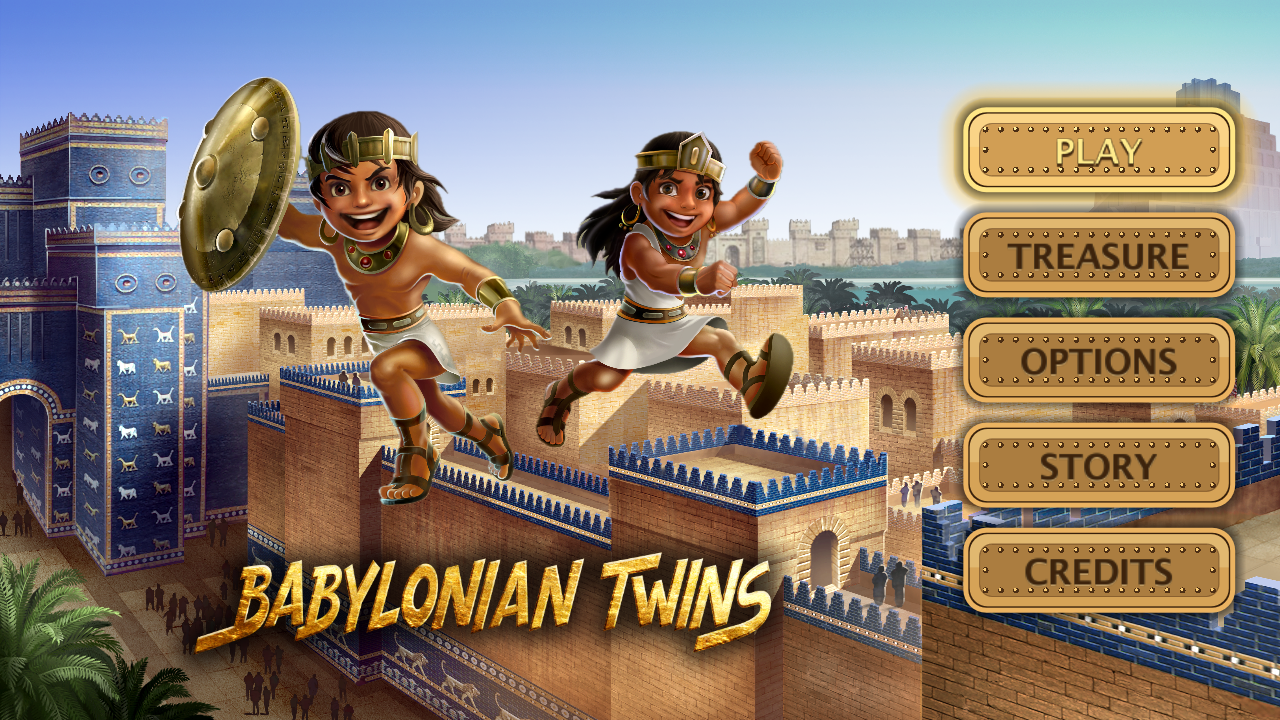
Bringing a 1993 Amiga game into the modern era presents a unique set of challenges. The original game, developed for the Amiga platform, relied heavily on 68000 assembly language. This low-level programming language, while offering direct hardware control and peak performance in its day, is notoriously difficult to read, understand, and maintain decades later. The developer, facing the daunting task of porting the game to the Godot Engine, decided to explore an unconventional approach: using a Large Language Model (LLM) to interpret the assembly code.
The core problem is that 68000 assembly is an archaic language. It lacks the high-level abstractions, clear variable names, and structured programming paradigms that modern developers take for granted. A typical line of assembly might look like `MOVE.W D0, (A0)+`, which translates to moving a word-sized value from register D0 to the memory location pointed to by A0, and then incrementing A0. While efficient, understanding the overall logic of a complex program requires painstaking reverse-engineering and deep familiarity with the processor architecture. For a game with potentially tens of thousands of lines of assembly, this task can be prohibitively time-consuming.
Leveraging LLMs for Code Translation
The developer's innovative strategy involved feeding the 68000 assembly code into an LLM. The goal was not to have the LLM directly rewrite the game, but to use it as an intelligent assistant for understanding the existing logic. By prompting the LLM to explain specific code blocks, identify patterns, and even suggest equivalent C or GDScript (Godot's scripting language) constructs, the developer could accelerate the reverse-engineering process. Think of it less like an automated translator and more like having an expert assembly language archaeologist who can quickly point out the function of obscure glyphs and symbols.
The process involved iterative prompting. The developer would present a segment of assembly code and ask the LLM to describe its purpose. For example, a prompt might be: "Explain what this block of 68000 assembly code does, focusing on its effect on game state." The LLM, trained on a vast corpus of text and code, could often infer the intent behind the low-level instructions, recognizing common routines for graphics manipulation, input handling, or game logic. This allowed the developer to build a conceptual understanding of the original game's mechanics without having to manually trace every single instruction.
Translating Logic to Godot
Once the logic was understood, the next step was to reimplement it within the Godot Engine. This involved writing new code in GDScript or C# that replicated the functionality identified in the assembly. The LLM could assist here as well, by helping to translate specific algorithmic patterns or data structures from the assembly's implicit representation into Godot's object-oriented framework. For instance, if the assembly handled sprite animation frames through a series of memory offsets and conditional jumps, the LLM could help conceptualize how to represent that using Godot's animationPlayer node or a custom script.
This phase required careful mapping of Amiga-specific hardware interactions to Godot's abstract rendering and input systems. Amiga sprites, custom chips, and interrupt handling are vastly different from the scene tree, nodes, and signals in Godot. The LLM's ability to process and explain complex relationships was crucial in bridging this gap. It helped in understanding how certain visual effects or game behaviors were achieved on the Amiga, enabling the developer to find equivalent, albeit differently implemented, solutions in Godot.
Surprising Discoveries and Future Implications
The surprising detail here is not the success of the port itself, but the effectiveness of an LLM in a task that traditionally requires deep, specialized human expertise. While the LLM didn't write perfect, production-ready code, its ability to act as an interpretive layer for highly obscure assembly was unexpectedly powerful. It democratizes the process of retro game preservation and modernization, potentially allowing more developers to tackle legacy projects without years of dedicated reverse-engineering study.
This approach opens up new avenues for game preservation. Many classic games exist only in compiled binary form, with source code lost to time. Using LLMs to understand and translate these binaries could unlock a treasure trove of gaming history, making them playable and adaptable for future generations. It also hints at broader applications in software archaeology, where understanding legacy systems is critical for maintenance, migration, or security analysis.
What's Next for the Game?
The ported game now runs on a modern engine, retaining its original feel while benefiting from Godot's features. This project serves as a compelling proof of concept for using AI as a tool in game development and preservation. The developer demonstrated that with the right tools and techniques, even the most archaic codebases can be brought back to life. The question now is how widely this methodology will be adopted by other developers facing similar challenges with older game titles or software systems.