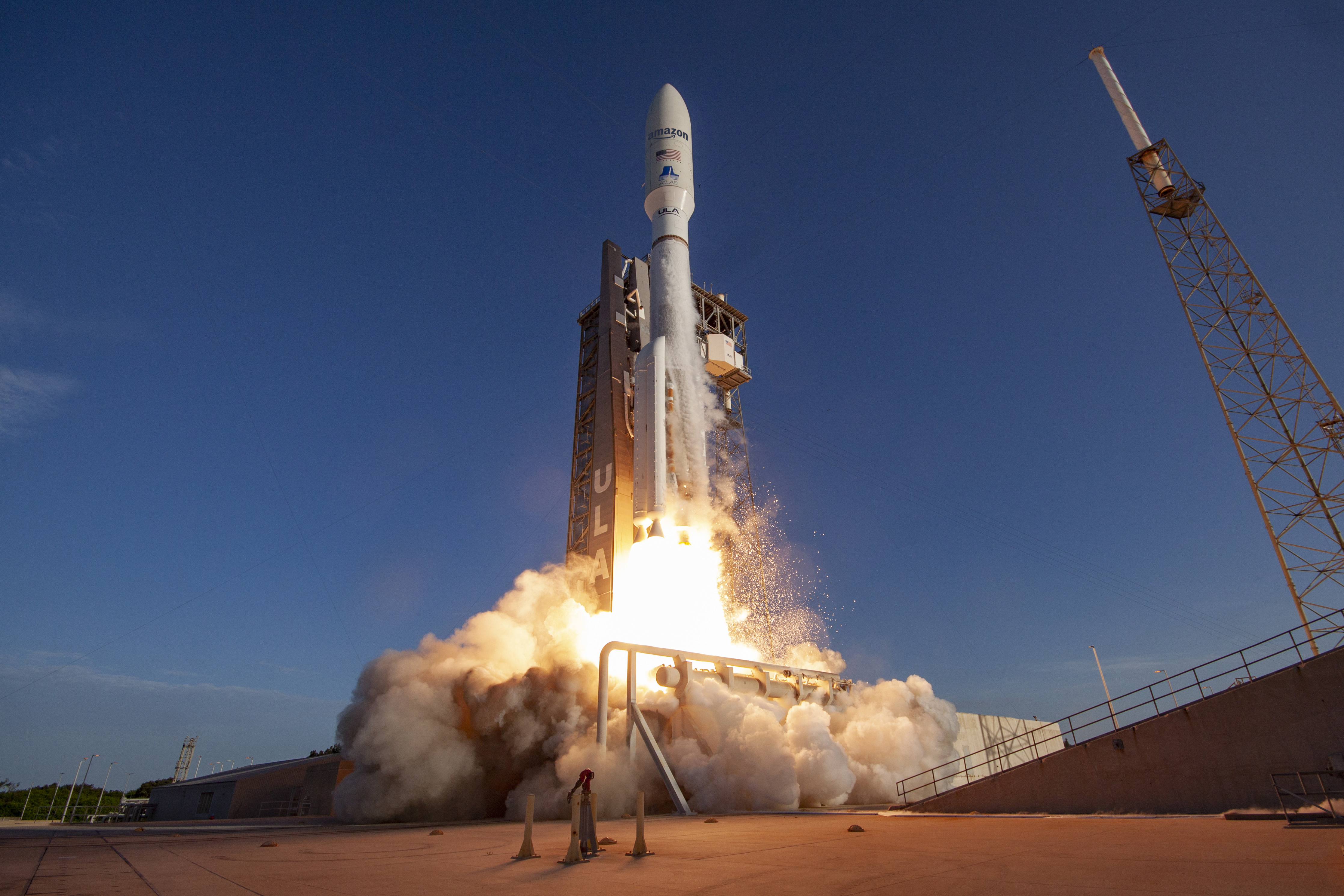
Amazon's Ambitious Satellite Play
Amazon is significantly expanding its ambitions with Project Kuiper, its low Earth orbit (LEO) satellite constellation. While initially focused on providing broadband internet to underserved areas, the company is now setting its sights on a more direct and potentially disruptive market: mobile phone connectivity. This strategic pivot places Amazon squarely in competition with SpaceX's Starlink, which has already begun offering similar direct-to-device satellite services.
The move signals a deepening commitment to Kuiper and a clear indication that Amazon views satellite technology as a critical component of its future infrastructure, not just for fixed broadband but for ubiquitous mobile communication. The implications for consumers and the broader telecommunications industry are substantial, potentially ushering in an era where cellular dead zones become a relic of the past, accessible via satellite from major tech players.
Project Kuiper: The Technical Underpinnings
Project Kuiper aims to deploy a constellation of over 3,200 satellites to provide high-speed, low-latency broadband internet. Unlike some geostationary satellites that are hundreds of thousands of miles away, Kuiper's satellites will orbit much closer to Earth, enabling faster response times. This proximity is crucial for enabling real-time applications like video conferencing and online gaming, and it's even more critical for the seamless experience expected from mobile phone services.
Amazon has been making significant strides in developing the necessary technology. The company has secured regulatory approval from the Federal Communications Commission (FCC) for its constellation and has conducted successful test launches of its prototype satellites. These tests have focused on validating the satellite design, communication payloads, and ground infrastructure necessary for a global network. The development of custom user terminals, designed to be affordable and easy to deploy, is also a key part of Kuiper's strategy to drive adoption.
Direct-to-Device: The New Frontier
The decision to pursue direct-to-device connectivity is a significant escalation. This capability allows standard smartphones, without any special hardware modifications, to connect directly to satellites for services like text messaging, emergency calls, and potentially even basic data. This bypasses the need for dedicated satellite phones or expensive add-on devices, making satellite communication accessible to a much broader audience.
For consumers, this means that even in remote areas or during terrestrial network outages, a connection could be available. This capability is particularly valuable for emergency services, search and rescue operations, and for individuals who frequently travel to areas with poor or non-existent cellular coverage. Amazon's scale and existing customer base provide a powerful platform for rolling out such a service, potentially reaching millions of users rapidly.
The Competitive Landscape: SpaceX and Beyond
SpaceX has already made significant inroads into the direct-to-device market with its Starlink service. Through partnerships with carriers like T-Mobile, SpaceX has demonstrated the viability of connecting standard smartphones to its satellites. This has set a precedent and created an expectation among consumers for this type of connectivity.
Amazon's entry into this space intensifies the competition. Both companies are leveraging their extensive resources, technological expertise, and ambitious LEO constellations to capture market share. The rivalry is not just about providing internet access; it's about defining the future of mobile communication. The success of these ventures could reshape the traditional mobile carrier market, forcing established players to adapt or risk becoming obsolete in coverage-critical areas.
Beyond SpaceX, other players are also exploring satellite-to-device technologies, though perhaps with less aggressive timelines. Companies like Lynk Global and AST SpaceMobile are also developing solutions, indicating a broader industry trend toward integrating satellite and terrestrial networks. However, Amazon's financial backing and existing global logistics network give Kuiper a formidable advantage in terms of scaling and deployment speed.
Implications for the Telecom Industry
The advent of satellite-based mobile connectivity poses a direct challenge to the traditional business model of mobile network operators. While these operators have invested billions in building out terrestrial cellular towers, satellite networks offer a compelling alternative for reaching the last mile and covering vast geographic areas where terrestrial infrastructure is economically unfeasible. This could lead to a significant shift in how mobile coverage is delivered and priced.
For users, this competition is likely to result in more choices and potentially lower costs for mobile connectivity, especially in previously underserved regions. It also raises questions about spectrum allocation and regulatory frameworks. How will regulators manage the increasing demand for spectrum to support both terrestrial and satellite mobile services? And what will be the long-term impact on the established relationships between mobile carriers and their subscribers?
Amazon's strategy with Kuiper appears to be multifaceted. Beyond direct-to-device services, the company is also expected to leverage its cloud computing arm, AWS, to provide ground infrastructure and manage data flow. This integration could create a powerful, end-to-end solution that is difficult for competitors to replicate. The sheer scale of Amazon's ambition suggests that Kuiper is not merely a side project but a core strategic initiative designed to influence the future of global connectivity.
The Road Ahead
Project Kuiper is still in its developmental stages, and the full rollout of its mobile connectivity services will take time. Challenges remain, including ensuring reliable performance across diverse environmental conditions, managing the complex orbital mechanics of a large constellation, and achieving the cost targets necessary for mass adoption. However, Amazon's commitment and the rapid progress observed so far indicate that Project Kuiper is a serious contender in the race to provide ubiquitous mobile connectivity.
The ultimate success of Amazon's venture will depend on its ability to execute its ambitious deployment plans, secure necessary regulatory approvals worldwide, and offer a compelling user experience at a competitive price point. If successful, Project Kuiper could fundamentally alter the landscape of mobile communication, turning previously unreachable areas into connected spaces and intensifying the competition in the global satellite communications market.