Introduction to Graph Databases
Many applications today deal with data that is not just a collection of isolated records but rather a web of interconnected entities. Traditional relational databases, while powerful for structured tabular data, can struggle to efficiently store, manage, and query these complex relationships. Representing a social network, a supply chain, or a knowledge graph in rows and columns can lead to cumbersome queries, performance bottlenecks, and increased development complexity. This is precisely where graph databases excel.
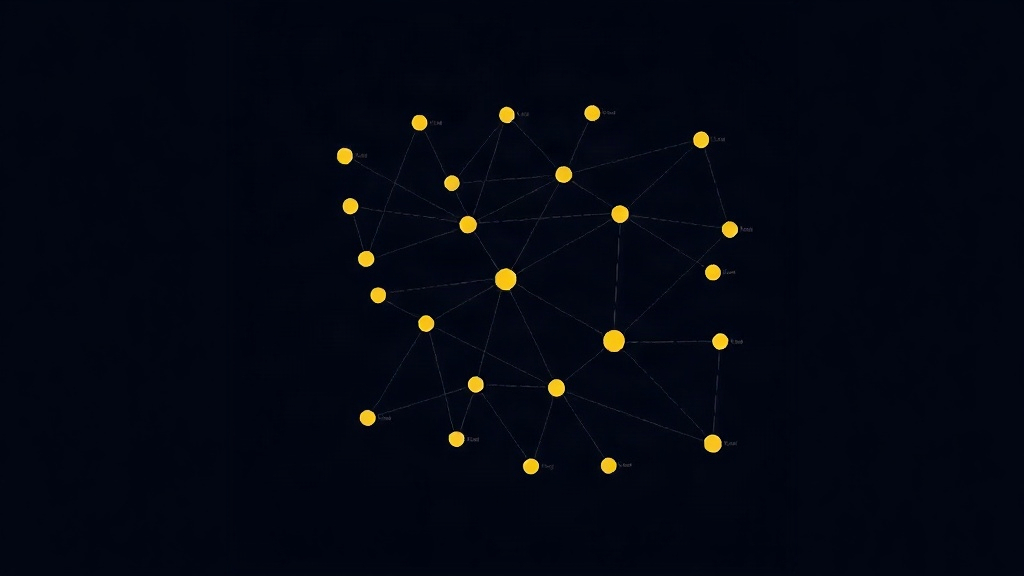
Graph databases shift the focus from tables and rows to nodes (entities) and relationships (connections between entities). This model is inherently more intuitive and performant for highly connected data. Instead of performing complex JOIN operations across multiple tables, graph databases traverse relationships directly, making queries on interconnected data significantly faster and simpler.
What is Amazon Neptune?
Amazon Neptune is a fully managed graph database service offered by Amazon Web Services (AWS). It is purpose-built to store and query highly connected data, making it an ideal choice for applications such as knowledge graphs, recommendation engines, fraud detection systems, and social networking platforms. Neptune supports two popular graph models: Property Graph and RDF (Resource Description Framework).
In the Property Graph model, data is represented as nodes, relationships, and properties. Nodes represent entities (e.g., a person, a product, a company), relationships represent how these entities are connected (e.g., 'knows', 'purchased', 'works for'), and properties are key-value pairs that describe nodes and relationships (e.g., a person node might have properties like 'name' and 'age', while a 'purchased' relationship might have a 'date' property).
The RDF model represents data as triples: subject, predicate, and object. For example, in the triple ('Alice', 'knows', 'Bob'), 'Alice' is the subject, 'knows' is the predicate (representing the relationship), and 'Bob' is the object. RDF is often used for semantic web applications and knowledge representation.
Querying Data in Neptune
Amazon Neptune provides support for powerful query languages tailored for graph data. For the Property Graph model, Neptune supports Apache TinkerPop Gremlin, a graph traversal language that allows for expressive and efficient querying of graph structures. For the RDF model, Neptune supports SPARQL, the standard query language for RDF data.
Gremlin, for instance, allows developers to write queries that intuitively describe the path or pattern they are looking for in the graph. A simple Gremlin query might look like `g.V().has('name', 'Alice').out('knows').values('name')`, which would find all people Alice knows by name. This is a far cry from complex SQL JOINs that might be required to achieve the same in a relational database.
Key Features and Benefits of Amazon Neptune
Neptune offers several compelling features that make it a robust and scalable solution for graph database needs:
- Fully Managed Service: AWS handles the heavy lifting of database administration, including hardware provisioning, patching, setup, configuration, and backups. This allows developers to focus on building applications rather than managing infrastructure.
- High Availability and Durability: Neptune is designed for high availability, with automatic data replication across multiple Availability Zones (AZs) within an AWS region. It offers durable storage that automatically backs up data and supports point-in-time recovery.
- Scalability: Neptune can scale both read and write operations. It supports read replicas to scale read throughput and can scale storage independently up to petabytes.
- Performance: It is optimized for high-throughput, low-latency graph data queries, leveraging an optimized distributed storage engine.
- Security: Neptune provides robust security features, including encryption at rest and in transit, network isolation via Amazon VPC, and IAM integration for access control.
- Support for Popular Graph Models and Languages: As mentioned, it supports both Property Graph (with Gremlin) and RDF (with SPARQL), providing flexibility for different use cases and developer preferences.
Use Cases for Amazon Neptune
The ability to efficiently query highly connected data opens up a wide range of applications:
- Recommendation Engines: Systems like those used by Netflix or Amazon.com can leverage graph databases to understand user preferences, item similarities, and complex relationships to provide personalized recommendations. For example, 'users who bought X also bought Y', or 'people who liked movie A also liked movie B'.
- Fraud Detection: By modeling transactions, accounts, and entities as a graph, Neptune can help identify suspicious patterns and rings of fraudulent activity that might be missed by traditional methods. For instance, detecting multiple accounts linked by the same device or IP address engaging in unusual transaction patterns.
- Knowledge Graphs: Building comprehensive knowledge graphs for domains like life sciences, finance, or enterprise data allows for sophisticated querying and discovery of insights.
- Social Networking: Representing users, friendships, groups, and interactions as a graph is a natural fit, enabling features like 'people you may know' or analyzing network structures.
- Network and IT Operations: Mapping infrastructure components, dependencies, and their relationships can aid in root cause analysis and impact assessment during outages.
The Future of Connected Data
As applications become more sophisticated and data more interconnected, graph databases like Amazon Neptune are moving from niche solutions to essential components of modern data architectures. The ability to intuitively model and query relationships is becoming a critical differentiator for businesses seeking to extract deeper insights and build more intelligent applications. The fully managed nature of Neptune further lowers the barrier to entry, allowing more organizations to harness the power of graph data without the operational overhead.
What remains to be seen is how seamlessly Neptune will integrate with other emerging AWS AI and ML services to power even more advanced predictive and analytical capabilities directly on graph data, potentially blurring the lines between graph traversal and predictive modeling.