
Amazon's Texas Data Center and the Environmental Footprint of AI
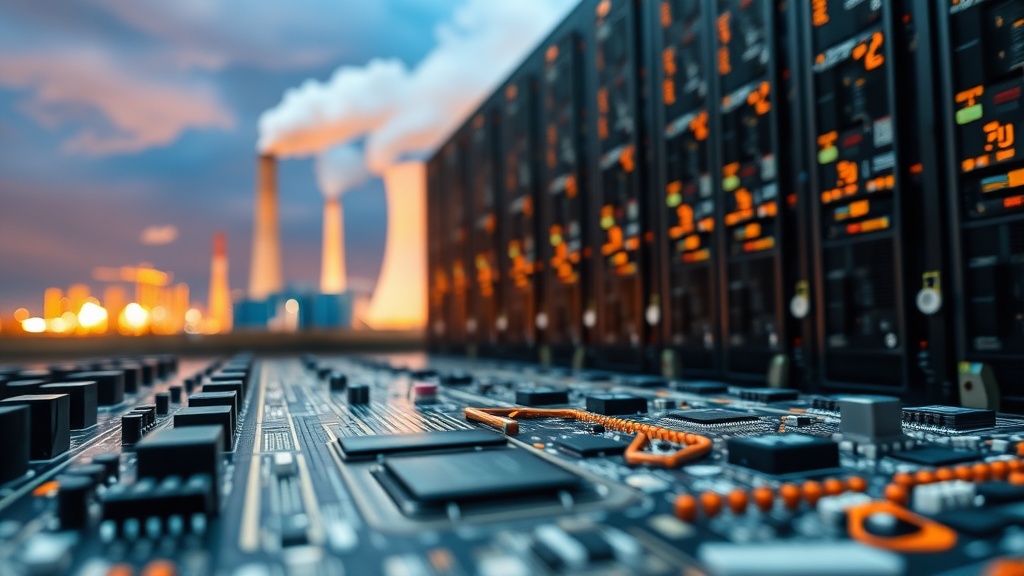
Amazon Web Services (AWS) is set to operate a massive new data center in North Texas, a development that, while promising for cloud computing capacity, is drawing significant environmental scrutiny. The facility's energy demands will be largely met by the nearby Wolf Hollow Generating Station, a natural gas-fired power plant that, according to The New York Times, is on track to become the single most polluting power plant in the United States. This situation highlights a growing tension between the insatiable energy needs of artificial intelligence and cloud infrastructure, and the urgent imperative to decarbonize the global economy.
The Wolf Hollow plant, located in Granbury, Texas, is a 975-megawatt facility that burns natural gas to generate electricity. While natural gas is often presented as a cleaner alternative to coal, its combustion still releases substantial amounts of greenhouse gases, primarily carbon dioxide (CO2) and methane, a potent greenhouse gas. The sheer scale of the energy required by modern data centers, particularly those supporting advanced AI workloads, means that even facilities designed to be efficient can have a disproportionately large environmental impact if their power sources are not clean. This is not a new problem, but the increasing demand for AI compute power is rapidly amplifying the challenge.
AWS has stated its commitment to sustainability, aiming to power its operations with 100% renewable energy by 2025. However, the reality on the ground in many regions, including Texas, is complex. The state's energy grid is largely deregulated and heavily reliant on fossil fuels, with natural gas playing a dominant role. While AWS may invest in or procure renewable energy credits, the direct draw from a polluting plant like Wolf Hollow raises questions about the efficacy and immediacy of these commitments when faced with the immediate, massive power needs of new infrastructure.
The Scale of Energy Demand for AI
The current boom in generative AI is a primary driver of increased data center energy consumption. Training large language models (LLMs) and running inference for AI applications requires immense computational power, which translates directly into significant electricity usage. A single AI training run can consume as much energy as hundreds of homes use in a year. As companies like Amazon, Google, Microsoft, and countless startups race to build and deploy more powerful AI models, the demand for data center capacity is skyrocketing. This surge is putting unprecedented pressure on existing power grids and driving the construction of new power generation facilities.
Consider the analogy of a city experiencing a sudden population boom. If the city's water treatment plants and power substations cannot keep pace, the new residents will strain existing resources, potentially leading to shortages or the need to rapidly build less-than-ideal infrastructure. Similarly, the AI boom is overwhelming the available clean energy infrastructure, forcing operators to tap into whatever power is available, even if it comes from carbon-intensive sources. This is precisely the situation unfolding in Texas, where the demand from new data centers is outstripping the supply of readily available renewable energy.
Texas's Energy Landscape and Regulatory Challenges
Texas's unique energy market, characterized by its independent grid (ERCOT) and a strong reliance on natural gas, presents a particular challenge. While the state is a leader in wind power, the intermittent nature of renewables means that baseload power is still crucial. Natural gas plants, like Wolf Hollow, provide this reliable, on-demand power. However, they also contribute significantly to air pollution and greenhouse gas emissions. The state's regulatory environment has historically favored energy production and infrastructure development, sometimes at the expense of stringent environmental controls, though this is evolving.
The decision to power a new, large-scale data center from a plant that is already one of the largest emitters raises concerns for environmental advocates and public health officials in the region. Air pollution from power plants can contribute to respiratory illnesses, cardiovascular problems, and other health issues. While natural gas is cleaner than coal, it is not emissions-free. The concentration of such a facility in one area, coupled with the increasing energy demands of emerging technologies, necessitates a critical look at how such growth is managed.
The Broader Implications for Tech and Climate Goals
This development underscores a critical, often overlooked, aspect of the AI revolution: its substantial environmental cost. While the focus is often on the algorithms, model performance, and potential societal benefits, the energy infrastructure required to support AI is a massive undertaking. Companies are facing increasing pressure from investors, regulators, and the public to demonstrate tangible progress toward sustainability goals. The reliance on fossil fuels for new, high-demand infrastructure like data centers complicates these efforts and could undermine broader climate targets.
What remains unclear is the extent to which AWS and other tech giants will be able to influence the energy mix in regions like Texas. While they have the capital to invest in renewable energy projects, the immediate need for power often forces pragmatic, if environmentally suboptimal, decisions. The situation at Wolf Hollow is a stark reminder that the transition to a sustainable digital future requires not just advancements in computing efficiency but also a parallel, aggressive build-out of clean energy infrastructure. Without this, the very technologies promising to solve complex global problems could inadvertently exacerbate others, like climate change.
The question for developers and founders is whether the current energy infrastructure can scale sustainably alongside the rapid growth of AI. If not, the cost of compute could rise, or environmental impact will continue to be a significant externality. For security professionals, the concentration of critical digital infrastructure in regions with potentially strained or carbon-intensive power grids introduces new vulnerabilities and risks. Investors, meanwhile, must weigh the long-term sustainability of business models that rely on energy-intensive operations. The future of AI is inextricably linked to the future of energy, and the choices made today, such as those concerning the Wolf Hollow plant, will have lasting consequences.