The "Eternal Intern" Problem in AI Agents
Most AI agents today suffer from what can only be described as the "eternal intern" problem. They are brilliant at executing specific instructions but fail to learn from their experiences. Imagine a chef who perfectly follows a recipe but forgets each day that your oven runs hot, or that a regular customer prefers less salt. This is analogous to current AI agents. They can process yesterday's logs, but merely re-reading them doesn't instill lasting wisdom or enable them to generalize lessons to new, unforeseen situations. This leads to repeated mistakes and a fundamental inability to adapt and improve organically.
The core issue is that these agents operate on a stateless basis, treating each interaction as a novel event. They don't build a persistent, evolving understanding of the environment or the task at hand. Consequently, their performance plateaus, and they cannot leverage past successes or failures to inform future actions. This limitation severely restricts their utility in complex, dynamic environments where continuous learning and adaptation are critical for success.
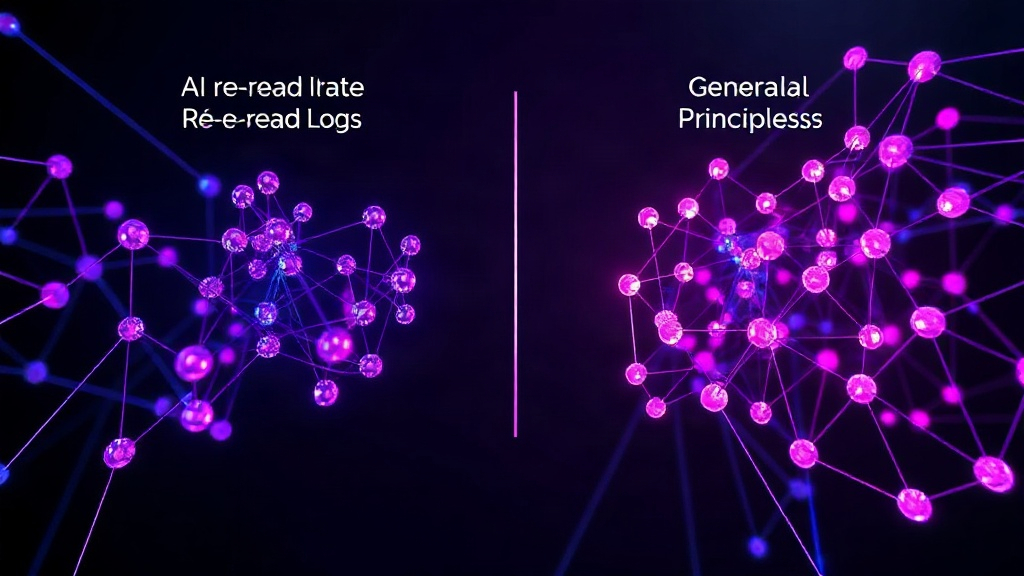
Introducing ALTK-Evolve: Learning from Experience
ALTK-Evolve is a novel framework designed to fundamentally change how AI agents learn and operate. Instead of merely processing raw data or re-reading historical interactions, ALTK-Evolve transforms these raw agent trajectories—the sequences of actions and observations—into reusable, generalizable guidelines. This process allows agents to move beyond rote memorization and develop a deeper, principle-based understanding of their tasks and environments.
The framework works by distilling the essence of successful (and unsuccessful) interactions into a set of actionable rules or principles. These principles are not specific to a single instance but represent broader strategies that can be applied across a range of similar situations. Think of it less like a chef memorizing every dish in every cookbook, and more like a seasoned chef developing an intuition for flavor pairings and cooking techniques that can be applied to create entirely new dishes. ALTK-Evolve aims to imbue AI agents with this kind of accumulated wisdom.
Quantifiable Improvements in Benchmarks
The efficacy of ALTK-Evolve has been demonstrated through rigorous benchmarking. The approach has shown significant improvements in agent reliability, particularly in challenging scenarios. For instance, on the AppWorld benchmark, ALTK-Evolve achieved a notable 14.2% increase in reliability. This improvement is especially significant because it was realized without increasing the agent's context window, a common bottleneck that can lead to performance degradation and increased computational costs. The ability to enhance performance without bloating context is a critical advantage, making the agents more efficient and scalable.
The gains are particularly pronounced in multi-step tasks. These are tasks that require a sequence of actions, where errors in early steps can cascade and lead to overall failure. By learning generalizable principles, ALTK-Evolve enables agents to better navigate these complex sequences, anticipate potential pitfalls, and maintain a coherent strategy throughout the task execution. This is a crucial step towards deploying AI agents in real-world industrial and operational settings where such sequential decision-making is the norm.
Broader Implications for AI Agent Development
The development of ALTK-Evolve addresses a critical gap in current AI agent technology. The ability to learn and generalize from experience is what separates a tool from an intelligent collaborator. For developers building AI agents, this means a pathway to creating more robust, adaptable, and truly intelligent systems. The "eternal intern" problem has been a persistent hurdle, and ALTK-Evolve offers a concrete solution.
For businesses looking to leverage AI agents for automation, this translates into agents that require less constant supervision and are more reliable in production. The ability to autonomously improve and adapt means agents can handle a wider range of tasks and operate more effectively in environments that are subject to change. This is particularly relevant for industrial operations, where automation powered by AI agents can lead to significant gains in efficiency and productivity. The success of companies like Magentic, which raised $18 million to automate industrial operations with AI agents, underscores the immense market potential for such advanced AI capabilities.
The Future of AI Agent Authorization
The rise of sophisticated AI agents also introduces new challenges in areas like security and authorization. As highlighted by recent discussions, AI agents acting on behalf of users present a unique problem for traditional authorization models. Existing systems, typically based on tenant and user permissions, lack a clear framework for handling requests made by autonomous agents that aren't directly tied to a specific human user's session. This necessitates a rethinking of authorization architectures to accommodate these new types of actors. The capability for agents to learn and evolve, as demonstrated by ALTK-Evolve, will only amplify the need for robust and adaptable security protocols. Developers will need to consider how to grant and manage permissions for agents that operate with a degree of autonomy, ensuring that their learned behaviors remain within defined security boundaries.