The Limits of Individual AI Prowess
Discussions around artificial intelligence often focus on its potential to surpass human capabilities in specific domains. This typically centers on metrics like speed, processing power, or memory capacity. We envision a single, hyper-intelligent AI that can outthink any human expert. However, this perspective misses the core of AI's emergent power. The true paradigm shift is not in creating a singular, all-knowing entity, but in the sophisticated orchestration of multiple, specialized AI agents working in concert.
Think of it less like a single, brilliant polymath and more like a highly efficient, global orchestra. Each musician (AI agent) masters a specific instrument (task). The conductor (orchestration system) doesn't need to play every instrument perfectly; their genius lies in coordinating the timing, dynamics, and interplay of all the musicians to produce a symphony that no single musician could ever achieve alone. This is the essence of multi-agent orchestration in AI.
What is Multi-Agent Orchestration?
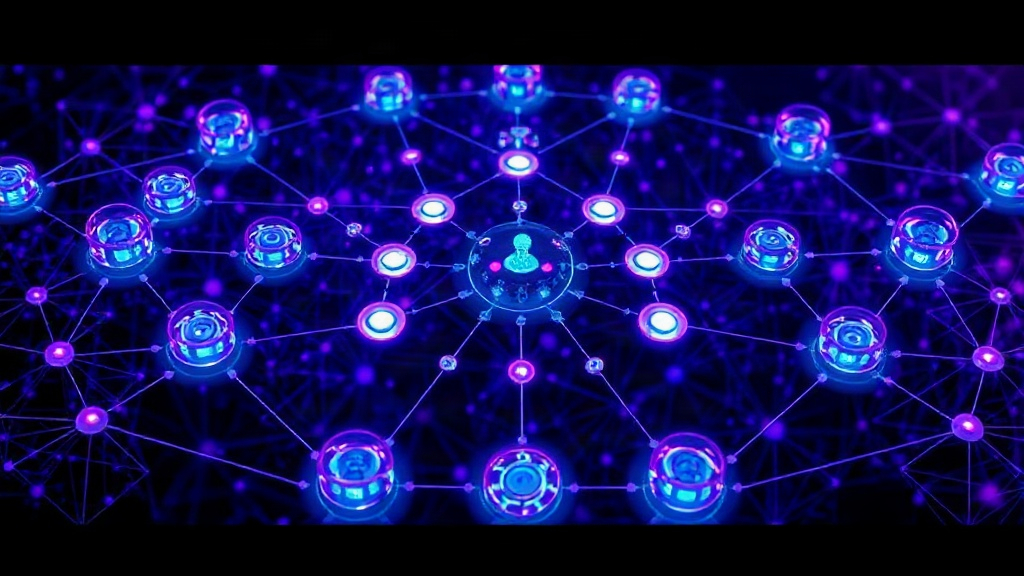
Multi-agent orchestration refers to the architecture and methodologies used to manage, coordinate, and leverage a collection of independent AI agents to achieve a common goal or solve complex problems. Instead of a monolithic AI tackling every aspect of a task, the problem is decomposed. Each sub-problem is assigned to a specialized agent best suited for it. These agents then communicate, negotiate, and collaborate, guided by an overarching coordination mechanism.
This approach mirrors real-world human collaboration. In software development, you don't expect a single engineer to handle UI design, backend architecture, database management, and frontend implementation simultaneously at an expert level. Instead, teams are formed with specialists for each area. Similarly, in complex scientific research, a project might involve computational modelers, experimental physicists, data analysts, and theoretical mathematicians, each contributing their unique expertise. Multi-agent AI systems adopt this distributed, specialized approach.
Key Components of Orchestration
Effective multi-agent orchestration relies on several critical components:
- Agent Specialization: Each agent is trained or designed for a specific function. This could range from natural language processing and image recognition to complex mathematical modeling or strategic planning. Specialization allows for deeper expertise and more efficient processing within its domain.
- Communication Protocols: Agents need standardized ways to communicate. This involves defining message formats, data structures, and semantic meanings to ensure that information is exchanged accurately and unambiguously.
- Coordination Mechanisms: This is the heart of orchestration. It involves algorithms and strategies for task allocation, conflict resolution, consensus building, and managing dependencies between agents. This could be hierarchical, decentralized, or a hybrid approach.
- Environment and Context Awareness: Agents must understand their operational environment and the broader context of the overall goal. This allows them to make informed decisions and adapt their actions based on the state of other agents and the task progress.
- Learning and Adaptation: Orchestration systems can evolve. Agents can learn from interactions, improve their specialization, and the coordination mechanisms themselves can be optimized over time based on performance feedback.
The Power of Collective Intelligence
The true power of multi-agent systems lies in their ability to achieve emergent properties that far exceed the sum of their individual parts. When agents collaborate effectively, they can:
- Tackle Complexity: Decompose highly complex problems into manageable sub-tasks, making them solvable by current AI capabilities.
- Enhance Robustness: If one agent fails or performs poorly, others can compensate or the system can reroute tasks, leading to greater resilience than a single point of failure.
- Improve Efficiency: Specialized agents can perform their tasks much faster and more accurately than a general-purpose AI trying to do everything.
- Foster Innovation: The interaction between diverse agents can lead to novel solutions and insights that might not be apparent from a single perspective.
Consider the challenge of developing a new drug. A multi-agent system could involve agents specializing in molecular simulation, bioinformatics, clinical trial design, regulatory compliance, and market analysis. Each agent performs its specialized task, feeding results to others. The simulation agent might identify promising compounds, which are then analyzed by the bioinformatics agent for efficacy and safety. This information informs the clinical trial agent, and so on. The entire process is far more efficient and comprehensive than a single AI attempting to cover all these disparate fields.
Beyond Speed: The Human Analogy
The common narrative of AI surpassing humans often frames it as a competition of raw computational power or abstract reasoning. This is a limited view. Human progress has always been driven not just by individual genius, but by collaboration, communication, and the division of labor. The internet, large-scale scientific endeavors, and complex engineering projects are all testaments to the power of collective human intelligence. AI, through multi-agent orchestration, is beginning to mirror and amplify this collaborative capability.
This shift implies that the future of AI development will increasingly focus on building sophisticated coordination layers and robust communication frameworks, rather than solely on pushing the boundaries of single model performance. The challenge moves from 'how smart can one AI be?' to 'how effectively can many AIs work together?'
Unanswered Questions in AI Collaboration
While the potential of multi-agent orchestration is immense, significant challenges and unanswered questions remain. How do we ensure ethical alignment across a diverse set of agents? What are the optimal architectures for coordination in highly dynamic and unpredictable environments? And crucially, what happens to the human roles as we delegate increasingly complex tasks to these AI collectives? The transition to a world powered by AI mass collaboration will require not just technological advancements, but also a fundamental rethinking of how humans and machines interact and co-create.