
The AI Paradox: Fast Tools, Slow Outcomes
Artificial intelligence promises unprecedented acceleration. It can write code in seconds, sift through terabytes of data for insights, and even diagnose complex issues. Yet, for many professionals, the tangible impact on their daily output feels surprisingly muted. The work still waits. The reason isn't a lack of AI capability, but the persistent reality of organizational friction – the slowest, most essential step in any given process, often referred to as a weak link, dictates the overall speed. This phenomenon echoes historical technological adoptions, where transformative tools like electricity and computers took decades to fulfill their potential because entire infrastructures, workflows, and supporting systems had to be re-engineered.
Consider the modern software development lifecycle. An AI can suggest code snippets, identify bugs, or even draft entire functions with remarkable speed. However, the generated code must still pass through rigorous code reviews, navigate complex cross-team dependencies for integration, await multiple layers of manual approvals, and often requires manual configuration in disparate environments. Scattered institutional knowledge exacerbates these delays, as teams spend valuable time searching for context or understanding existing systems rather than leveraging AI's immediate output. The bottleneck hasn't shifted from 'Can we solve this?' to 'How quickly can we solve this?' but rather to 'How quickly can the organization *process* the solution?'
Historical Precedents: The Electricity and Computer Eras
Professor Chad Jones of Stanford has highlighted how AI could significantly boost long-term economic growth. His research suggests that the most substantial gains, however, may be deferred. This is because the true impact of any foundational technology is often realized only after a period of widespread adaptation and systemic change. History provides ample examples. The advent of electricity, for instance, didn't immediately usher in an era of hyper-efficiency. It took decades for factories to be rewired, for manufacturing processes to be redesigned around electric power, and for new industries to emerge that were predicated on its availability. Similarly, the computer revolution, while seemingly rapid, involved a massive undertaking of digitizing records, retraining workforces, and developing entirely new software ecosystems and business models. Each of these transitions was constrained not by the speed of the core technology itself, but by the pace at which the surrounding human and organizational structures could evolve.
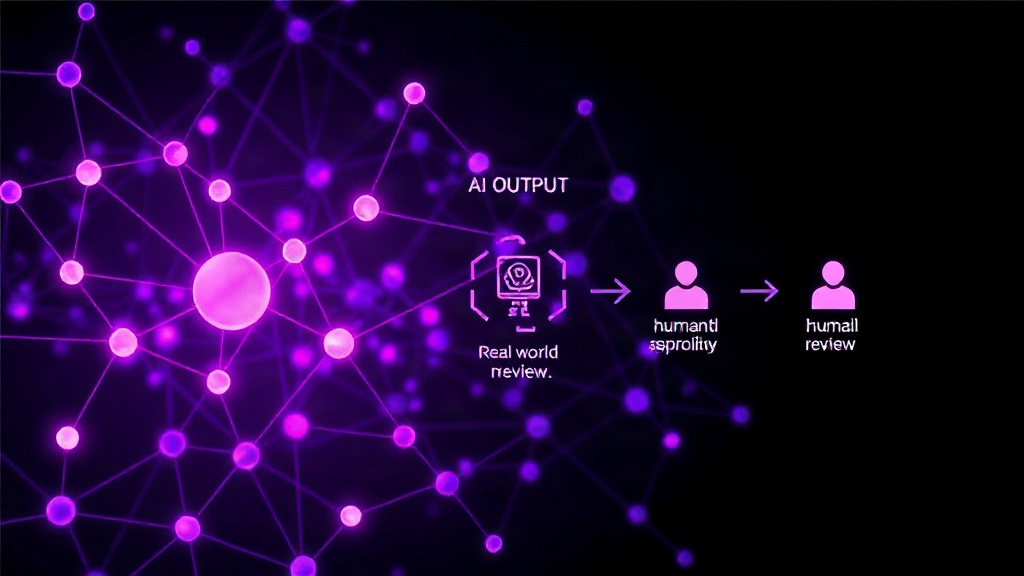
The pattern holds true for AI. While the intelligence component can operate at speeds incomprehensible to human cognition, its integration into real-world applications is tethered to existing, often slow-moving, operational frameworks. These frameworks include not just technical infrastructure but also established business processes, regulatory compliance requirements, and even ingrained human habits and decision-making protocols. The AI might deliver a perfect analysis in milliseconds, but if that analysis requires a committee meeting for validation, or if the output needs to be manually entered into a legacy system, the speed advantage of the AI becomes largely irrelevant to the final outcome's timeline.
Identifying the Modern Weak Links
In today's tech landscape, these weak links manifest in several critical areas:
- Release Cycles: Traditional software deployment pipelines are often lengthy, involving multiple stages of testing, staging, and production environments, each with its own set of checks and balances. AI can accelerate development, but if the deployment process remains unchanged, the overall time-to-market doesn't shrink proportionally.
- Cross-Team Dependencies: Modern software and systems are rarely built by a single team. AI might optimize a component, but if that component needs to be integrated by another team with a different roadmap and priorities, the AI's speed is effectively paused until that integration can occur.
- Approval Processes: Many industries and organizations have established hierarchies and gatekeepers for decision-making and resource allocation. AI-generated recommendations or solutions must still navigate these human-centric approval workflows, which can introduce significant delays.
- Manual Configuration: Despite advancements in automation, many systems still require manual configuration, setup, or deployment. AI can identify the optimal configuration, but the execution of that configuration might be a manual, time-consuming task.
- Scattered Knowledge and Documentation: AI can synthesize information, but it often relies on access to comprehensive and accurate data. If knowledge is siloed, poorly documented, or spread across disparate systems, AI's ability to provide rapid, context-aware solutions is hampered.
These are not technical limitations of AI itself, but rather systemic constraints within organizations and industries. The focus must therefore shift from simply deploying more powerful AI tools to fundamentally re-evaluating and redesigning the processes and structures that govern how work is done. This involves streamlining approval chains, fostering better inter-team communication and integration, investing in robust automation for configuration and deployment, and prioritizing the consolidation and documentation of institutional knowledge.
The Path Forward: Re-engineering for Speed
The critical insight is that AI's true potential is unlocked not by using it within existing paradigms, but by building new paradigms around it. This requires a strategic, holistic approach. Organizations must identify their specific weak links and invest in redesigning workflows, automating manual steps, and fostering a culture that embraces agility and continuous integration. The speed of AI is a powerful engine, but it needs a modern chassis and a clear, unobstructed road to deliver on its promise of accelerated progress.
What nobody has fully addressed yet is the scale of organizational change management required. It is not merely about adopting new software; it is about fundamentally altering how decisions are made, how teams collaborate, and how value is delivered. This requires leadership buy-in, significant investment in training and process re-engineering, and a willingness to challenge long-standing operational norms. The companies that successfully navigate this transition will be the ones that not only harness AI's computational power but also adapt their own internal ecosystems to match its velocity.