The Quiet Revolution of Invisible AI
The current discourse around Artificial Intelligence often conjures images of advanced chatbots, hyper-realistic image generators, or AI agents performing complex, multi-step tasks. These are the flashy capabilities that capture headlines and fuel public imagination. However, the next, and perhaps more profound, stage of AI adoption may be characterized by the opposite: AI that becomes so deeply integrated into everyday software that users stop noticing it. This isn't a future prediction; it's a present trend that is quietly reshaping our digital experiences.
Source 1, a discussion from Reddit's r/artificial, highlights this shift. The core idea is that AI's most valuable contributions might not be in generating impressive, standalone demos, but in seamlessly enhancing existing functionalities. Think of an AI that quietly corrects a grammatical error in an email before you send it, or an AI that intelligently sorts and prioritizes your incoming messages without explicit instruction. These are not the kind of features that make for exciting product launches, but they are the ones that significantly improve user efficiency and software utility. The question posed is whether the next wave of AI adoption will prioritize these subtle, background enhancements over the more ostentatious, conversational AIs that have dominated recent attention.
This perspective suggests a maturation of AI integration. Instead of AI as a distinct, novel feature, it becomes an inherent, invisible layer that simply makes software work better. This is akin to how early internet connectivity moved from being a distinct dial-up service to an assumed, always-on utility. The impact is undeniable, but the technology itself fades into the background, becoming a foundational element rather than a focal point.
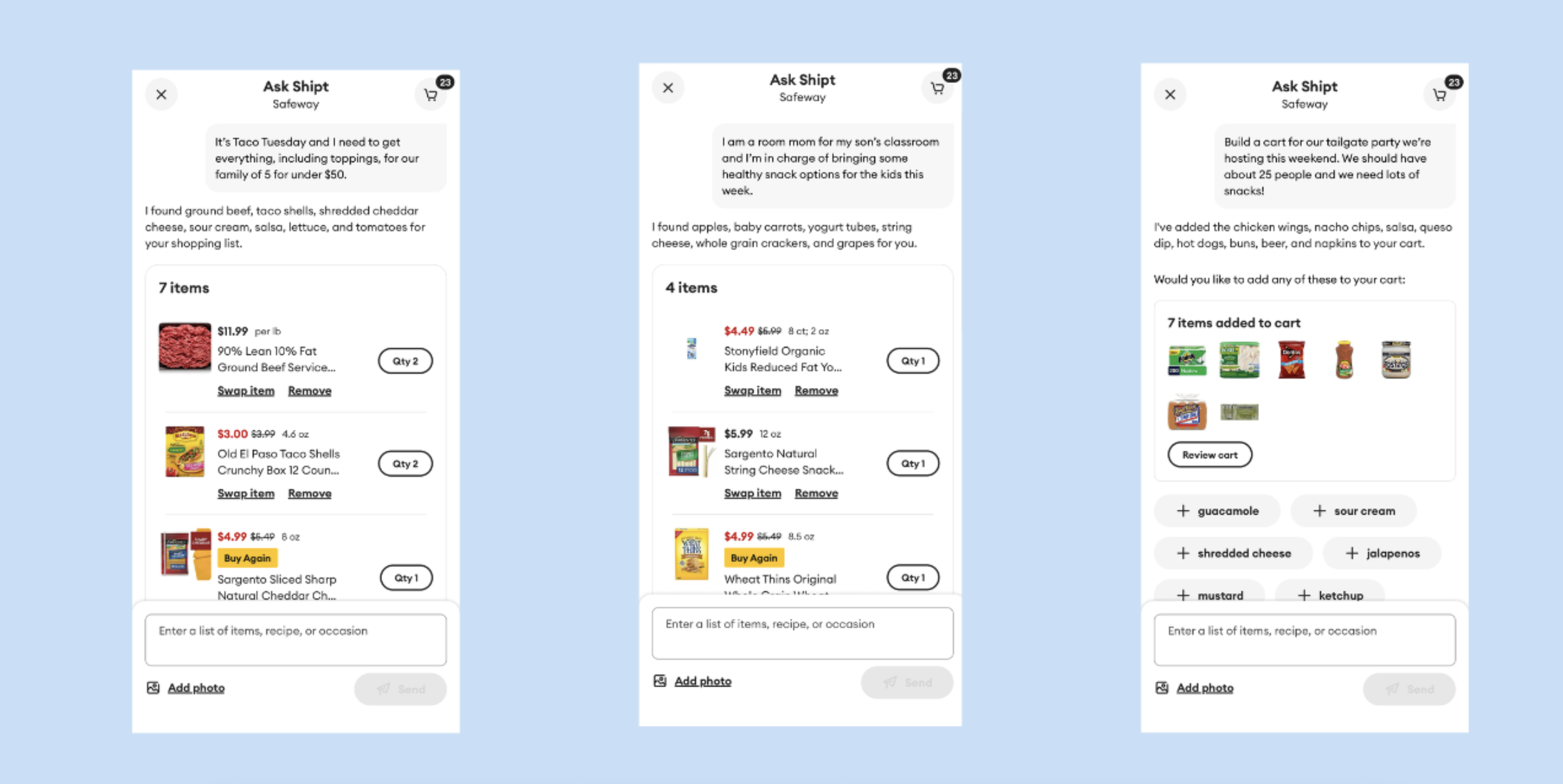
Source 2, reporting on Shipt's new AI shopping assistant, offers a concrete example of this trend, albeit with a slightly more visible interface. Shipt's assistant allows users to craft complex grocery lists with natural language prompts, such as "Create a cart for my Saturday tailgate for 25 people and include some brunch items." While this is a more interactive and demo-worthy application than a background error corrector, it still represents AI working behind the scenes to parse complex requests, access product databases, and assemble a functional shopping cart. The user isn't manually searching for each item; they are leveraging AI to abstract away the tedious parts of the task. Even this more visible assistant aims to streamline a common, repetitive activity, making the overall shopping experience more efficient.
The Value Proposition of Unseen AI
The argument for invisible AI rests on its ability to solve real user problems without demanding significant cognitive load or learning curves. When AI quietly fixes a mistake, finds the right information, organizes data, or handles a repetitive task, it reduces friction. Users don't need to learn new interfaces or master complex commands. The AI simply makes the existing tool more effective. This is a powerful value proposition, particularly for enterprise software and productivity tools where efficiency is paramount.
Consider a customer service platform. An AI that automatically categorizes incoming tickets, suggests relevant knowledge base articles to agents, or even drafts initial responses based on historical data, performs its function without the agent needing to interact with a separate AI module. The AI is embedded within the workflow, augmenting the agent's capabilities. Similarly, in software development, an AI that automatically identifies potential bugs during code compilation, suggests code optimizations, or helps refactor legacy code, operates as a background enhancement. The developer benefits from improved code quality and faster development cycles without needing to explicitly invoke an AI tool for each task.
This approach democratizes AI's benefits. Rather than requiring users to become prompt engineers or AI specialists, invisible AI integrates intelligence into the tools they already use. This lowers the barrier to entry for AI adoption and ensures that its advantages are accessible to a broader audience, including those who are not tech-savvy. The user experience becomes smoother, and the overall productivity gains can be substantial.

The Challenge of Demonstrating Value
The primary challenge with invisible AI lies in its inherent lack of demonstrability. How do you create a compelling demo for a system that excels at preventing errors or streamlining processes without fanfare? The very success of invisible AI is that it elicits little reaction. When a system quietly handles a complex task or prevents a significant problem, the user's response is often a simple "that worked" or no response at all. There's no "wow" moment, no viral tweet about a particularly clever AI interaction.
This poses a significant hurdle for product managers and marketers. The traditional product launch cycle thrives on showcasing novel features and impressive capabilities. Marketing materials often highlight the most visually striking or intellectually stimulating aspects of a product. With invisible AI, the most impactful features are, by definition, the least visible. This necessitates a shift in how AI value is communicated. Instead of focusing on the AI itself, the emphasis must be on the outcomes: reduced error rates, increased efficiency, faster task completion, and improved user satisfaction.
The Shipt example, while more visible, still grapples with this. While the assistant's ability to build a cart is functional, its true value is realized when the user finds they've saved significant time and effort compared to manual list building. The