The Shifting Landscape of Software Development
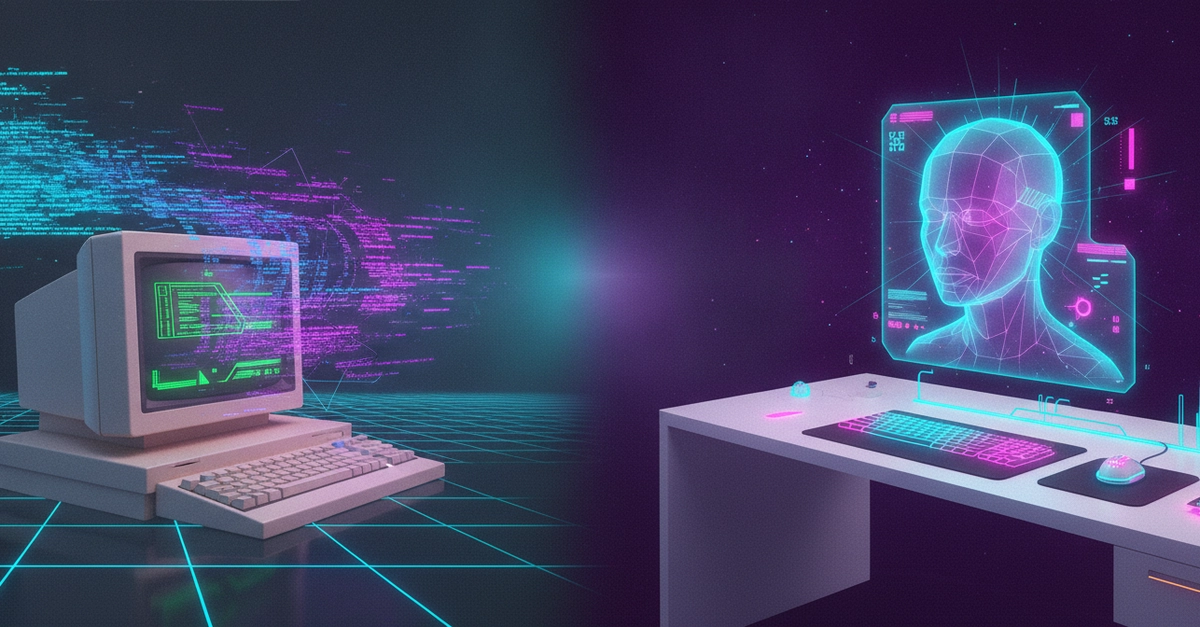
The rapid integration of Artificial Intelligence into software development workflows has fundamentally altered the daily reality for many engineers. What was once a process centered on deep, hands-on coding, rigorous code reviews, and intricate testing, is now increasingly augmented—and in some areas, replaced—by AI assistants. This shift, while boosting productivity, is leaving a growing number of developers feeling adrift, questioning the future trajectory of their careers and the very nature of their craft.
Consider the transition from a purely hands-on approach to one where AI tools handle much of the generative and even some of the analytical heavy lifting. Before AI, the challenge and satisfaction often stemmed directly from the act of writing code, solving complex logical puzzles, and architecting solutions from the ground up. Now, the process often involves prompting AI, reviewing its output, and focusing on integration and higher-level problem-solving. While this can free up time for more strategic tasks, it also means the core technical craftsmanship that many developers found most engaging is being sidelined. This raises a critical question: what skills become paramount when the machine can code faster and, in many cases, more efficiently than a human?

Redefining the Developer's Role
The feeling of being 'stuck' stems from this perceived displacement of core competencies. Developers who previously derived satisfaction from the intricate art of coding now find themselves in roles that emphasize prompt engineering, AI output validation, and system integration. This isn't necessarily a demotion, but it is a significant redefinition. The skills that once guaranteed career progression—deep algorithmic knowledge, mastery of specific programming languages, and meticulous debugging—are being supplemented by new demands.
The focus is shifting towards understanding how to effectively leverage AI tools, refining the ability to translate complex requirements into precise prompts, and developing a keen eye for detecting subtle errors or inefficiencies in AI-generated code. This requires a different kind of expertise: one that blends technical acumen with strategic thinking and an understanding of AI's limitations. The ability to architect systems that effectively incorporate AI, manage data pipelines for AI training and inference, and ensure the ethical and secure deployment of AI-driven features are becoming increasingly vital.
The Search for Fulfillment Beyond Code Generation
For many, the initial fear is that AI will make them redundant. However, a more nuanced perspective suggests that AI is an augmentation tool, not a wholesale replacement. The challenge lies in identifying and cultivating the aspects of software engineering that AI cannot easily replicate. These include:
- Strategic Problem Solving: Understanding business needs, identifying opportunities for technological solutions, and devising high-level strategies.
- System Design and Architecture: Creating robust, scalable, and maintainable systems, a task that requires deep contextual understanding and foresight.
- Human-Centric Development: Focusing on user experience, accessibility, and the ethical implications of technology.
- Complex Debugging and Optimization: Tackling novel bugs, performance bottlenecks that AI might miss, and optimizing systems for edge cases.
- Collaboration and Communication: Leading teams, mentoring junior developers, and bridging the gap between technical teams and business stakeholders.
The satisfaction derived from these activities is often more profound and less susceptible to automation. It shifts the developer's role from a code generator to a technology strategist and problem solver. The ability to ask the right questions, to understand the 'why' behind the 'what,' becomes paramount.
Navigating the Skill Shift: What's Next?
The question for developers is no longer *if* their roles will change, but *how* they will adapt. This necessitates a proactive approach to skill development. Instead of viewing AI as a threat, developers can see it as an opportunity to evolve. This means:
- Mastering AI Tools: Becoming proficient in using AI coding assistants, understanding their strengths and weaknesses, and integrating them seamlessly into workflows.
- Developing Soft Skills: Enhancing communication, collaboration, critical thinking, and problem-solving abilities. These are inherently human skills that AI cannot replicate.
- Focusing on Architecture and Design: Deepening understanding of system design principles, scalability, and security. These higher-level skills are crucial for guiding AI-driven development.
- Specializing in Niche Areas: Identifying emerging fields within AI, such as MLOps, AI ethics, or specialized AI model development, where human expertise remains critical.
- Embracing Lifelong Learning: The pace of technological change demands a commitment to continuous learning and adaptation.
The future of software engineering is likely to be a partnership between human ingenuity and artificial intelligence. Developers who embrace this evolution, focusing on strategic thinking, complex problem-solving, and effective AI utilization, will not only remain relevant but will likely find new avenues for growth and fulfillment.