%22%20%2F%3E%0A%20%20%3C%2Fsvg%3E)
The Evolving Role of Leadership in the Age of AI
The rapid advancement of artificial intelligence is not diminishing the need for human leadership; it is fundamentally reshaping and amplifying it. As AI systems become more sophisticated, capable of complex analysis, decision-making, and even creative output, the role of human leaders evolves from direct command-and-control to strategic guidance, ethical stewardship, and fostering human-AI collaboration. This shift, detailed in recent analysis from Skema Business School, suggests that the more AI thinks, the more critical effective human leadership becomes.
Traditionally, leadership has been associated with making decisions, allocating resources, and setting direction. However, as AI takes on more of these functions, human leaders must pivot. Their primary responsibility becomes defining the objectives, values, and ethical boundaries within which AI operates. This is not merely about setting parameters; it's about understanding the potential societal, ethical, and organizational impacts of AI-driven decisions and ensuring alignment with human values and long-term strategic goals.
Consider AI in customer service. An AI chatbot can handle a vast volume of queries with incredible speed and accuracy. But when a customer faces a complex, emotionally charged issue, it is the human leader who must design the escalation protocol, train the AI to recognize such situations, and ensure that human agents are available and empowered to intervene with empathy and nuanced judgment. The AI handles the volume; the human handles the critical exceptions and the relationship.
This dynamic extends to strategic planning. AI can analyze market trends, predict consumer behavior, and model various business scenarios with unprecedented detail. Yet, it is the human leader who must interpret these analyses, inject strategic intuition, consider unforeseen external factors (like geopolitical shifts or novel ethical dilemmas), and ultimately make the final, high-stakes decisions that shape the organization's future. AI provides the data and predictive power; leadership provides the wisdom and foresight.

Navigating the Ethical and Control Imperative
One of the most significant areas where leadership is becoming indispensable is in the ethical deployment of AI. As AI systems make decisions that can have profound impacts on individuals and society—from loan applications to medical diagnoses to hiring processes—human leaders are tasked with ensuring fairness, transparency, and accountability. This requires establishing robust ethical frameworks, implementing bias detection and mitigation strategies, and fostering a culture where ethical considerations are paramount.
The challenge is that AI, by its nature, can operate in ways that are opaque or difficult for humans to fully comprehend. This 'black box' problem means that leaders cannot simply delegate oversight. They must invest in understanding AI's capabilities and limitations, and develop mechanisms for auditing AI decisions and ensuring they align with societal norms and legal requirements. This is akin to a pilot needing to understand the mechanics of their aircraft, not just how to fly it, especially when unexpected turbulence arises.
Furthermore, leadership is crucial for managing the integration of AI into existing organizational structures and workflows. This involves more than just technological implementation; it requires change management, employee training, and fostering a culture of continuous learning. Leaders must guide their teams through the transition, addressing anxieties about job displacement and empowering individuals to work alongside AI, leveraging its capabilities to enhance their own roles.
The Future of AI-Augmented Organizations
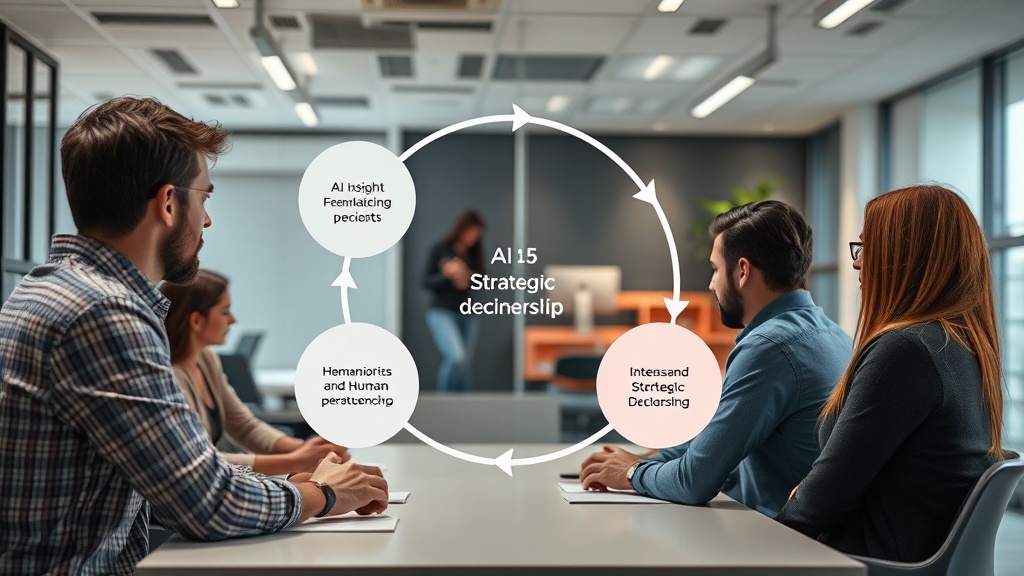
The ultimate goal is not for AI to replace human leadership, but to augment it. Organizations that thrive in the AI era will be those where human leaders skillfully integrate AI tools to amplify human potential. This means cultivating a symbiotic relationship where AI handles repetitive tasks, data processing, and complex calculations, freeing up human leaders to focus on higher-level strategic thinking, innovation, creativity, and fostering human connection.
This requires a new set of leadership competencies. Leaders need to be technologically literate, ethically astute, adaptable, and skilled in managing human-AI teams. They must be able to ask the right questions of AI, critically evaluate its outputs, and make informed decisions that align with organizational values and long-term vision. The ability to foster trust, encourage experimentation, and navigate the complexities of AI's evolving capabilities will be hallmarks of effective leadership in the coming years.
The analysis from Skema suggests that the more autonomous AI becomes, the greater the responsibility placed upon human leaders to provide the moral compass, strategic direction, and human touch that technology alone cannot replicate. The future of organizational success in the AI age hinges on this critical synergy between advanced artificial intelligence and discerning human leadership.
The Unanswered Question of AI Governance
While the imperative for human leadership in the AI era is clear, a significant unanswered question remains: what are the most effective and scalable models for AI governance that can keep pace with AI's exponential development? Current regulatory frameworks and internal corporate policies often lag behind the technology's advancements, leaving a critical gap. How do we ensure that leadership's ethical guidance is not only articulated but also effectively embedded into the very architecture and operation of AI systems across diverse industries and global contexts? The challenge is to move beyond reactive measures to proactive, adaptive governance structures that empower leaders and safeguard against unintended consequences.