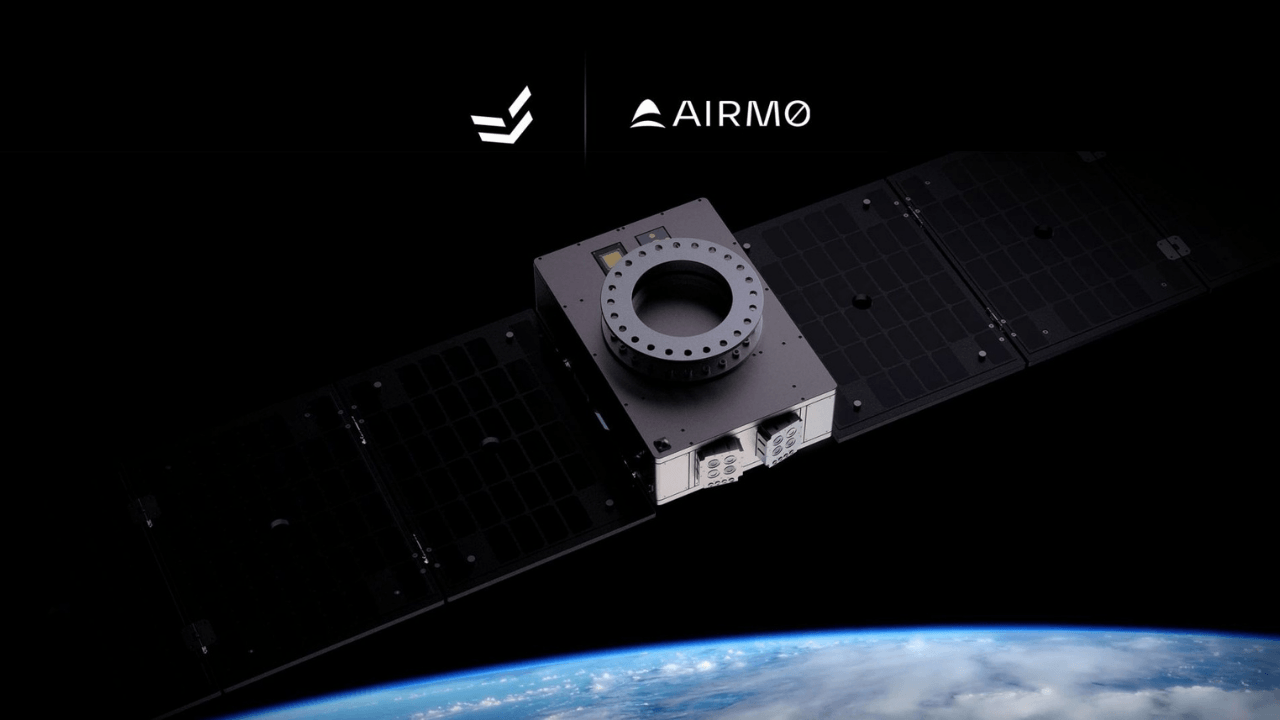
Targeting Methane Emissions from Orbit
Methane, a greenhouse gas over 80 times more potent than carbon dioxide in the short term, poses a significant threat to climate stability. The International Energy Agency (IEA) estimates that approximately 200 billion cubic meters of natural gas are lost annually worldwide through leaks, venting, and flaring. This enormous volume represents not only a substantial environmental hazard but also a considerable economic waste. Recognizing this critical problem, AIRMO, a European startup, is leveraging advanced satellite technology to provide precise detection and localization of methane leaks from oil and gas infrastructure.
AIRMO's approach is built upon the principle that methane has a distinct spectral signature detectable from space. By analyzing data from specialized satellites equipped with hyperspectral sensors, the company can identify plumes of methane emanating from industrial sites. This capability allows for a more proactive and targeted approach to leak detection compared to traditional ground-based methods, which are often time-consuming, expensive, and limited in their scope.
The urgency to address methane emissions is amplified by recent climate reports and international commitments. The Global Methane Pledge, launched at COP26, aims to reduce global methane emissions by at least 30 percent below 2020 levels by 2030. Achieving this target requires robust monitoring and mitigation strategies. AIRMO's service directly supports these efforts by providing actionable intelligence to operators, enabling them to pinpoint and repair leaks swiftly, thereby reducing both emissions and the loss of valuable natural gas resources.

The Technology Behind the Detection
AIRMO's core technology relies on sophisticated algorithms that process vast amounts of data from Earth-observing satellites. These satellites are equipped with sensors capable of capturing light across a wide spectrum, including wavelengths that are sensitive to methane absorption. When methane is present in the atmosphere, it absorbs specific frequencies of light, creating a unique fingerprint that can be identified through spectral analysis.
The process begins with satellite data acquisition. AIRMO partners with satellite operators to access imagery that covers target regions of interest, typically areas with significant oil and gas activity. Once the data is received, proprietary algorithms are employed to filter out atmospheric noise and other interfering factors. The system then searches for the characteristic spectral signature of methane. Crucially, AIRMO's algorithms are designed to distinguish methane plumes from background atmospheric methane and other gases, ensuring high accuracy and minimizing false positives.
What sets AIRMO apart is its ability to not only detect methane but also to precisely geolocate the source of the leak. This is vital for operators who need to dispatch repair crews efficiently. By triangulating the plume's origin using multiple satellite passes or by analyzing the plume's dispersion patterns, AIRMO can provide coordinates that pinpoint the leaking facility or even specific pieces of equipment. This level of detail is a significant leap forward from broader atmospheric measurements.
The data is then presented to clients through a user-friendly platform, often a web-based dashboard. This platform visualizes the detected leaks, providing information on their severity, location, and potential impact. Clients can use this information to prioritize repairs, track their emission reduction progress, and ensure compliance with environmental regulations. The platform is akin to a sophisticated alert system, continuously scanning the skies for tell-tale signs of methane escaping into the atmosphere.
Market Opportunity and Competitive Landscape
The market for methane detection and monitoring solutions is rapidly expanding, driven by increasing regulatory pressure, corporate sustainability goals, and the growing awareness of methane's climate impact. Companies across the oil and gas sector, as well as other industries like agriculture and waste management, are actively seeking effective ways to measure and reduce their methane footprint.
AIRMO enters this market with a compelling value proposition: cost-effective, large-scale, and precise methane leak detection from space. Traditional methods, such as aerial surveys with specialized aircraft or ground-based sensors, can be effective but are often limited in their coverage and frequency. Ground-based methods, in particular, can only monitor specific points and miss diffuse or intermittent leaks. AIRMO's satellite-based approach offers a synoptic view, enabling continuous monitoring of vast areas and identifying leaks that might otherwise go undetected.
The competitive landscape includes other companies developing satellite-based methane detection services, as well as providers of alternative monitoring technologies. However, AIRMO's focus on advanced spectral analysis and precise geolocation, combined with a scalable data processing infrastructure, positions it as a strong contender. The surprising detail here is not the technological sophistication itself, but the speed at which satellite capabilities are evolving to address specific environmental challenges like methane emissions, moving from research concepts to commercially viable services in just a few years.
The economic implications for operators are also significant. Beyond the environmental benefits, preventing methane leaks means conserving a valuable commodity. The 200 billion cubic meters lost annually represents billions of dollars in lost revenue. By enabling operators to quickly identify and fix these leaks, AIRMO helps them to improve operational efficiency and profitability while simultaneously enhancing their environmental performance.
The Road Ahead
AIRMO's mission is critical in the global effort to combat climate change. By providing a powerful tool for identifying and mitigating methane emissions, the company is enabling industries to take concrete steps towards decarbonization. As satellite technology continues to advance and regulatory frameworks surrounding methane emissions become more stringent, the demand for solutions like AIRMO's is expected to grow substantially.
The challenges ahead will involve scaling their operations to cover more regions, continuously improving the accuracy and resolution of their detection capabilities, and integrating their services seamlessly into the workflows of their clients. For developers in the environmental monitoring space, this represents an exciting frontier where cutting-edge remote sensing, data science, and climate action converge. The overarching question remains: how quickly can these advanced monitoring capabilities be deployed globally to make a significant dent in methane emissions before the next critical climate tipping point is reached?