The Motivation Machine: Sonic Kinetic
Forget pre-recorded workout playlists and generic timers. A new project, dubbed Sonic Kinetic, aims to inject genuine urgency and personalization into at-home fitness routines through the power of generative AI. Developed by Marouan El-Khatib, Sonic Kinetic transforms a user's fitness goals into a dynamic, audio-driven coaching experience that feels remarkably personal – and, when needed, aggressively motivating.
The core innovation lies in its ability to generate workout scripts and corresponding audio in real-time. Users input key parameters: a callsign, the total duration of their session, the specific muscle groups or exercises they want to focus on, and a desired intensity level, ranging from 'mild' to 'brutal'. This information is fed into Google's Gemini AI model, which then breaks down the workout into discrete intervals, typically lasting between 30 and 90 seconds. Each interval is accompanied by a specific coaching instruction designed to guide the user through the exercise.
But Sonic Kinetic doesn't stop at script generation. The real magic happens when these AI-generated coaching lines are then processed by ElevenLabs' advanced speech synthesis technology. This transforms the text into spoken audio, with the AI capable of modulating its tone and delivery to match the intensity specified by the user. The result is an audio coach that can genuinely sound encouraging during rest periods and, crucially, like it's yelling at you when pushing through demanding sets.
On-Demand Audio, No Pre-Recording
One of the most striking aspects of Sonic Kinetic is its complete avoidance of pre-recorded audio. Unlike many fitness apps that rely on a fixed library of voiceovers, every single audio clip in Sonic Kinetic is generated dynamically. This means that if a user requests a completely different workout routine on another day, or even later the same day, they will receive a unique script and a corresponding, newly generated set of audio cues. This approach ensures that the experience remains fresh and tailored precisely to the user's immediate needs and preferences.
The technical pipeline involves a swift, multi-stage process. First, the user's input is parsed and sent to Gemini for script generation. Gemini returns a structured plan, complete with timed intervals and coaching prompts. This script is then passed to ElevenLabs for text-to-speech conversion, producing the final audio output. The entire process, from input to audible coaching, reportedly takes only a few seconds, ensuring minimal delay between setting up a workout and starting it.
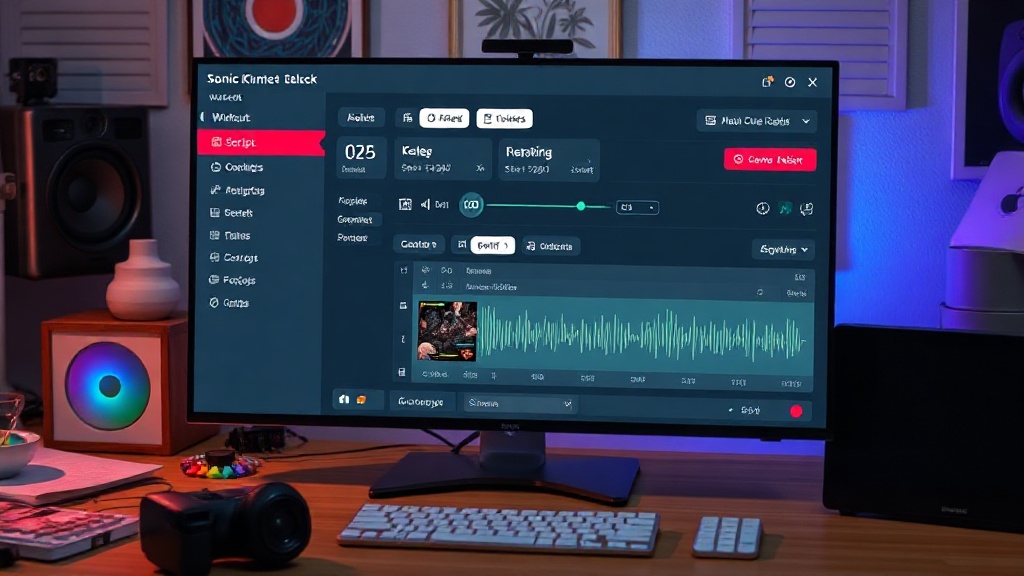
The visual component of Sonic Kinetic also adds to its appeal. As the workout script is generated, a corresponding pacing curve is drawn in real-time as an SVG line directly within the browser. This visual representation provides users with an immediate understanding of the workout's structure and intensity fluctuations, complementing the auditory coaching.
Beyond the Beep: A New Era of Fitness Tech?
The implications of Sonic Kinetic extend beyond mere novelty. For developers, it represents a powerful example of integrating multiple cutting-edge AI services – large language models for content generation and advanced text-to-speech for emotive audio output – into a cohesive and functional application. The ability to generate dynamic, context-aware audio content opens doors for a wide range of applications, from personalized learning tools and interactive storytelling to more engaging and responsive virtual assistants.
For the fitness industry, Sonic Kinetic hints at a future where personalized coaching is not only accessible but also dynamically adaptive. Imagine an AI coach that can adjust its tone, pace, and encouragement based on your real-time biometric data (if integrated), or even your perceived exertion levels. While Sonic Kinetic currently relies on user-defined intensity, the architecture it demonstrates could pave the way for such sophisticated, real-time adjustments.
The project also raises an interesting question about the future of content creation in specialized domains. If AI can generate effective, motivating workout scripts and audio on demand, what does this mean for the human trainers and content creators who currently produce these materials? While the human touch and nuanced expertise of a seasoned trainer are unlikely to be fully replicated, AI tools like Sonic Kinetic could democratize access to personalized fitness guidance, making it more affordable and readily available to a wider audience.
The surprising detail here is not just the clever use of AI, but the specific way it's applied to evoke a particular emotional response. The AI doesn't just deliver instructions; it's programmed to 'yell' when the workout demands it, mirroring the high-intensity coaching style that many find effective. This deliberate design choice moves beyond functional utility to tap into the psychological drivers of motivation, demonstrating a sophisticated understanding of how users engage with fitness content.
The Developer's Perspective
Building Sonic Kinetic required stitching together several powerful AI APIs. Gemini's role is crucial for understanding the user's intent and structuring a coherent workout plan. Its ability to break down a broad request into granular, actionable steps is key. ElevenLabs, on the other hand, handles the crucial task of voice delivery, ensuring that the generated audio sounds natural and conveys the intended emotion. The SVG rendering for the pacing curve adds a visual layer that is both informative and aesthetically pleasing, demonstrating how frontend technologies can be integrated with backend AI services.
For developers looking to replicate or build upon this concept, understanding the API contracts and data formats for both Gemini and ElevenLabs is paramount. The orchestration layer, responsible for passing data between these services and handling the user interface, is where much of the application logic resides. This includes error handling, managing API rate limits, and ensuring a smooth user experience.
The choice to make everything on-the-fly is a significant architectural decision. It avoids the complexities of managing a large, pre-recorded audio library and ensures scalability. However, it also means that the performance of the AI models and the speed of API responses directly impact the user experience. Optimizing these calls and potentially implementing caching strategies for common workout structures could be areas for future improvement.
Future Directions
While Sonic Kinetic is currently a personal project, its potential applications are vast. Imagine integrating it with wearable sensors to create adaptive training programs that respond to your heart rate or fatigue levels. Or consider its use in physical therapy, where AI-generated audio cues could guide patients through prescribed exercises with consistent, precise instructions. The core technology – generating context-aware, emotive audio on demand – has implications far beyond the gym.
The project serves as a compelling case study for the creative application of generative AI. It demonstrates how developers can leverage these powerful tools not just for text or image generation, but for creating dynamic, interactive experiences that directly influence user behavior and motivation. If you're a developer looking to experiment with integrating LLMs and advanced TTS, Sonic Kinetic provides a tangible and inspiring example of what's possible.