
Automating Music Analysis
A newly launched web application aims to demystify the architectural components of music. Developed by Reddit user WhichYoung6026, the tool allows musicians, producers, and enthusiasts to upload any audio track and receive an instant breakdown of its song structure. This includes identifying standard sections like verses, choruses, bridges, intros, outros, and pre-choruses. The application leverages artificial intelligence to perform this analysis, moving beyond simple audio playback to offer a deeper understanding of a song's composition.
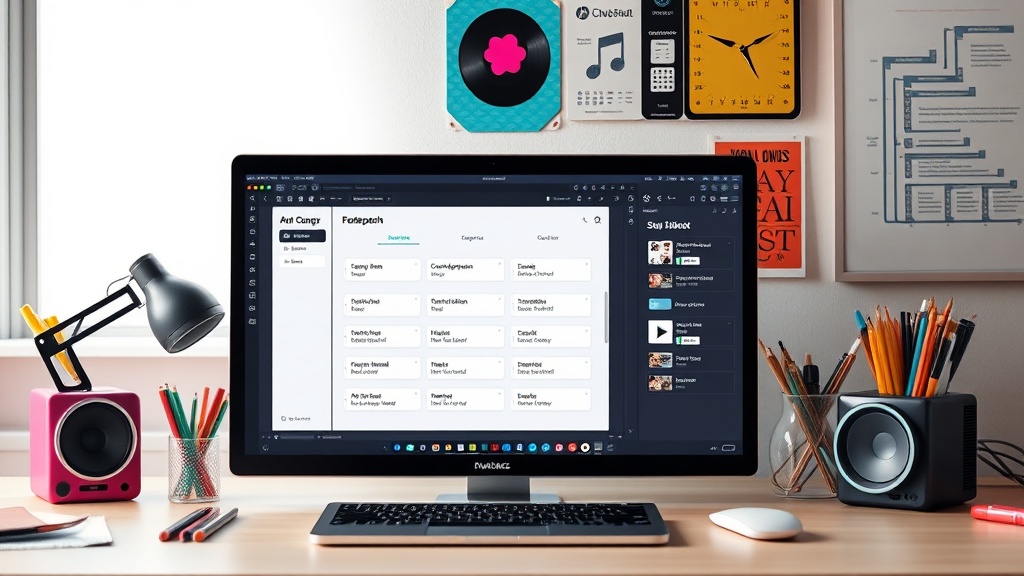
The core functionality revolves around a user-friendly upload interface. Once a track is processed, the application visually represents the identified sections, providing a clear map of the song's progression. This feature is particularly valuable for songwriters looking to analyze their own work or to understand the structural patterns employed by their favorite artists. For producers, it can serve as a quick reference for arrangement decisions or for dissecting the flow of existing tracks.
Beyond Structure: AI Feedback and Export
The utility of the application extends beyond mere structural mapping. A significant addition is the AI feedback component. After analyzing the song's structure, the system provides commentary and suggestions based on AI analysis. While the specifics of this feedback mechanism are not detailed, it implies an AI trained on musical theory, common compositional practices, and potentially subjective aesthetic principles. This could range from comments on section length and repetition to suggestions for transitions or arrangement variations. The goal is to offer actionable insights that users can apply to their own creative processes.
Furthermore, the application offers the ability to export the structural analysis and AI feedback in a PDF format. This feature enhances the tool's practicality for professional workflows. Musicians can easily share their song analyses with collaborators, producers can present structural breakdowns to artists, and educators can use the generated reports as teaching aids. The PDF export transforms the dynamic web application into a shareable, archival document, preserving the insights gained from the analysis.
The developer, /u/WhichYoung6026, has explicitly sought user feedback, indicating a commitment to iterative development and community input. This open approach is common in the early stages of software releases, especially within developer communities like Reddit, where direct interaction can foster rapid improvement and identify unforeseen use cases. The request for opinions suggests that the current iteration is a robust starting point, but the developer is keen to refine its features and accuracy.
Potential Applications and Future Development
The implications of such a tool are broad. For aspiring musicians, it can serve as an educational resource, helping them internalize the common building blocks of popular music. By seeing how different artists structure their songs, emerging talents can learn to craft more compelling and coherent pieces. For seasoned professionals, it offers a rapid, objective analysis that can supplement their own subjective understanding and intuition. It could also be a valuable tool for musicologists or researchers studying trends in musical composition over time, provided the AI's accuracy can be validated across diverse genres and eras.
The underlying AI model likely employs techniques such as signal processing to identify recurring patterns and segment the audio. This could involve analyzing features like tempo, harmonic content, rhythmic density, and spectral characteristics to differentiate between sections. The sophistication of the AI feedback would depend on the complexity of the models used, potentially drawing from large datasets of analyzed music and human-annotated structures.
What remains to be seen is the breadth of genres the AI can accurately analyze. Popular music structures, like verse-chorus forms, are well-defined. However, more experimental, classical, or jazz music often features less conventional structures. The accuracy and utility of the tool in these less standardized contexts will be a key indicator of its overall robustness. Additionally, the nature of the AI feedback is a point of curiosity; whether it offers technical advice (e.g., 'bridge is too short') or more subjective creative prompts (e.g., 'consider a more dramatic harmonic shift here') will determine its value for different user types. The developer's call for feedback suggests these are areas ripe for exploration and improvement.
The successful implementation of such a tool could also pave the way for further AI-driven music production assistants. Imagine tools that not only map structure but also suggest chord progressions, melodic lines, or even generate accompaniment based on the identified song sections. For now, this application focuses on the foundational element of musical architecture, providing a valuable service for anyone involved in creating or deeply understanding music.