The Unseen Data in AI Models
The artificial intelligence models we interact with daily, from chatbots that finish our sentences to tools that answer our questions, are built by processing an immense volume of data scraped from the internet. This data includes public records, code repositories, social media posts, blog entries, and photographs. It's highly probable that your own digital footprint—your Reddit comments, your open-source code contributions, your personal blog from years past, or even photos you shared online—exists within the training data of these AI systems. The natural and immediate question that arises when this abstract concept becomes personal is whether AI companies had the legal right to use this data to train their models. Did they require your explicit permission? Should they have compensated you? In essence, was it legal?
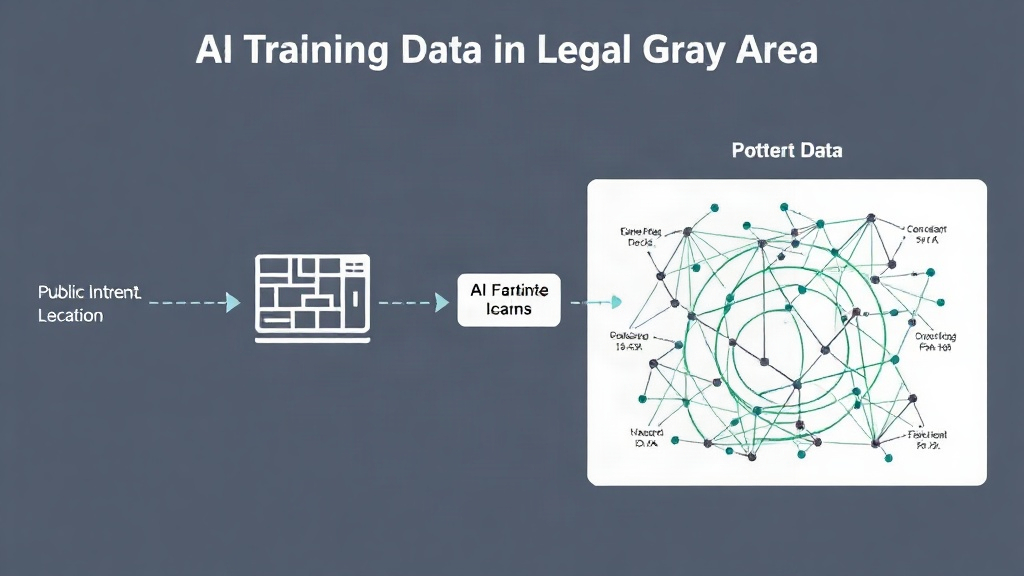
As of 2026, the answer is predominantly yes, it is legal in most jurisdictions, though the legal landscape is still very much under construction, with courtrooms actively shaping its contours. The term "legal" has, for many users, quietly diverged from "something you explicitly agreed to." This isn't a scenario where users signed terms of service explicitly granting AI companies the right to train models on their public data. Instead, the legality hinges on interpretations of existing copyright law, fair use doctrines, and the public accessibility of the data itself. The sheer scale of data collection makes individual consent impractical, pushing the legal debate toward broader principles of data usage and intellectual property rights in the digital age.
This evolving legal framework presents a significant challenge for individuals and creators who contribute to the vast pool of public data. While AI companies benefit from this freely accessible information, the original creators often receive no attribution or compensation. The current legal interpretation often favors the AI developers, citing the transformative nature of AI training and the public domain status of much of the data. However, ongoing lawsuits and legislative discussions indicate a potential shift, as policymakers and the judiciary grapple with balancing innovation with the rights of data creators.
Copyright and Fair Use: The Core of the Debate
The central legal battleground revolves around copyright law and the doctrine of fair use. Copyright law grants creators exclusive rights over their original works. However, the fair use doctrine allows limited use of copyrighted material without permission for purposes such as criticism, comment, news reporting, teaching, scholarship, or research. AI companies often argue that their use of public data for training constitutes fair use, as the process is transformative—creating a new tool (the AI model) rather than merely reproducing the original content. They contend that the AI doesn't 'store' or 'display' copyrighted works in a way that directly competes with the original, but rather learns patterns, styles, and information from them.
Critics, including artists, writers, and developers, argue that this interpretation stretches the concept of fair use too thin. They contend that AI models can generate outputs that are derivative of, or even directly mimic, the style and content of the training data. For instance, an AI image generator trained on a photographer's portfolio might produce images that are indistinguishable from the photographer's signature style, potentially undermining their market. Similarly, AI text generators trained on copyrighted novels could produce passages that closely resemble the original author's prose. The argument against fair use often centers on the commercial nature of many AI applications and the potential for direct economic harm to the creators whose work was used without compensation.
The legal precedents for this digital dilemma are still being established. Landmark cases are working their way through the courts, and their outcomes will significantly shape how AI training data is treated. The complexity is further amplified by the global nature of the internet and AI development. Laws vary by country, and a legal framework that is accepted in one region might be contested in another. This creates a patchwork of regulations that AI companies must navigate, and which leaves individuals uncertain about the protection of their digital contributions.
The Unanswered Question of Consent and Compensation
Beyond the copyright debate, a fundamental ethical and legal question remains: should AI companies be required to obtain consent or provide compensation for the use of publicly available data? While 'public' data implies a degree of accessibility, it doesn't automatically equate to a license for commercial exploitation, especially when the data is copyrighted. The current system, where AI models are trained on vast, often uncompensated, datasets, has enabled rapid innovation. However, it has also led to a growing sense of unfairness among creators who see their work fueling multi-billion dollar industries without any return.
This tension is particularly acute for creative professionals. Artists, writers, musicians, and programmers are increasingly finding their livelihoods threatened by AI systems that can replicate their skills at scale. The lack of a clear legal pathway for them to control the use of their work or to benefit from its incorporation into AI models is a significant concern. Some are exploring ways to 'poison' their data to disrupt AI training, while others are advocating for new legislation that would mandate opt-out mechanisms or establish collective licensing agreements. The question of compensation is not merely about financial reward; it's about acknowledging the value of human creativity and ensuring that the digital economy is built on principles of fairness and respect for intellectual property.
What nobody has adequately addressed yet is how to create a scalable and fair system for licensing and compensation in the era of AI. The sheer volume of data involved makes individual negotiations impossible. Potential solutions might involve industry-wide agreements, government-mandated data trusts, or novel technological approaches to track data provenance and usage. Until such mechanisms are established, the current legal ambiguity will continue to benefit AI developers at the expense of creators, leaving a significant ethical and legal void.
Navigating the Evolving Legal Landscape
For individuals and businesses, navigating this uncertain legal terrain requires a proactive approach. Understanding that data shared publicly may be used for AI training is the first step. For developers, this means being mindful of the licenses associated with open-source code and the potential implications of contributing to public repositories. For content creators, it involves considering the terms of service on platforms where they share their work and exploring any available opt-out mechanisms, however limited they may be. The legal landscape is not static; it is being shaped by ongoing litigation, legislative proposals, and evolving societal norms.
Companies developing AI are also facing increasing pressure to be more transparent about their data sources and to implement more robust data governance practices. This includes exploring ethical sourcing of data and respecting intellectual property rights. As the legal framework solidifies, those who have operated in a gray area may find themselves subject to new regulations and liabilities. The trend is moving towards greater accountability, making it crucial for all stakeholders to stay informed about legal developments and to adapt their practices accordingly. The future of AI development hinges on finding a sustainable balance between technological advancement and the rights of data creators.