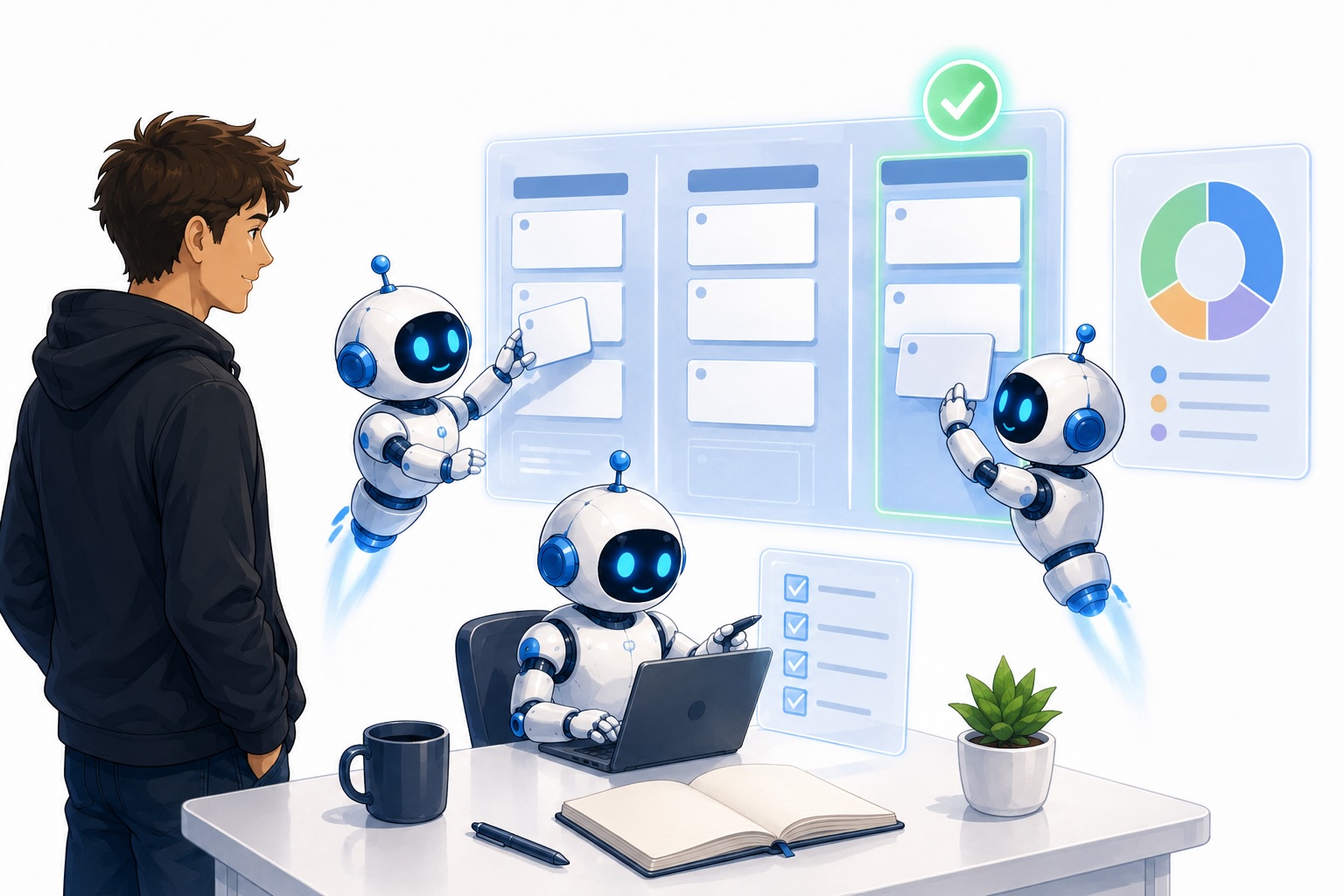
AI Integration in Project Management Workflows
The integration of Artificial Intelligence, particularly Large Language Models (LLMs), is rapidly transforming how software engineering projects are managed. These tools are moving beyond simple automation to become active participants in the project lifecycle, enhancing productivity and offering novel solutions to long-standing challenges. For software engineers and project managers, this shift signifies an opportunity to offload repetitive tasks, gain deeper insights, and accelerate development cycles. The core promise lies in leveraging AI to augment human capabilities, allowing teams to focus on complex problem-solving and strategic decision-making rather than getting bogged down in administrative overhead.
LLMs can assist in a multitude of project management functions. This includes everything from initial project planning and task breakdown to code generation, bug detection, and even communication summarization. For instance, an AI assistant can analyze project requirements and automatically generate a detailed task list with estimated effort, much like a seasoned project manager would. It can also monitor code repositories for potential issues, flag security vulnerabilities, and suggest optimizations, acting as an always-on quality assurance and performance tuning tool. This proactive approach to issue identification and resolution can significantly reduce the time spent on debugging and rework, a common bottleneck in software development.
Streamlining Development Tasks with LLMs
One of the most immediate impacts of LLMs in project management is their ability to accelerate core development tasks. AI-powered code generation tools can take natural language prompts and translate them into functional code snippets, drastically reducing the time engineers spend writing boilerplate or repetitive code. This isn't about replacing human developers but rather about providing them with a powerful co-pilot. Think of it less like an automated factory churning out code and more like an exceptionally skilled pair programmer who can instantly draft implementations based on your specifications. This frees up developers to concentrate on the architectural design, complex algorithms, and innovative features that truly differentiate a product.
Beyond code generation, LLMs excel at analyzing and summarizing vast amounts of information. In a project context, this translates to the ability to quickly process meeting transcripts, project documentation, and issue tracker data. An AI can identify key decisions, action items, and potential risks buried within lengthy discussions, presenting them in a concise, digestible format. This capability is invaluable for maintaining project alignment, especially in remote or distributed teams where clear and efficient communication is paramount. Project managers can use these summaries to stay abreast of project status without sifting through hours of recordings or dense text, ensuring that critical updates are not missed.
Enhancing Planning and Risk Management
Effective project management hinges on robust planning and foresight. AI is beginning to offer sophisticated tools for these critical phases. By analyzing historical project data—including timelines, resource allocation, and outcomes—AI models can predict potential project delays, budget overruns, and resource contention with greater accuracy than traditional methods. This predictive capability allows project managers to proactively adjust plans, reallocate resources, or implement mitigation strategies before issues escalate. It transforms risk management from a reactive process into a proactive one, where potential pitfalls are identified and addressed early in the development cycle.
Furthermore, AI can assist in breaking down complex project requirements into manageable tasks. By understanding the interdependencies between different components and features, AI can suggest an optimal task sequencing, identify critical path items, and even help in assigning tasks based on team members' skills and availability. This granular level of planning, informed by data-driven insights, can lead to more realistic timelines and more efficient resource utilization. The surprising detail here is not just the speed at which AI can perform these analyses, but its ability to identify subtle patterns and correlations in data that might escape human observation, leading to more robust and resilient project plans.
The Future of AI in Software Project Management
The trajectory of AI in project management points towards increasingly sophisticated and integrated solutions. We can anticipate AI agents that not only assist with task management and code generation but also actively participate in team collaboration, facilitate knowledge sharing, and even offer strategic guidance based on project performance and market trends. The challenge will be in ensuring these AI tools are seamlessly integrated into existing workflows without creating new points of friction or requiring extensive retooling. Developers and project managers will need to develop new skills in prompt engineering and AI oversight to harness these capabilities effectively.
What nobody has addressed yet is the long-term impact on the skill sets required for project management roles. As AI takes over more of the analytical and administrative burdens, the emphasis will likely shift towards human-centric skills such as leadership, strategic thinking, ethical AI deployment, and complex stakeholder management. The project manager of the future may spend less time tracking tasks and more time fostering team cohesion, navigating ambiguity, and ensuring the AI-driven project is aligned with overarching business objectives. This evolution demands a proactive approach to professional development, ensuring that teams are not just adopting AI tools but are also cultivating the human expertise to guide them effectively.