
The Siren Song of the All-in-One AI Platform
The artificial intelligence landscape is a relentless churn. New tools launch daily, promising to revolutionize workflows, boost productivity, and consolidate an entire digital assistant into a single interface. Yet, for many users, particularly those deep in development and creative work, this promise often falls flat. The prevailing sentiment, echoed across developer forums and online communities, is that tools striving to be everything to everyone are the first to be abandoned. The survivors, it seems, are those that master a single task and execute it exceptionally well.
Consider the common user experience: a developer stumbles upon a new AI tool. It boasts impressive features – a chatbot, a code generator, a document summarizer, a project manager, and perhaps even a rudimentary image editor. Intrigued, they integrate it into their workflow. For a week, it’s a novelty. But as the initial excitement fades, the cracks begin to show. The chatbot is mediocre, the code generation is buggy, the summarizer misses crucial nuances, and the project management features are clunky compared to dedicated tools. The tool, in its attempt to be a Swiss Army knife, becomes a master of none. This is where the 'cancel button' temptation begins to grow.
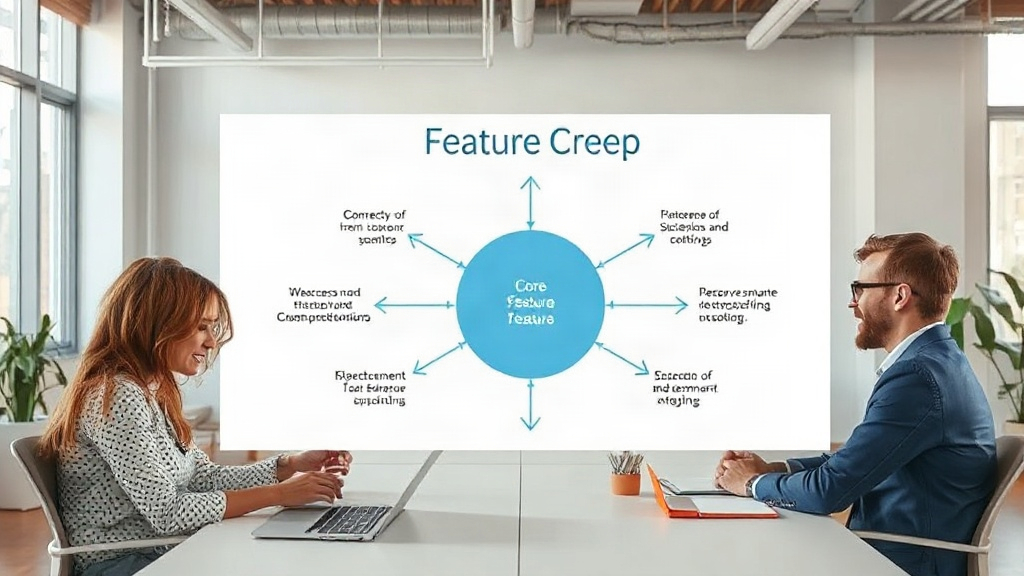
The alternative is a starkly different approach. Instead of feature creep, these successful tools exhibit a laser focus. They identify a core problem and solve it with elegance and efficiency. This specialization allows for deeper optimization, a more intuitive user experience, and ultimately, greater reliability. When a tool consistently delivers on its primary promise, day after day, it earns its place in a user’s essential toolkit. It becomes a dependable component, not a fleeting distraction.

What Defines a 'Survivor' in the AI Tool Market?
The user experience described is not anecdotal. It reflects a fundamental principle of product development and user adoption: focus. When an AI tool attempts to integrate too many disparate functionalities, it often sacrifices depth for breadth. This can manifest in several ways:
- Mediocre Performance: Each added feature requires development resources. Spreading these thinly across numerous functions means none may reach peak performance. A chatbot might be basic, a summarizer may lack advanced context awareness, or a code generation model might produce less sophisticated output than specialized alternatives.
- Cluttered Interfaces: An abundance of features invariably leads to complex, overwhelming user interfaces. Navigating these can be time-consuming and frustrating, detracting from the very productivity the tool is supposed to enhance. Users often find themselves searching for the specific function they need amidst a sea of options.
- Increased Complexity and Bugs: More features mean more code, more integrations, and more potential points of failure. This complexity can lead to a higher frequency of bugs and performance issues, further eroding user trust and reliance.
- Loss of Core Value Proposition: When a tool starts adding features that dilute its original purpose, users begin to question its identity. If a powerful AI writing assistant suddenly adds basic graphic design capabilities, its core strength in text generation might be perceived as compromised.
The tools that endure, conversely, are those that have honed a specific skill. Take Claude, for example. While it has evolved, its core strength remains advanced natural language understanding and generation – a powerful chatbot and writing assistant. Canva, known for its intuitive graphic design capabilities, focuses on making visual content creation accessible to a broad audience without overwhelming them with professional-grade, complex design software features. Perplexity AI has carved out a niche by focusing on providing direct, sourced answers to queries, acting as an intelligent search engine rather than a general-purpose AI assistant.
The Unanswered Question: Where is the Line?
The current trend suggests a clear user preference for specialized AI tools. However, the exact threshold for feature bloat remains a critical, unanswered question for AI product managers. At what point does adding a new, genuinely useful feature tip the scales from enhancement to distraction? Is it a specific number of features? Is it the integration of features that are tangential to the core offering? Or is it the perceived impact on the core functionality?
For instance, if an AI coding assistant adds a feature that intelligently analyzes error logs to pinpoint bugs, this could be seen as a highly relevant enhancement. But if the same tool then introduces a calendar integration to schedule coding sessions, it might be perceived as straying too far from its primary purpose. Understanding this delicate balance is crucial for the long-term viability of any AI product. The danger lies in a slow, incremental creep of features, where each addition seems minor, but the cumulative effect transforms the tool into something users no longer recognize or rely on for its original, powerful function.
User Behavior and the 'Cancel Button' Reflex
The