The Shifting Landscape of Software Engineering
The core anxiety for software engineers in 2024 is not whether AI can write code, but whether it can write it better and faster than humans. For decades, the defining skill of the profession was translating abstract requirements into precise, efficient machine instructions. This fundamental currency of software development is rapidly losing its value.
The rise of agentic AI systems and 'System 1' large language models (LLMs) signifies a profound shift. These systems operate with a speed and pattern-matching precision that mirrors human intuition, often referred to as 'System 1' thinking – fast, automatic, and emotional. This contrasts with 'System 2' thinking, which is slow, deliberate, and logical. LLMs, despite their complexity, often exhibit 'System 1' characteristics in their output generation, providing near-instantaneous responses based on vast pattern recognition.
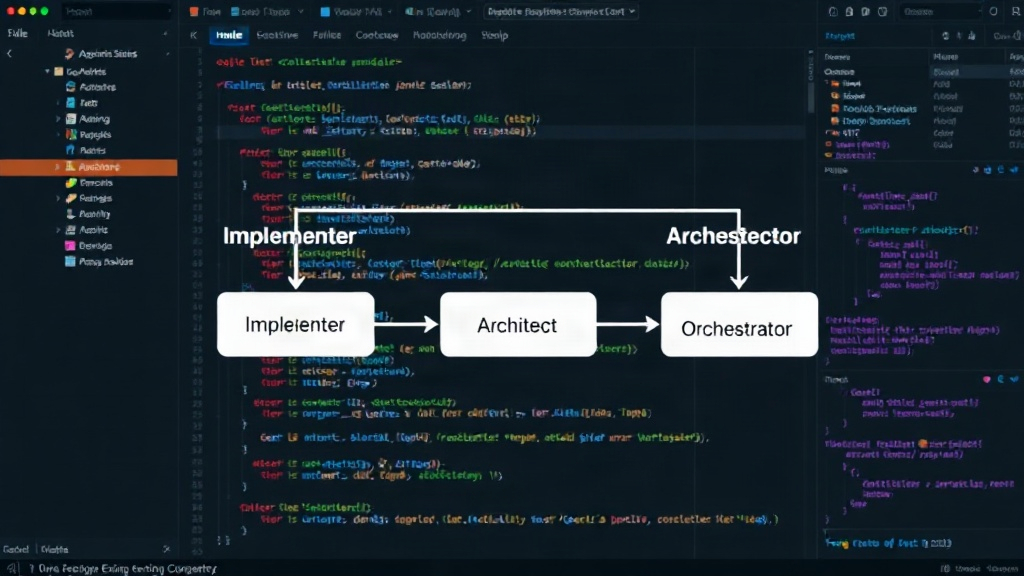
This technological evolution is pushing software engineers away from being mere implementers. The new paradigm demands a transition to roles that emphasize higher-level cognitive functions: becoming architects, validators, and orchestrators. The engineering role is not disappearing; it is ascending to a new plane of abstraction.
From Code Monkeys to System Designers
Consider the analogy of a skilled artisan. For centuries, the value was in the meticulous carving of wood or the forging of metal. Now, the master craftsman might design intricate furniture or complex machinery, relying on automated tools to perform the detailed fabrication. The engineer's role is similarly evolving from the granular execution of code to the strategic design and oversight of complex systems.
This requires a new skillset. Engineers must now excel at defining problems, validating AI-generated solutions, and integrating these solutions into larger, coherent systems. The ability to understand the nuances of system design, to foresee potential failure points, and to ensure the ethical and reliable operation of AI-driven components becomes paramount. This is not about coding less; it's about coding with greater strategic intent and oversight.
The challenge lies in this redefinition. Many engineers have built their careers and identities around their coding prowess. The prospect of this skill being commoditized by AI is unsettling. However, history shows that technology doesn't eliminate professions; it transforms them. The advent of compilers, for instance, shifted focus from assembly language to higher-level programming, enabling greater productivity and complexity.
The 'System 1' AI Challenge
'System 1' models, like many LLMs, are adept at generating plausible, often correct, outputs rapidly. They excel at tasks that involve pattern recognition and interpolation from massive datasets. This includes generating boilerplate code, writing unit tests, and even drafting initial API designs. Their speed and apparent fluency can create an illusion of complete competence.
However, 'System 1' thinking lacks the deep, causal reasoning that characterizes human 'System 2' thought. AI models do not truly 'understand' the underlying logic or the long-term implications of the code they produce in the way a human architect does. They can generate code that is syntactically correct but semantically flawed, inefficient, or insecure when considered within the broader system context. They may also struggle with novel problems that fall outside their training data distribution.
This is where the human engineer's role as a validator and architect becomes indispensable. Engineers must possess the critical thinking skills to scrutinize AI-generated code, identify subtle errors, and ensure it aligns with system-wide requirements, performance benchmarks, and security policies. They need to ask the 'why' behind the AI's output, not just accept the 'what'.
Reclaiming Engineering Identity
The path forward involves embracing this elevated role. Engineers must cultivate skills in:
- System Design and Architecture: Understanding how to design robust, scalable, and maintainable systems.
- Problem Definition: Clearly articulating complex problems that AI can then help solve.
- AI Solution Validation: Critically evaluating and testing AI-generated code and designs.
- Orchestration and Integration: Seamlessly weaving AI components into larger software ecosystems.
- Prompt Engineering and AI Interaction: Effectively guiding AI tools to produce desired outcomes.
- Ethical AI Oversight: Ensuring AI systems operate responsibly and without bias.
This shift is not a threat but an opportunity. It allows engineers to move beyond the repetitive, often tedious, aspects of coding and focus on the more intellectually stimulating challenges of system design, strategic problem-solving, and the creative orchestration of complex technological solutions. The identity of a software engineer is not being erased; it is being refined and elevated to meet the demands of a new era.
The Unanswered Question
What remains unclear is how educational institutions and professional development programs will adapt to train the next generation of engineers for this architect-centric, AI-augmented role. Will curricula shift from deep implementation details to systems thinking and AI interaction, or will they lag behind, leaving a skills gap?