
A New Standard for AI-Driven Chip Thermal Analysis
The increasing complexity of semiconductor packaging, particularly with the rise of 2.5D and 3D Integrated Circuits (ICs), presents significant challenges for thermal management. As chiplets are stacked and interconnected in intricate ways, predicting and managing heat dissipation becomes critical for performance, reliability, and power efficiency. Traditional thermal modeling approaches struggle to keep pace with these advanced architectures. In response, researchers from the University of Technology Sydney (UTS), ShanghaiTech University, and Technical University of Munich have introduced IC-ThermBench, an open and progressive benchmark designed to accelerate the development and evaluation of AI-driven thermal learning models for these cutting-edge IC designs.
The motivation behind IC-ThermBench stems from the need for a standardized, comprehensive, and accessible platform to test and compare the efficacy of AI models in predicting thermal behavior. Current AI thermal models often operate in silos, trained on proprietary datasets or specific, limited use cases. This fragmentation hinders progress and makes it difficult for the industry to adopt AI solutions for thermal analysis with confidence. IC-ThermBench aims to bridge this gap by providing a diverse set of tasks and data that represent real-world thermal challenges in advanced packaging.
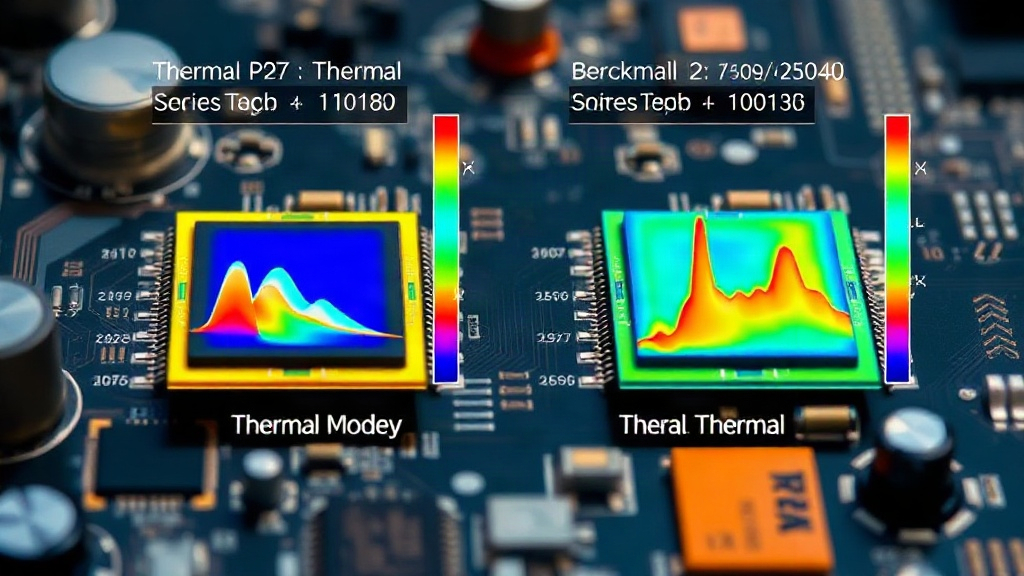
The benchmark is built upon established 3D-IC tasks, encompassing both steady-state and transient thermal analysis. Steady-state analysis focuses on the equilibrium temperature distribution under constant operating conditions, crucial for understanding peak heat loads. Transient analysis, on the other hand, examines how temperatures evolve over time, which is vital for managing dynamic power fluctuations and preventing thermal shock. By integrating these established methodologies, IC-ThermBench ensures that AI models can be evaluated against well-understood thermal phenomena.
Expanding Benchmarks with 2.5D Chiplet Integration
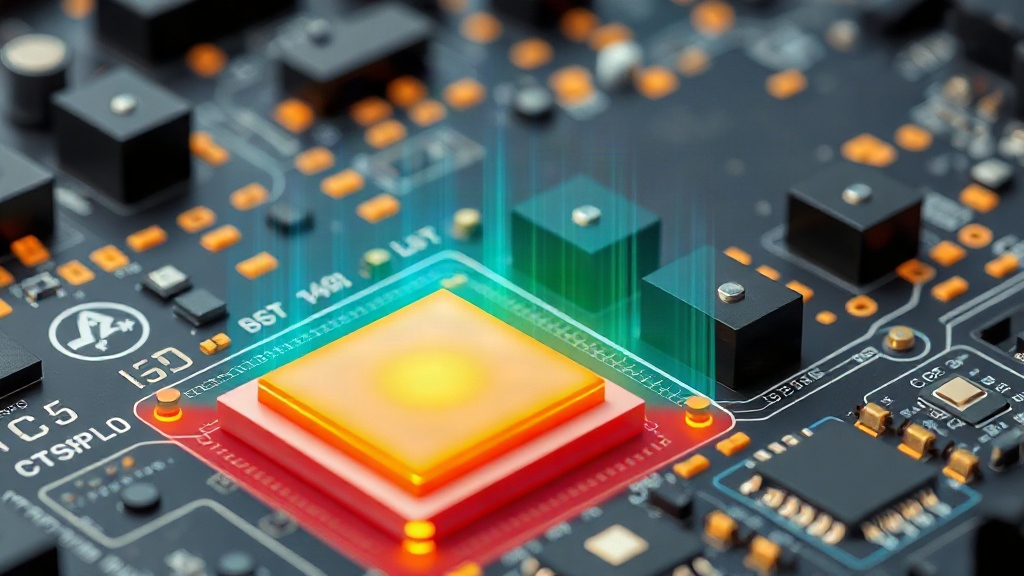
A key innovation of IC-ThermBench is the inclusion of a novel dataset for 2.5D chiplet designs. This new component comprises approximately 50,000 samples, specifically engineered to address the unique thermal characteristics of chiplet-based systems. In 2.5D packaging, multiple chiplets are placed side-by-side on an interposer, which then connects to the package substrate. This configuration introduces complex thermal coupling between adjacent chiplets, making accurate modeling essential. The dataset captures these intricate thermal interactions, providing a rich environment for training and validating AI models designed for this increasingly prevalent architecture.
The progressive nature of IC-ThermBench means it is designed to evolve. The researchers envision that the benchmark will continuously incorporate new tasks and data, reflecting the rapid advancements in IC packaging technology. This foresight is critical in a field where new architectures and design paradigms emerge frequently. By building a flexible and expandable framework, IC-ThermBench aims to remain relevant and valuable to the research community and industry practitioners for years to come.
The abstract of the research paper, titled “IC-ThermBench: An Open, Progressive Benchmark for Generalizable 2.5D/3D-IC Thermal Learning,” highlights the benchmark's core objective: to provide a generalizable solution for AI-driven thermal learning. Generalizability is a paramount concern; an AI model that can accurately predict thermal behavior across a wide range of 2.5D and 3D IC configurations is far more valuable than one optimized for a single, specific design. IC-ThermBench pushes AI models to demonstrate this broader applicability.
The Significance of Openness and Progressiveness
The decision to make IC-ThermBench an open benchmark is significant. Open benchmarks foster collaboration, transparency, and reproducibility in research. Developers and researchers can freely access the dataset and evaluation methodologies, allowing them to rigorously test their models and compare their performance against established baselines. This openness accelerates the pace of innovation by enabling researchers to build upon each other's work more effectively. It also provides a clear pathway for industry adoption, as companies can rely on a standardized evaluation process to assess potential AI solutions for their thermal design challenges.
The progressive aspect of the benchmark ensures its long-term utility. As chiplet integration becomes even more sophisticated, with heterogeneous chiplets, advanced interposers, and 3D stacking beyond simple 2.5D configurations, new thermal challenges will arise. IC-ThermBench’s architecture is intended to accommodate these future complexities, allowing for the integration of new datasets and task types as the technology landscape evolves. This adaptability is crucial for maintaining the benchmark's relevance in a rapidly advancing field.
The researchers specifically combined established 3D-IC tasks with the new 2.5D chiplet data. This hybrid approach offers a unique advantage. It allows for a holistic evaluation of AI models, assessing their capability to handle both traditional 3D stacking scenarios and the more contemporary chiplet-based designs. This comprehensive evaluation is vital for developing AI thermal models that are truly generalizable and robust enough for the diverse range of advanced packaging solutions being developed today and in the future.
Why This Matters for AI and Semiconductor Design
The implications of IC-ThermBench extend to both the AI and semiconductor design communities. For AI researchers, it provides a challenging and relevant domain for developing and testing new predictive modeling techniques. The complexity of thermal interactions in 2.5D and 3D ICs offers fertile ground for advancements in areas like graph neural networks, physics-informed neural networks, and multi-scale modeling. The benchmark serves as a rigorous testing ground, pushing the boundaries of what AI can achieve in simulating complex physical phenomena.
For semiconductor designers and thermal engineers, IC-ThermBench offers a path towards more efficient and reliable chip development. By enabling faster and more accurate thermal predictions, AI models validated against this benchmark can help engineers optimize designs, reduce the need for costly and time-consuming physical prototyping, and ensure that advanced ICs operate within safe thermal limits. This is particularly important for high-performance computing, AI accelerators, and advanced mobile devices where thermal constraints are often a primary design bottleneck.
The integration of AI into thermal design is not merely an incremental improvement; it represents a paradigm shift. Traditional physics-based simulations, while accurate, can be computationally prohibitive for exploring the vast design space of modern ICs. AI offers a way to dramatically accelerate this process, making it feasible to perform extensive design space exploration and optimization. IC-ThermBench provides the necessary foundation for this transition, ensuring that the AI tools developed are effective, reliable, and validated against realistic industry challenges.
Looking Ahead: The Future of AI in Thermal Management
The introduction of IC-ThermBench by UTS, TU Munich, and ShanghaiTech is a significant step towards realizing the full potential of AI in semiconductor thermal management. By providing an open, progressive, and comprehensive benchmark, these institutions are paving the way for more robust, generalizable, and widely adopted AI solutions. As chip architectures continue to evolve, the need for advanced thermal analysis will only intensify. IC-ThermBench positions itself as a critical enabler for this future, fostering innovation and collaboration across the AI and semiconductor ecosystems.
The benchmark's focus on both established 3D-IC tasks and the emerging 2.5D chiplet paradigm ensures its immediate relevance and future adaptability. It is more than just a dataset; it is a framework for progress, encouraging the development of AI models that can tackle the increasingly complex thermal challenges posed by next-generation integrated circuits. The success of IC-ThermBench will be measured by its adoption and its contribution to creating more performant, reliable, and energy-efficient electronic devices.