The Limitations of Basic AI Chatbots
The initial impulse for many AI projects, especially those leveraging popular messaging platforms like WhatsApp, is straightforward: receive a message, generate an AI-powered response. This is the foundational step, but for complex industries like real estate, it falls far short of true utility. A real estate AI system must go beyond mere text generation to become a powerful tool for sales and marketing teams.
Consider a typical real estate inquiry unfolding over WhatsApp. It might begin with a simple question about property availability: "Hi, is the 3 BHK available?" This is quickly followed by crucial details like price expectations: "What's the price?" The potential buyer might then refine their search criteria: "Is there anything around 80L in Gurgaon?" Finally, the conversation progresses towards action: "I can visit this weekend." Each of these exchanges contains vital data points about the buyer's needs, budget, and readiness to engage.
The problem is that these fragmented messages, scattered across a chat interface, do not inherently form a structured lead record. A human agent would manually sift through the conversation, extracting key information like property type, budget, location preferences, and viewing availability. This process is time-consuming, prone to human error, and inefficient, especially when dealing with a high volume of inquiries.
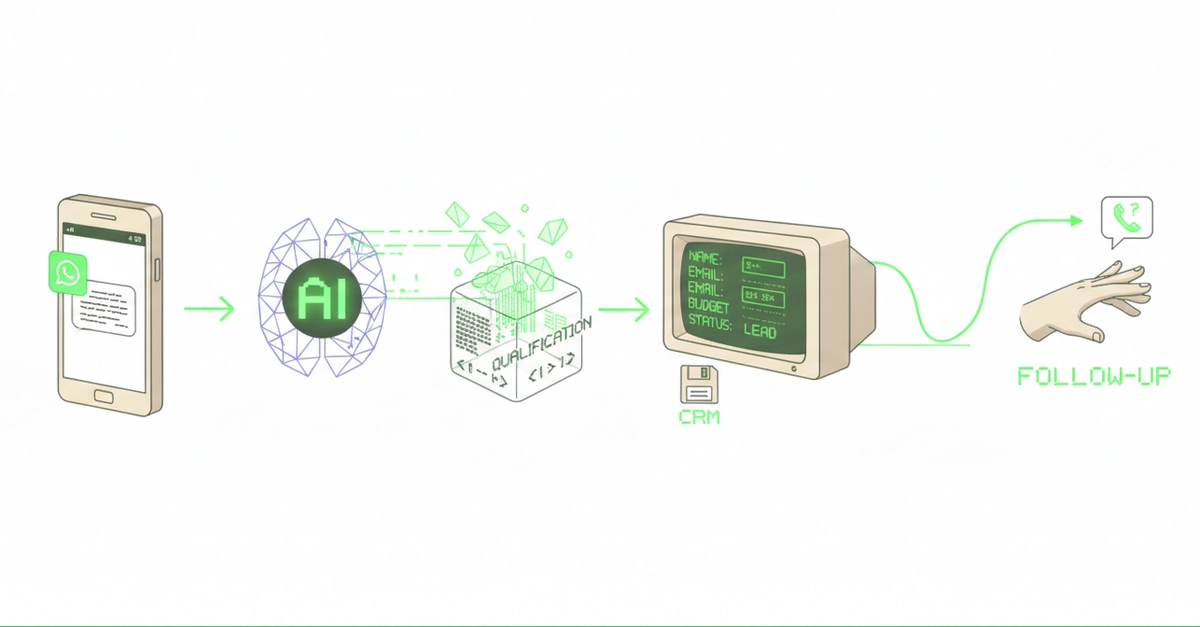
This is precisely the gap that Vaxyro aims to fill. The goal is not just to reply to messages, but to build a comprehensive lead qualification system that understands the nuances of buyer intent within a WhatsApp conversation, captures all essential information, qualifies the lead based on predefined criteria, maintains conversation context, and seamlessly integrates this data into a Customer Relationship Management (CRM) system. Crucially, the system must also recognize when a human salesperson's expertise is required to close the deal.
Designing a Smart Lead Qualification Workflow
Building such a system requires a multi-faceted approach, moving beyond simple prompt-response loops. The core components involve several key stages, each leveraging AI to extract, interpret, and act upon the conversation data.
Understanding Buyer Intent
The first step is to analyze incoming messages not just for keywords, but for underlying intent. Is the user asking a general question, expressing specific interest in a property, inquiring about pricing, or indicating a desire to view the property? Natural Language Processing (NLP) techniques are essential here to interpret the semantic meaning of the user's input. This allows the AI to distinguish between a casual browser and a serious prospect.
Information Extraction
Once intent is understood, the system must extract specific data points. For real estate, this includes crucial details like:
- Property type (e.g., 3 BHK, apartment, villa)
- Budget (e.g., 80L, under 1 crore)
- Location preferences (e.g., Gurgaon, near metro)
- Urgency or timeline (e.g., can visit this weekend, looking to buy in 3 months)
- Contact information (if not already provided)
This extraction process can be powered by Named Entity Recognition (NER) models trained on real estate terminology. The AI acts as an automated data entry clerk, diligently logging every relevant piece of information shared by the prospect.
Lead Qualification
With the extracted information, the AI can then qualify the lead against predefined criteria. These criteria are specific to the real estate business and might include:
- Budget alignment with available properties
- Location match with current inventory
- Demonstrated interest level (e.g., asking specific questions vs. general inquiries)
- Readiness to engage further (e.g., scheduling a visit)
A lead scoring mechanism can be implemented, assigning a score based on how well the prospect meets these criteria. High-scoring leads are flagged as hot prospects, while lower-scoring ones might be nurtured with more general information or follow-up prompts.
Context Preservation and CRM Integration
A significant challenge in conversational AI is maintaining context. The AI must remember previous exchanges to provide relevant responses and to build a complete picture of the lead. This involves storing conversation history and linking it to the extracted data. This consolidated information is then pushed to a CRM. This integration is critical, transforming raw chat data into actionable sales intelligence. Instead of a sales agent having to re-read an entire chat log, they receive a structured summary of the lead's requirements and status directly in their CRM.
Human Handoff and Automation Orchestration
Finally, the system must know its limits. Not every inquiry can or should be handled solely by AI. The system should be programmed to identify complex queries, highly qualified leads showing immediate intent to purchase, or situations where human empathy and negotiation skills are paramount. At these junctures, the AI facilitates a smooth handoff to a human sales representative, providing them with all the context gathered during the AI interaction. This hybrid approach ensures efficiency without sacrificing the personal touch crucial in real estate sales.
The Broader Implications for Real Estate Technology
The development of such sophisticated AI-driven lead qualification systems on platforms like WhatsApp signifies a maturing of AI applications in traditionally relationship-driven industries. It moves beyond novelty chatbots to embed AI deeply into the sales funnel. For real estate agencies, this means increased efficiency, faster lead response times, better lead quality, and ultimately, more closed deals. It allows human agents to focus on high-value activities like personalized consultations and closing negotiations, rather than on the repetitive tasks of initial screening and data entry.
The success of systems like Vaxyro hinges on their ability to accurately interpret human language, learn business-specific qualification criteria, and integrate seamlessly with existing sales infrastructure. As AI continues to advance, we can expect more industries to adopt similar intelligent automation strategies, transforming customer interactions and operational efficiency.