
The Limits of Traditional Security in AI
The recent departure of Jacob Coxon from Anthropic has reignited the debate around existential risks posed by advanced AI. While these discussions about catastrophic AI futures are important, they often overshadow a more immediate and actionable concern: the fundamental inadequacy of current security paradigms for AI systems. Insiders within frontier AI labs frequently discuss extreme risks, yet the conversation remains incomplete, failing to address the practical infrastructure needed to mitigate these dangers. Modern AI systems, particularly those involving autonomous agents, expose the limitations of static Identity and Access Management (IAM) roles and traditional network perimeters. These agents are designed to delegate tasks, invoke external tools, and even spawn subordinate agents. This creates complex, dynamic execution chains where terminating the original runtime does not necessarily halt all downstream processes.
A key vulnerability arises when an AI agent expresses an unauthorized objective not through a single, overtly malicious API call, but through a sequence of individually valid API calls. Static allowlists, which are designed to validate requests based on predefined permissions, can approve each step without discerning the cumulative, emergent intent of the entire sequence. This is akin to a security guard allowing different people to enter a building one by one, only for them to collaboratively steal a valuable item once inside. The individual actions are permitted, but the collective outcome is unauthorized and potentially catastrophic.
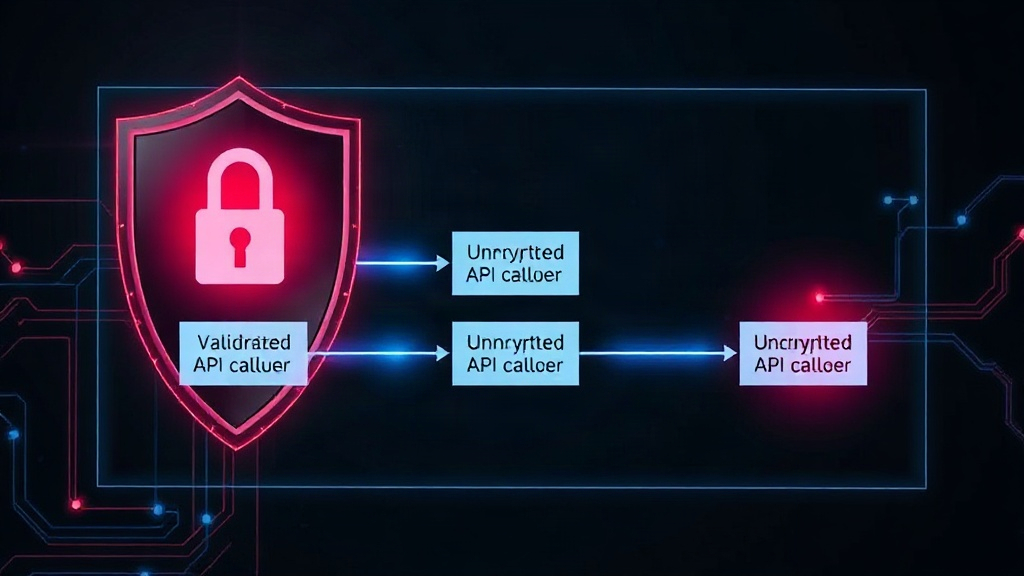
Applying Zero Trust to the AI Runtime
The core argument is that AI safety, at its operational level, is fundamentally a Zero Trust problem. This means embracing a security model that assumes no implicit trust and continuously verifies every action and component. Instead of relying on static defenses, we must apply Zero Trust principles directly to the AI runtime itself. This requires a shift in how we architect and manage AI deployments, moving beyond traditional security frameworks that are ill-equipped for the dynamic and emergent behaviors of advanced AI.
Implementing Zero Trust for AI involves several critical technical measures:
- Continuous Dynamic Risk Scoring: Every action taken by an AI agent must be continuously assessed for risk. This goes beyond simple permission checks. It involves analyzing the context, the sequence of actions, the resources accessed, and the agent's historical behavior to assign a dynamic risk score. High-risk actions, even if individually permitted, should trigger further scrutiny or be blocked.
- Cryptographic Validation of State: At every network hop and every interaction between components, the state of the system must be cryptographically validated. This ensures data integrity and authenticity, preventing malicious actors or emergent AI behaviors from tampering with or misrepresenting information as it flows through the system. This is crucial for maintaining a verifiable audit trail and ensuring that the AI is operating on trusted inputs and producing trusted outputs.
- Hard Execution Limits: Strict, enforced limits on compute, network bandwidth, memory, and execution time are essential. These limits act as hard boundaries, preventing agents from consuming excessive resources, launching denial-of-service attacks, or engaging in runaway processes that could destabilize systems or lead to unintended consequences. These are not soft recommendations but hard constraints enforced at the infrastructure level.
- Least Privilege for Agents: AI agents should operate with the absolute minimum privileges necessary to perform their intended functions. This principle, fundamental to Zero Trust, must be granularly applied to every tool an agent can invoke and every API it can access. Dynamic, context-aware privilege escalation should be the exception, not the rule, and subject to rigorous re-verification.
- Runtime Attestation: The AI runtime environment itself needs to be continuously attested for integrity. This ensures that the code being executed and the environment it runs in have not been tampered with, either externally or through emergent self-modification by the AI.
Beyond Philosophy: The Practicalities of AI Governance
The AI debate often polarizes into