
The Unseen Threat: Browsers as a Data Control Point
Artificial intelligence has a unique knack for finding patterns invisible to human observers. Recently, AI has illuminated a significant, yet often overlooked, security gap within enterprise environments: the humble web browser. This isn't a new vulnerability introduced by AI; rather, AI's advanced analytical capabilities have exposed how enterprises have long been able to ignore a critical control point for data movement and modern work. Skyhigh Security's analysis highlights that browsers, once seen as mere conduits for information, have evolved into central hubs where data flows in and out, and where AI interactions now occur, demanding a fresh security perspective.
The traditional enterprise security perimeter has dissolved. With the rise of cloud computing, remote workforces, and a proliferation of Software-as-a-Service (SaaS) applications, data no longer resides solely within a corporate data center. Employees access sensitive information from various devices, networks, and locations. This distributed model makes traditional network-based security measures insufficient. The browser, therefore, has become an indispensable tool for accessing these distributed resources, inadvertently transforming into a primary gateway for both legitimate work and potential data exfiltration or compromise.
AI's Role in Exposing the Gap
AI's contribution to this revelation is twofold. Firstly, AI-powered security tools can now analyze user behavior and data flows with unprecedented granularity. These tools can detect subtle anomalies that might indicate a security risk, such as unusually large data downloads, access to sensitive cloud applications from unmanaged devices, or the use of unapproved AI services. By processing the sheer volume of logs and network traffic generated by modern enterprises, AI can identify trends and deviations that human analysts would likely miss or take too long to uncover.
Secondly, the integration of AI into everyday workflows presents new vectors for potential data leakage. Employees are increasingly using generative AI tools, chatbots, and AI-powered productivity suites. While these tools can boost efficiency, they also represent new endpoints where sensitive enterprise data might be inadvertently shared or stored. If an employee pastes proprietary code into a public AI model for debugging, or uploads confidential customer data to an AI-powered analysis tool without proper controls, that data could be exposed. AI security platforms can now flag these types of interactions, which were previously difficult to monitor comprehensively.
The Browser as a Critical Control Point
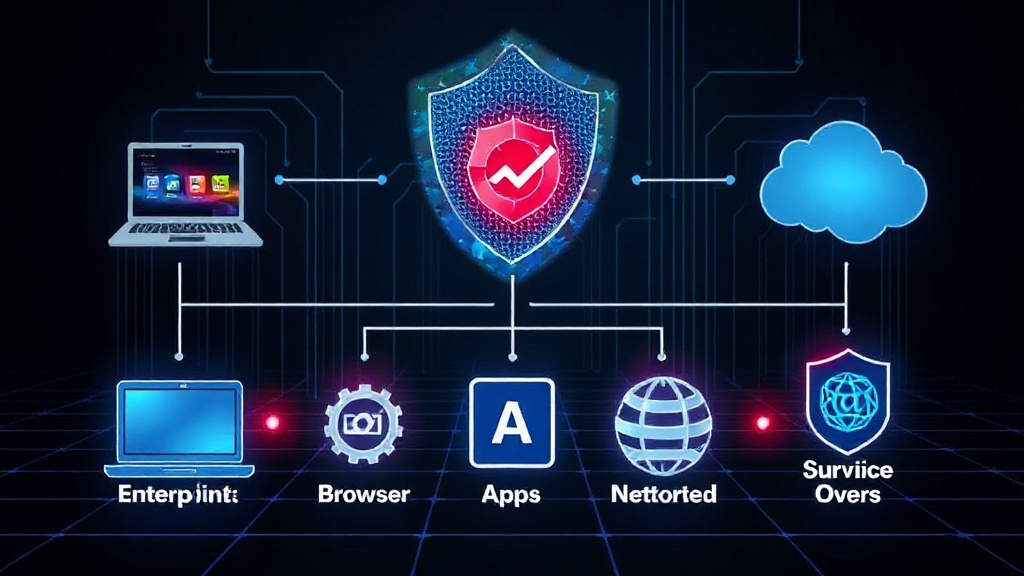
Enterprises have historically focused security efforts on endpoints, networks, and cloud applications themselves. However, the browser acts as the interface for all these elements. It's the common denominator that connects users to the web, cloud services, and now, AI tools. If the browser itself isn't adequately secured or managed, it undermines the security of all connected resources.
Consider the journey of data. An employee might download a confidential report from a cloud storage service via their browser. They might then use this data in an AI-powered document summarizer, also accessed through the browser. Finally, they might upload the summarized, potentially still sensitive, document to a collaboration platform, again via the browser. At each step, the browser is the active component. Without proper security policies and controls applied to browser activity, data can leak out at any of these stages. This is akin to having a fortress with strong walls and guards, but leaving the main gate wide open and unguarded.
Why Enterprises Have Ignored This Gap
Several factors have contributed to enterprises overlooking browser security. For a long time, the primary concern was malware and phishing attacks targeting individual users. Endpoint security solutions were designed to protect against these threats. However, the shift towards cloud-based applications and the increasing complexity of data flows changed the landscape. The browser's role expanded dramatically, but security strategies lagged behind.
Furthermore, managing browser activity across a diverse workforce using various devices and operating systems presents significant challenges. Traditional methods of browser security often involved restrictive policies that could hinder productivity. This created a tension between security and usability, leading many organizations to err on the side of user flexibility, inadvertently creating the security gap AI is now highlighting. The sheer volume of web traffic and the dynamic nature of web applications also made comprehensive monitoring and control difficult with older security tools.
The Imperative for Modern Browser Security
The insights provided by AI necessitate a fundamental shift in how enterprises approach browser security. It's no longer sufficient to rely on basic endpoint protection or network firewalls. Organizations need to implement robust browser security solutions that offer visibility, control, and threat prevention specifically tailored to the modern web environment.
This includes capabilities such as:
- Data Loss Prevention (DLP) for Browsers: Monitoring and controlling sensitive data uploaded or downloaded through web browsers.
- Cloud Access Security Broker (CASB) Integration: Extending CASB policies to govern access and data handling within browser sessions for cloud applications.
- AI Usage Monitoring: Detecting and controlling the use of unapproved or risky AI services accessed via the browser.
- Advanced Threat Protection: Safeguarding against sophisticated web-based threats, including zero-day exploits and malicious web content.
- Context-Aware Policies: Applying security policies based on user, device, location, and the sensitivity of the data being accessed.
By treating the browser as a critical control point, and leveraging AI-driven insights to enforce granular policies, enterprises can finally close this persistent security gap. This proactive approach is essential to protect sensitive data and maintain security in an increasingly AI-integrated and cloud-centric world.