The Automation of Execution
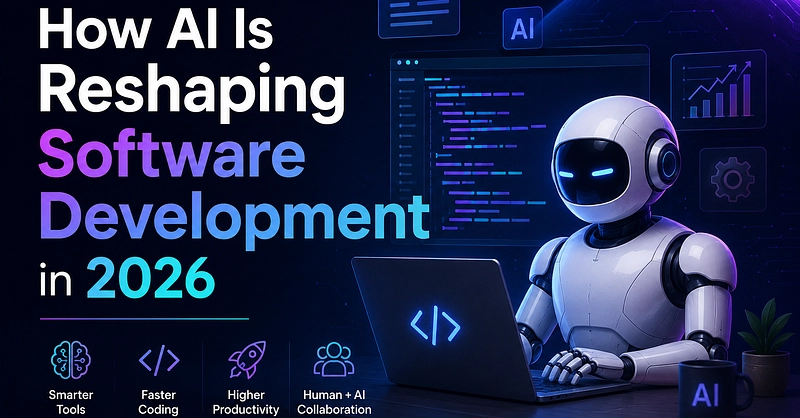
The craft of software development is undergoing a seismic shift. For years, proficiency was measured by typing speed, syntax recall, and the ability to navigate complex framework APIs. Developers routinely spent significant time on mundane tasks: configuring build pipelines, debugging elusive syntax errors like missing semicolons, and piecing together boilerplate code, often sourced from platforms like Stack Overflow. This era, characterized by manual execution and deep dives into implementation details, is rapidly receding.
AI coding assistants and, more recently, autonomous AI agents have begun to absorb much of this routine labor. These advanced systems now possess the capability to analyze vast and intricate codebases, refactor sprawling legacy microservices with precision, generate exhaustive test suites that cover edge cases, and even propose optimized pull requests. Astonishingly, they can accomplish these feats in a fraction of the time it would take even a senior developer to simply establish a local development environment. This acceleration is not merely an incremental improvement; it represents a fundamental change in the execution layer of software engineering.
Redefining the World-Class Software Team
This profound automation naturally prompts a critical question for engineering leaders and teams: When AI handles much of the execution, what defines a world-class software team in 2026? The answer, according to emerging industry consensus, is that software engineering has not lost its core purpose; it has evolved. The focus is shifting away from the 'how' of coding and towards the 'what' and 'why'.
The emphasis will increasingly be on higher-order cognitive skills. World-class teams will excel in areas that AI currently struggles to replicate: strategic thinking, architectural design, complex problem-solving, and understanding nuanced business requirements. The ability to translate abstract business needs into robust, scalable, and maintainable software systems will become paramount. This involves not just designing the system's blueprint but also anticipating future needs, identifying potential bottlenecks, and making trade-offs that balance technical debt with delivery speed.
Furthermore, critical thinking and rigorous validation will be essential. While AI can generate code and tests, humans will be responsible for questioning the AI's output, ensuring its alignment with project goals, and verifying its correctness in complex scenarios. This includes evaluating the security implications of AI-generated code, assessing its performance characteristics under real-world load, and ensuring its maintainability over time. The human element becomes the ultimate arbiter of quality and strategic fit.
The Evolving Skillset of the Developer
The skillset required for developers is thus undergoing a significant transformation. The demand for deep, esoteric syntax knowledge or the ability to manually write thousands of lines of boilerplate code will diminish. Instead, developers will need to cultivate skills in:
- System Architecture and Design: Understanding how to design complex, distributed systems, microservices, and data pipelines that are resilient, scalable, and secure. This involves a shift from component-level coding to holistic system design.
- Problem Decomposition and Abstraction: The capacity to break down intricate business problems into manageable components that can be effectively addressed, either by humans or by AI agents. This requires a strong grasp of logical thinking and algorithmic principles.
- AI Prompt Engineering and Orchestration: Learning how to effectively communicate with and guide AI agents to produce desired outcomes. This includes crafting precise prompts, setting constraints, and iterating based on AI feedback. It’s akin to becoming a conductor of an AI orchestra.
- Codebase Comprehension and Refactoring Strategy: While AI can perform refactoring, humans will need to understand the 'why' behind it, guiding AI to refactor for specific goals like improved performance, maintainability, or security, rather than just performing automated transformations.
- Validation and Verification: Developing sophisticated strategies for testing and validating AI-generated code. This includes not only functional correctness but also performance, security, and ethical considerations.
- Cross-functional Collaboration: Enhanced communication and collaboration skills will be vital. Developers will need to work more closely with product managers, designers, and business stakeholders to ensure AI-assisted development aligns with strategic objectives.
This evolution means that junior roles might shift from entry-level coding tasks to more focused AI interaction and validation roles, while senior developers will likely find themselves taking on more strategic and architectural responsibilities. The ability to understand the broader system and its business context will differentiate top talent.
The Future of Development Environments
The development environment itself is also being reshaped. Instead of local setups dominated by IDEs and debuggers, future environments will likely be more cloud-native and AI-integrated. Developers might interact with a centralized, AI-powered platform that manages code generation, testing, deployment, and monitoring. This platform could provide contextual insights, suggest architectural improvements, and even predict potential issues before they arise.
Think of it less like a traditional IDE and more like an intelligent co-pilot that not only suggests the next line of code but also understands the entire flight plan and can alert you to turbulence or suggest optimal routes. This shift necessitates a move away from managing local dependencies and configurations towards interacting with sophisticated, managed services.
What This Means for the Industry
The implications for the software industry are profound. Companies that successfully adapt their development processes and upskill their teams will gain a significant competitive advantage. They will be able to innovate faster, deliver higher-quality software, and respond more nimbly to market changes. Conversely, organizations that cling to traditional development paradigms risk falling behind.
The definition of 'developer productivity' will also change. It will no longer be solely about lines of code written per day but about the strategic impact and value delivered. This means a greater emphasis on the quality of architectural decisions, the effectiveness of problem-solving, and the successful alignment of software with business goals. The entire software development lifecycle, from ideation to deployment and maintenance, will be infused with AI, demanding a new breed of technically adept, strategically minded engineers.