
Navigating the AI Publication Landscape
The path to academic recognition in Artificial Intelligence is often paved with submissions to a select few top-tier conferences. For many researchers, particularly those in the crucial final stages of their graduate studies, consistent rejection from these prestigious venues can be a significant hurdle. This was the predicament shared by a 5th-year PhD student, who, despite receiving good review scores, found their work repeatedly turned away from leading AI conferences. Their primary goal: to find a suitable publication venue to complete their degree, explicitly excluding the so-called "elitist clubs" like NeurIPS.
The student's research area, efficient Generative AI, is a rapidly evolving and highly competitive field. While top conferences offer unparalleled visibility and prestige, their highly selective nature means that many valuable contributions may not make it through. This raises a broader question for the academic community: what are the viable alternatives for researchers whose work doesn't fit the narrow mold of the current elite conference circuit, but still represents meaningful progress?
Beyond the Elite: Exploring Alternative Venues
The student's plea for recommendations highlights a critical need for a more diverse and accessible publication ecosystem. While journals and conferences like ICML, ICLR, and CVPR are often the default targets for cutting-edge AI research, their acceptance rates can be notoriously low, sometimes hovering in the 15-25% range. This intense competition, coupled with the subjective nature of peer review, can leave promising research outside the spotlight. For a student on a timeline, the focus shifts from maximizing prestige to securing a publication that validates their work and fulfills degree requirements.
The search for alternative venues is not just about finding a less competitive space; it's about identifying outlets that still offer rigorous peer review and contribute to the scientific record. This involves looking at established journals with strong reputations in specific subfields of AI, as well as regional or specialized conferences that may have a more focused scope or a different review philosophy. The key is to find a venue that aligns with the research's maturity and impact, even if it doesn't carry the same global brand recognition as the top-tier events.
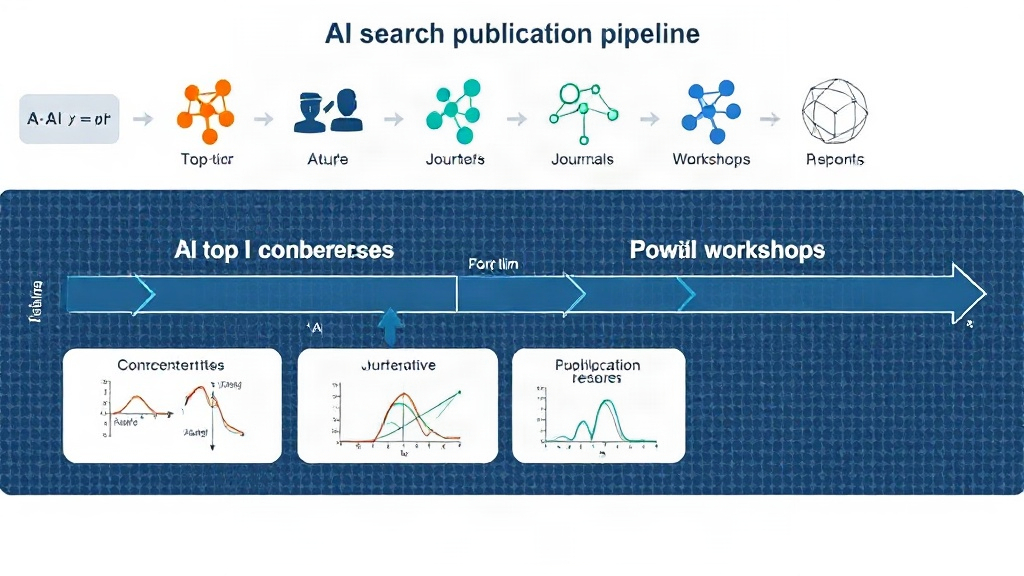
For researchers in Generative AI, this could mean exploring journals focused on machine learning applications, computational creativity, or even specialized venues within computer vision or natural language processing, depending on the specific flavor of their work. Some researchers also find success in workshops co-located with major conferences, which often have lower barriers to entry and can serve as excellent stepping stones for future submissions to main tracks or journals. These workshops can provide valuable feedback and early validation.
The Value of Diverse Publication Outlets
The current emphasis on a few hyper-competitive conferences can inadvertently stifle innovation. When researchers tailor their work to meet the perceived expectations of a narrow set of reviewers or program committees, the breadth of AI research can suffer. A more distributed publication landscape, with robust journals and specialized conferences, allows for a wider range of research questions and methodologies to be explored and validated. It also provides more opportunities for early-career researchers to build a publication record.
Journals, in particular, offer a different kind of validation than conferences. They typically involve a more in-depth review process, allowing for more extensive revisions and a deeper engagement with the research. While conference publications are often faster, journal articles tend to have a longer shelf life and are considered by many to be the gold standard for archival research. For a student needing to graduate, a journal publication can be a more reliable, albeit potentially slower, route.
Consider the current landscape: while many AI researchers aspire to publish at ICLR or CVPR, there are also highly respected journals like the Journal of Machine Learning Research (JMLR), IEEE Transactions on Pattern Analysis and Machine Intelligence (TPAMI), and Artificial Intelligence, among many others. These journals often have editorial boards composed of leading experts and employ rigorous review processes. Furthermore, specialized conferences in areas like natural language processing (ACL, EMNLP), computer vision (WACV), and robotics (ICRA, RSS) offer strong alternatives for researchers whose work aligns with those domains.
The Unanswered Question: Systemic Change in AI Academia
What remains unaddressed is whether the current system, which heavily favors a small number of elite conferences, will adapt to accommodate the growing volume and diversity of AI research. The pressure to publish in these select venues can lead to a homogenization of research topics and methodologies, as well as immense stress on researchers. While the student's immediate need is for venue recommendations, the broader challenge is how the AI academic community can foster a more inclusive and supportive publication environment that values a wider spectrum of contributions.
For the researcher in question, the path forward involves a strategic assessment of their work's strengths and its alignment with the scope and audience of various journals and conferences. It requires diligent research into publication metrics, acceptance rates, and the typical scope of papers accepted by different outlets. Engaging with senior colleagues and mentors who have experience navigating these diverse publication channels is also crucial. The goal is to find a venue that not only accepts their research but also provides a platform for it to be seen and appreciated by the relevant community, thereby fulfilling their academic requirements and contributing to the field.