Community Friction for AI-Powered Projects
A developer recently attempted to share an open-source project, Open Vectorizer, a Rust-based raster-to-SVG vectorization engine, only to encounter unexpected resistance from established developer communities. The project, which boasts local execution, WebAssembly compilation, a reproducible benchmark suite, and performance competitive with tools like Potrace and VTracer, was met with barriers to entry when the developer sought community feedback and potential contributors.
The initial attempt to share Open Vectorizer on Hacker News through a "Show HN" post was thwarted by the platform's temporary restrictions. These restrictions were implemented due to a significant influx of submissions from users unfamiliar with the community's norms, a common challenge for rapidly growing platforms dealing with increased traffic and new participants. While the developer acknowledged the rationale behind the restriction, it presented an immediate roadblock to reaching the intended audience.
Navigating Reddit's Moderation Policies
Following the Hacker News experience, the developer turned to Reddit, specifically targeting relevant subreddits like r/rust and r/programming. However, this avenue proved equally challenging. The project's description, which included details about its AI-assisted development and performance benchmarks, triggered moderation filters in several communities.
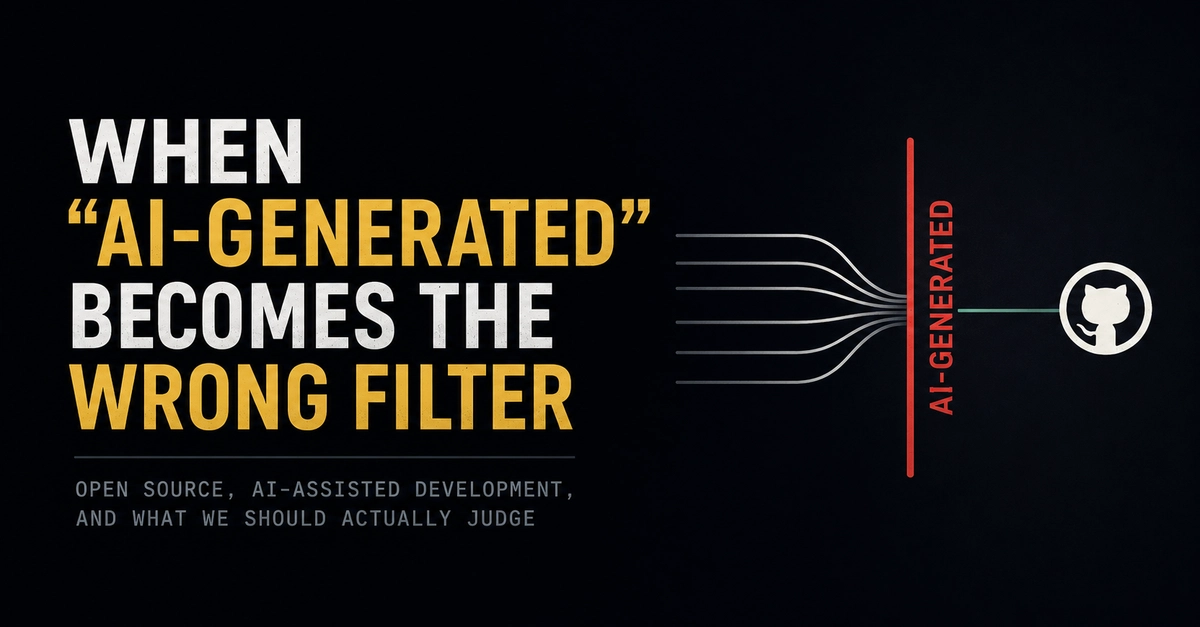
One subreddit moderator cited the project's reliance on AI as the reason for removal, stating that "posts that are primarily AI generated or heavily AI assisted are not allowed." This stance reflects a broader tension within developer communities regarding the role and transparency of AI in software development. The developer clarified that while AI tools were used in the development process, the core logic and implementation were human-driven, and the project was open-source with reproducible benchmarks, aiming for transparency and community engagement.
The moderator's response, however, indicated a strict policy against AI-assisted content, regardless of the extent of human involvement or the project's technical merit. This highlights a growing divide: some communities are embracing AI as a development tool, while others are wary of AI-generated content, fearing a potential flood of low-quality submissions or a dilution of human-crafted code and expertise. The specific wording of the removal notice – "primarily AI generated or heavily AI assisted" – leaves room for interpretation, but the outcome was the same: Open Vectorizer was not permitted on these platforms.
The Unanswered Question of AI Transparency
What remains unaddressed by these community policies is a clear, nuanced framework for evaluating AI-assisted projects. The current approach often seems to be a blanket ban or a subjective interpretation of "heavily AI assisted." This leaves developers who leverage AI tools responsibly in a difficult position. They are penalized for using powerful, efficient tools that can accelerate development, improve code quality, and enable complex features. Open Vectorizer, with its reproducible benchmarks and open-source nature, represents an effort to be transparent about its development process. Yet, it was flagged and removed based on a perceived reliance on AI, rather than a thorough evaluation of its technical contributions.
The developer's experience underscores a critical challenge for the future of open-source development and community platforms: how to foster innovation while maintaining community standards and preventing the spread of low-effort, AI-generated content. The current ad-hoc moderation policies, while perhaps well-intentioned, create an environment of uncertainty and can stifle legitimate projects that happen to utilize AI tools. This situation is akin to early web developers being told their Flash animations weren't "real" web development; the tools change, and communities must adapt to distinguish between genuine innovation and superficial output.
Broader Implications for AI in Development
The rejection of Open Vectorizer by these developer communities signals a significant cultural and policy challenge. As AI tools become more integrated into developer workflows, from code generation and debugging to documentation and testing, platforms and communities must develop more sophisticated methods for content moderation and community engagement. A blanket ban on AI-assisted projects risks alienating developers who use these tools to build better software, faster.
The situation raises questions about the definition of "open source" in an AI-augmented world. If a significant portion of the codebase or the development process was aided by AI, does it still qualify under the same ethos? The developer's defense of Open Vectorizer – emphasizing its human-driven core, transparency through benchmarks, and open-source nature – suggests a path forward: focusing on the quality, transparency, and reproducibility of the project, regardless of the tools used. However, until communities establish clearer guidelines, developers building with AI will continue to face an unpredictable landscape.
The frustration is palpable. The developer invested time and effort into creating a technically sound, open-source tool. The desire to share, receive feedback, and attract contributors is fundamental to the open-source ethos. When algorithmic gatekeepers, whether automated or human moderators acting on policy, prevent this sharing based on the perceived use of AI, it creates a chilling effect on innovation. The path forward requires a dialogue, not just a ban, to understand how AI can be a partner in development, not an automatic disqualifier.