
Plantcoach: An Intent-Driven Approach to Plant Care AI
A newly developed AI assistant, codenamed Plantcoach, aims to provide expert plant care advice and diagnose plant problems. Unlike many generative AI applications, Plantcoach employs a strict intent-driven pipeline designed to prevent factual invention by its Large Language Model (LLM). The core philosophy is to use the LLM solely for rephrasing and improving the clarity of information, rather than for generating it. This approach is detailed in a technical repository available on GitHub, showcasing the architecture and internal workings of the system.
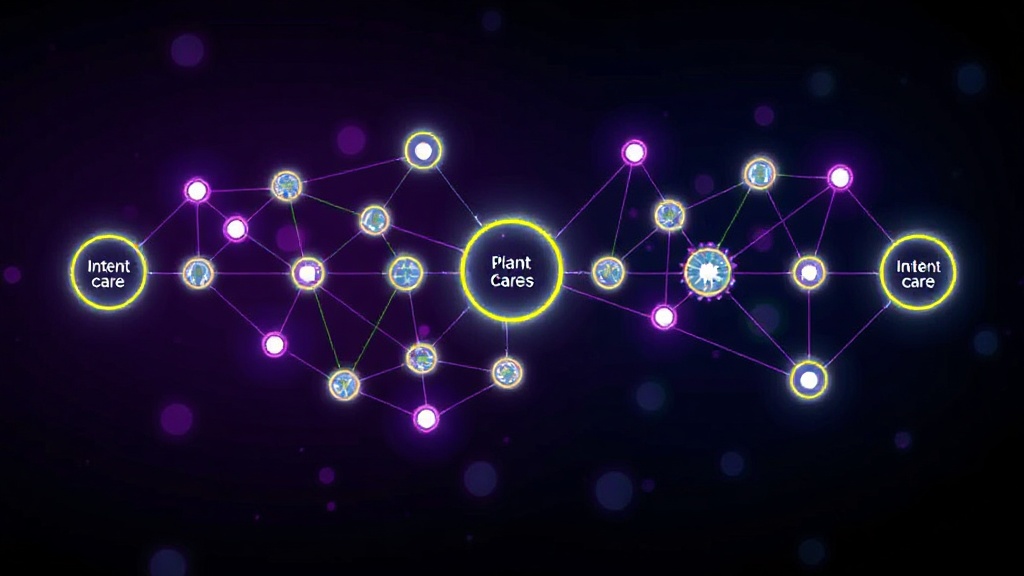
The system operates through a series of distinct stages. First, it performs intent recognition, identifying the user's goal, which can range from general care instructions, problem diagnosis, pest identification, toxicity checks, propagation guidance, to specific attribute-matching queries. Following intent recognition, the user's natural language input is translated into a structured JSON format. This structured data then drives a domain search, querying a dedicated knowledge base augmented with structured attributes. The LLM is introduced only at the final stage, where it refines the retrieved factual content into natural, user-friendly language.
An example of the internal JSON structure illustrates this process. For a query about a Monstera plant exhibiting brown leaf edges, the JSON might look like this:
{
  "intent": "care",
  "topic": "monstera",
  "symptoms": ["brown leaf edges"],
  "language": "en"
}
This structured output allows the system to precisely target relevant information from its knowledge base, ensuring accuracy and relevance. The separation of information retrieval and content generation is a key architectural choice, designed to mitigate the risks associated with LLM hallucination in a domain where factual accuracy is paramount.
Architectural Concerns and Scalability Questions
Despite the innovative architecture, significant questions remain regarding Plantcoach's scalability. The current design, while effective for its intended purpose, relies heavily on the precision of intent recognition and the structure of the knowledge base. As the domain of plant knowledge expands, or as user queries become more complex and nuanced, maintaining the accuracy and efficiency of the intent recognition and structured data generation becomes increasingly challenging.
One primary concern is the potential for a combinatorial explosion of intents and attributes. If the system needs to handle a vast array of plant species, each with unique care requirements, common problems, and specific pest vulnerabilities, the complexity of the structured data model could become unmanageable. Similarly, the knowledge base itself, while designed for structured search, would require continuous and meticulous updating to remain comprehensive and accurate. The process of converting natural language queries into precise JSON structures might also become a bottleneck. Edge cases, ambiguous phrasing, or novel problem descriptions could lead to misinterpretation, requiring sophisticated disambiguation logic or fallback mechanisms.
Furthermore, the reliance on a domain-specific knowledge base means that any expansion beyond the current scope of plant care would necessitate a complete overhaul or significant augmentation of this core component. If Plantcoach were to evolve into a more general-purpose assistant or incorporate related domains (e.g., gardening tools, soil science, pest control products), the current architecture might struggle to adapt without substantial re-engineering. The LLM's role, while limited to wording, still introduces a dependency that could be a point of failure or performance degradation. While it's not generating content, its ability to correctly interpret the structured data and produce coherent, accurate, and helpful output is still crucial.
Potential Scaling Strategies and Future Directions
To address these scalability concerns, several architectural adjustments could be considered. One avenue is to explore more advanced natural language understanding (NLU) techniques that can handle ambiguity and nuance more effectively. This might involve using transformer-based models fine-tuned on plant-specific language or incorporating knowledge graph embeddings to better represent the relationships between different plant attributes and issues.
Another strategy could involve a more dynamic knowledge base. Instead of a static, pre-defined structure, the system could employ techniques for knowledge graph construction and refinement, allowing it to learn and adapt from new data. This would require robust data ingestion pipelines and validation mechanisms to ensure the integrity of the growing knowledge base. For instance, a system could monitor user feedback on the accuracy of its responses, using this to iteratively improve its knowledge retrieval and LLM rephrasing.
The intent recognition module could also benefit from hierarchical or multi-stage processing. Instead of a flat list of intents, a more structured hierarchy could allow for finer-grained classification and better handling of complex, multi-part queries. This could reduce the burden on the initial JSON conversion step. For example, a query might first be classified as a "problem diagnosis" intent, then further refined to identify the specific plant and the observed symptoms, leading to a more precise JSON output.
The question of whether this architecture can scale is not merely a technical one; it touches upon the fundamental trade-offs between precision and flexibility in AI design. While the current approach prioritizes accuracy by strictly limiting the LLM's role, future iterations might need to carefully balance this with the ability to handle a wider range of inputs and a broader scope of knowledge. The success of Plantcoach's scalability will likely depend on its ability to evolve its data structures, NLU capabilities, and potentially even its LLM integration strategy in response to growing data and user demands.