Treating AI as an Untrusted Dependency
When integrating AI into a building permit review workflow, the crucial step is to treat AI outputs as inherently untrusted. This means that any AI-generated candidate, while potentially useful and produced quickly, must be accompanied by clear metadata: its source, its defined scope, and a designated owner responsible for its validation. This approach aligns with the current U.S. policy landscape, where federal agencies are actively publishing governance and procurement guidelines, yet the core responsibilities for permitting and professional engineering remain firmly with state and local authorities.
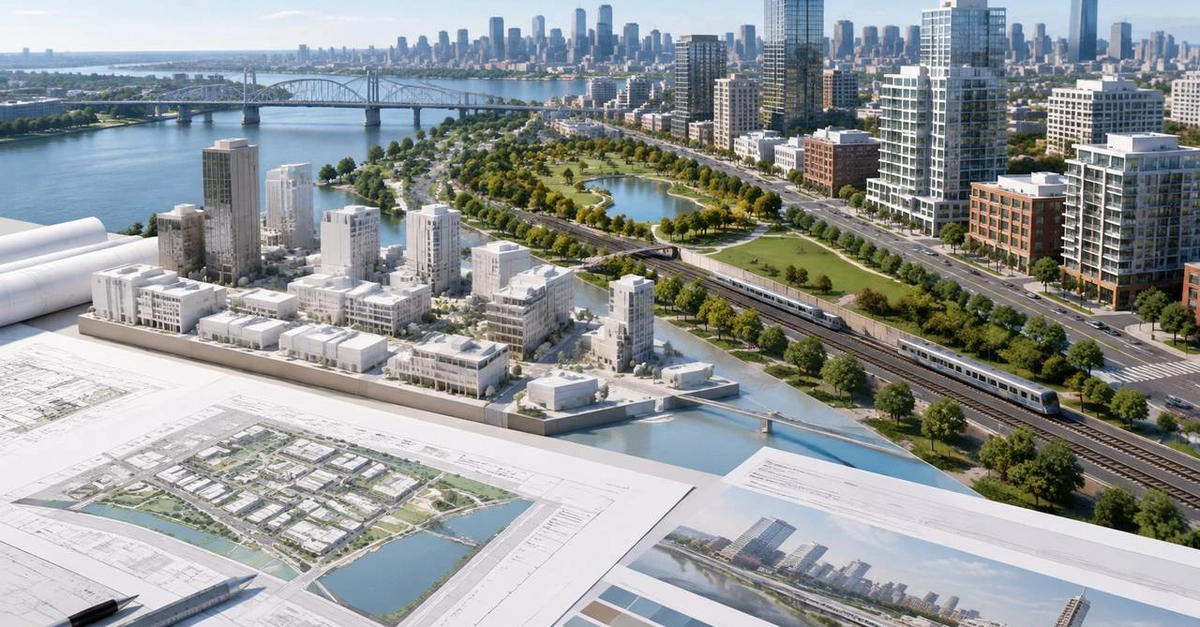
The primary objective of this proposed pipeline is not to restrict the use of generated images in architectural design. Instead, it aims to establish a robust process that prevents conceptual renderings, produced rapidly by AI, from being silently adopted as established engineering facts without proper scrutiny and validation. This distinction is critical for maintaining professional accountability and ensuring the safety and integrity of building projects.
Declaring Output Type and Intended Use
The pipeline begins with a concise metadata block integrated into the project log. This block serves to clearly define the nature and purpose of any AI-generated artifact. The essential fields include:
output_type: concept | effect | schemeintended_use: discussion | option_screening | technical_referencereview_owner: named person
The output_type field categorizes the AI's contribution. A concept image might be used to facilitate conversations about the overall massing and form of a proposed structure. An effect image aims to communicate a potential user experience or the visual impact of the design. A scheme sketch, on the other hand, is intended to test a more specific design element or a preliminary technical approach.
The intended_use field clarifies how the AI output is meant to be utilized within the project workflow. Discussion indicates the output is for exploratory conversation. Option screening suggests it's for evaluating different design possibilities. Technical reference implies a more formal use, but still one that requires validation before being treated as a definitive engineering component.
Crucially, the review_owner field assigns direct responsibility. This is not an abstract company or team assignment, but the name of a specific individual who is accountable for reviewing, validating, and ultimately approving or rejecting the AI-generated output. This personal accountability is a cornerstone of professional practice in architecture and engineering.
Establishing Scope and Limitations
Beyond the initial declaration, a more detailed scope definition is necessary. This involves specifying the boundaries of the AI's contribution and clearly stating what the output *is not*. For instance, a concept sketch of building massing should be explicitly labeled as not representing final facade treatments, structural details, or code compliance. This prevents misinterpretation and over-reliance on preliminary AI suggestions.
The pipeline requires documenting the specific prompts or models used to generate the output. This provides traceability and allows for reproducibility or debugging if issues arise. It’s akin to citing the specific version of a software library or the exact experimental setup in scientific research. Understanding the input parameters helps in evaluating the reliability and potential biases of the output.
Validation and Verification Process
The core of the untrusted dependency approach lies in the validation process. AI-generated outputs should not bypass established review stages. Instead, they should be integrated as inputs to those stages, requiring human expert review.
A potential validation workflow could involve:
- Initial Review: The designated
review_ownerassesses the AI output against its declaredoutput_typeandintended_use. Does the output match its stated purpose? - Cross-Referencing: If the AI output is intended to inform a technical aspect, it must be cross-referenced with existing, trusted data or design specifications. For example, an AI-generated floor plan might be checked against known site constraints or structural load-bearing requirements.
- Expert Sign-off: Ultimately, any AI-generated element that influences a final design decision must be reviewed and signed off by a licensed professional engineer or architect. This human oversight is non-negotiable. The AI provides candidates; the human provides the professional stamp of approval.
This structured approach ensures that AI serves as an accelerator for ideation and exploration, rather than a replacement for rigorous engineering analysis and professional judgment. It acknowledges the power of AI in generating possibilities rapidly, while preserving the critical need for accountability, traceability, and human expertise in the regulated domain of building permits.
The Policy Landscape Context
The current U.S. policy environment is characterized by a duality. On one hand, federal agencies are actively developing and releasing guidance on the ethical use, governance, and procurement of AI technologies. This includes frameworks for risk management, transparency, and accountability. On the other hand, the actual implementation of building codes, zoning regulations, and professional licensing remains a domain controlled by state and local governments. These entities often have established, sometimes lengthy, review processes that are deeply intertwined with professional liability and public safety mandates.
This pipeline is designed to operate within this complex framework. It leverages AI's capabilities for rapid ideation and analysis but grounds its outputs in traditional professional responsibility structures. By requiring explicit declarations of output type, intended use, and a named owner, the pipeline facilitates compliance with the spirit of emerging AI governance policies while respecting the existing legal and professional structures governing building permits. The goal is to integrate AI as a tool that enhances the efficiency and creativity of the design process, without compromising the safety, integrity, or accountability required in the construction industry.