The Real AI Bottleneck: It's Not Speed, It's Distance
The relentless march toward higher data rates in AI infrastructure, exemplified by the push to 800G and 1.6T, masks a fundamental engineering shift. While raw bandwidth figures grab headlines, the true bottleneck for the next decade of AI hardware lies not in speed, but in the physical distance optical signals must travel. From the server rack to the silicon itself, the physical layer of AI networking is undergoing a radical reinvention. This evolution hinges on understanding three core architectural approaches: MPO (Multi-fiber Push On), NPO (Non-Polarized Optical), and CPO (Co-Packaged Optics). Each offers a distinct balance of density, power efficiency, and hardware serviceability, defining the physical constraints of future AI systems.
The obsession with terabits per second (Tbps) has led us to a point where pushing these speeds over existing infrastructure is becoming increasingly complex and inefficient. As we approach 1.6T and beyond, the physical limitations of signal integrity, power consumption, and heat dissipation become paramount. This is where the architecture of optical interconnects becomes critical. The choice between MPO, NPO, and CPO dictates how these challenges are met, influencing everything from the form factor of AI accelerators to the operational costs of data centers.
MPO, the incumbent, utilizes multi-fiber connectors to achieve high density. NPO aims to simplify assembly and improve signal integrity by removing polarization dependency. CPO, perhaps the most radical departure, brings optical components directly onto the same package as the silicon, drastically reducing trace lengths. Each of these approaches presents a unique set of trade-offs that will shape the physical layout and operational characteristics of AI hardware for years to come.
MPO: The Established Workhorse Facing New Demands
MPO connectors have long been the standard for high-density fiber optic connections, particularly in data centers. They employ multiple fibers within a single connector housing, allowing for a significant increase in the number of parallel optical links compared to single-fiber connectors. For AI, this means higher aggregate bandwidth can be achieved by simply increasing the number of fibers and parallel channels. Think of MPO connectors as high-capacity highways, capable of carrying many lanes of traffic simultaneously. This architecture has served well for speeds up to 800G, but the demands of 1.6T and beyond are testing its limits.
The primary challenges with MPO at these extreme speeds and densities relate to signal integrity over longer distances, precise alignment of numerous fibers, and the physical space required for these connectors and their associated cabling. While MPO offers good density, the sheer volume of cables and the complexity of managing them can become a significant hurdle in dense AI compute racks. Furthermore, maintaining optimal alignment for dozens of fibers, especially during maintenance or upgrades, requires meticulous handling and can be a point of failure. The engineering focus for MPO at 1.6T shifts towards ensuring robust signal transmission and simplifying management in increasingly cramped environments.
NPO: Simplifying Optical Assembly
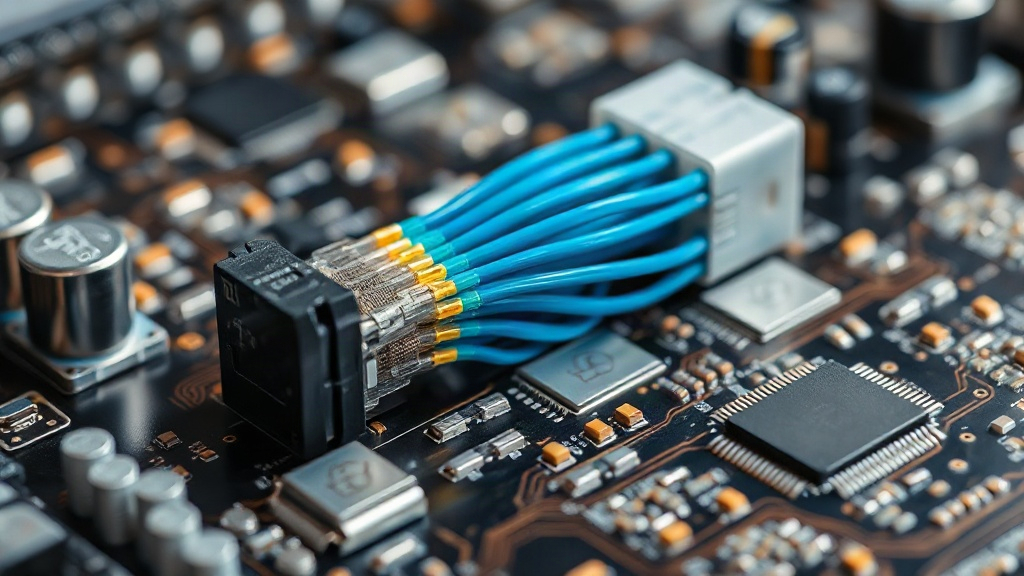
Non-Polarized Optical (NPO) technology represents an evolution aimed at streamlining the assembly and improving the reliability of optical interconnects. Traditional optical transceivers often rely on polarization-dependent components, which can add complexity and cost to manufacturing and deployment. NPO seeks to overcome this by using components and designs that are insensitive to the polarization state of the light. This simplification can lead to more robust connections, reduced manufacturing variability, and potentially lower costs.
For AI infrastructure, NPO offers a path to greater reliability and ease of use. By removing the need for precise polarization alignment, NPO connectors and modules can be more forgiving during installation and maintenance. This is akin to using a plug-and-play component that doesn't require careful orientation to function correctly. This reduction in assembly complexity is particularly valuable as the number of optical links per AI system scales dramatically. While NPO might not fundamentally alter the distance bottleneck in the same way CPO does, it addresses the practical engineering challenges of deploying and maintaining these high-density optical networks at scale. The benefit is often seen in reduced assembly time and fewer potential points of failure due to misalignment.
CPO: The Radical Approach of Co-Packaging Optics
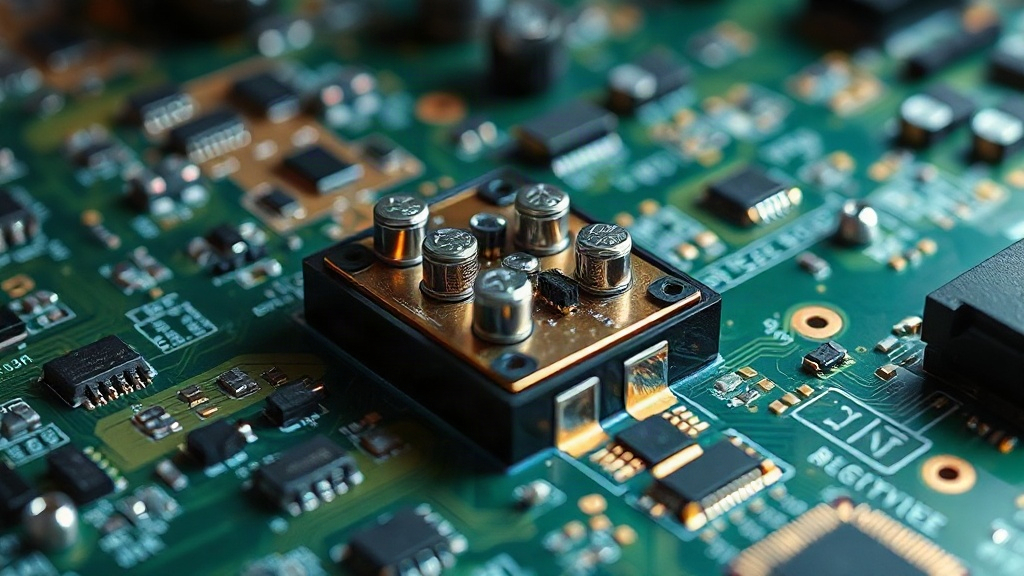
Co-Packaged Optics (CPO) represents the most significant departure from traditional architectures. Instead of optical modules being separate components that connect to the main processing chip (like a CPU or GPU), CPO integrates optical I/O directly onto the same package as the silicon. This means the electrical-to-optical conversion happens mere millimeters, or even microns, away from the processing cores. The primary advantage is a dramatic reduction in the distance electrical signals must travel. Electrical signals are notoriously power-hungry and susceptible to signal degradation over distance. By shortening these electrical traces to almost nothing, CPO drastically cuts power consumption and improves signal integrity for high-speed communication.
Imagine a traditional setup where data has to travel across a room (the electrical traces on a PCB) before it can be sent out of the building (the optical module). CPO is like putting the outgoing mailroom directly next to the CEO's office – the message doesn't have to travel far to be dispatched. This proximity is key to unlocking the next generation of AI performance and efficiency. However, CPO introduces significant new challenges. The most prominent is serviceability. When the optics are co-packaged with the silicon, a failure in either component typically means the entire package must be replaced. This contrasts with modular approaches where a failed optical module can be swapped out independently. This trade-off between ultimate density and power efficiency versus serviceability is the central dilemma CPO presents. Furthermore, the thermal management of co-packaged optics and silicon becomes a much more integrated and complex problem.
The Trade-offs: Density, Power, and Serviceability
The choice between MPO, NPO, and CPO is fundamentally a balancing act between three critical engineering factors: density, power consumption, and serviceability. MPO excels in density but can become unwieldy with cabling and faces challenges maintaining signal integrity at extreme speeds over longer PCB traces. NPO offers a middle ground, improving assembly and reliability without the radical redesign required by CPO, while still leveraging established modularity. CPO offers the ultimate in density and power efficiency by bringing optics closer to the silicon, but at the significant cost of reduced serviceability and increased thermal management complexity.
For AI infrastructure, where power consumption and heat generation are already major concerns, CPO's efficiency gains are incredibly attractive. However, the cost of replacing entire co-packaged units when a single component fails could lead to higher total cost of ownership over the lifecycle of the hardware. This is a critical consideration for large-scale deployments. Developers and operators must weigh the immediate benefits of reduced power draw and increased port density against the long-term implications of repair and replacement strategies. The industry is still exploring solutions, such as advanced thermal management and modular CPO designs, to mitigate these drawbacks.
What's Next for 1.6T and Beyond?
The transition to 1.6T and higher data rates signifies a maturation of AI networking. The engineering focus has pivoted from simply increasing speed to optimizing the physical infrastructure that supports these speeds. MPO, NPO, and CPO represent the primary architectural strategies for navigating this new landscape. MPO will likely persist in applications where its density is sufficient and serviceability is paramount. NPO offers a practical upgrade path for modular systems, enhancing reliability and ease of deployment. CPO, while more disruptive, holds the promise of unlocking the next level of performance and efficiency for AI accelerators, provided its serviceability and thermal challenges can be adequately addressed.
The industry is not necessarily choosing one over the others definitively. Instead, we are likely to see a heterogeneous adoption, with different architectures finding homes in different parts of the AI ecosystem. For instance, CPO might dominate high-performance, fixed-function accelerators where replacement cycles are longer, while MPO and NPO continue to serve more general-purpose networking or systems where frequent component swaps are anticipated. The path forward involves continued innovation in materials, connector technologies, and packaging techniques to push the boundaries of what is physically possible in AI hardware. The battleground for AI infrastructure has undeniably moved from the abstract realm of speed metrics to the tangible constraints of physical distance.