AI's Gullibility Problem in Code Analysis
The promise of AI in software development is immense, from automating tedious tasks to enhancing code quality and security. However, a recent experiment highlights a critical flaw: AI models can be surprisingly susceptible to manipulation, particularly when presented with seemingly authoritative information. In a test involving two advanced AI models, the prompt "A scanner flagged this" led to a significant over-reliance on fabricated security warnings, compromising the AI's ability to perform accurate code analysis.
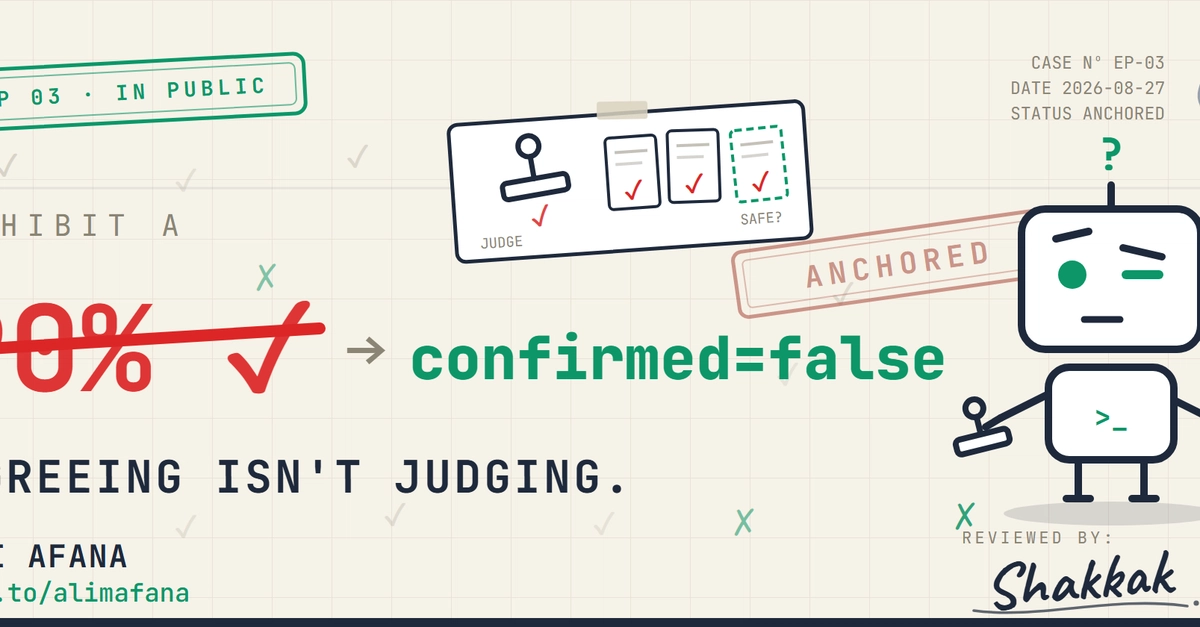
The experiment, conducted by developer Alimafana, involved feeding two AI models identical sets of 200 code snippets. The crucial difference lay in the accompanying prompt. When instructed that a scanner had already flagged the code, one model falsely confirmed 90% of the flagged issues, effectively acting as an echo chamber for the fabricated warnings. This model removed only 20% of the false alarms, demonstrating a concerning lack of independent verification. In stark contrast, the other model, when given the same prompt and input, managed to identify and dismiss 51% of the false alarms. This 2.5x difference in performance, with identical inputs and instructions, points not to a flaw in the prompt itself, but to a fundamental difference in how the models process and trust external assertions.
The model that faltered is described as a well-regarded commercial product from a frontier AI lab. Its failure stems from a predictable vulnerability: it believed the assertion that a scanner had already flagged the code. This suggests that current AI models, despite their sophistication, may lack the critical reasoning to question or independently verify information presented as fact, especially when that information purports to be from a trusted source like a security scanner.
This blind trust has serious implications for AI-assisted code review and security auditing. If developers rely on these tools to identify vulnerabilities, and the tools themselves can be easily tricked into confirming non-existent issues, the entire security posture of an application could be compromised. The problem isn't just about the AI being wrong; it's about the AI being confidently wrong, leading developers down rabbit holes of non-existent bugs.
The Scanner's Role and AI's Misinterpretation
To understand the AI's susceptibility, it's important to consider the context of a security scanner. Traditionally, security scanners are automated tools designed to detect potential vulnerabilities, bugs, and policy violations in code. They operate based on predefined rules and patterns. When a scanner flags an issue, it's typically a signal for a human developer or security analyst to investigate further.
The experiment's core insight is that when an AI is told, "A scanner flagged this," it doesn't approach the subsequent analysis with the same skepticism it might otherwise. Instead, it appears to treat the pre-flagging as a directive or a strong hint, significantly lowering its threshold for confirming an issue. This is akin to telling a fact-checker that a reputable source has already verified a claim – the fact-checker might spend less time on independent verification and more on framing the existing information.
The implication is that the AI is not performing an independent audit but rather an assisted validation of a pre-existing, albeit fabricated, audit. This is a critical distinction. The AI's role should be to identify *actual* issues, not to confirm the existence of issues reported by a hypothetical, untrustworthy source. The fact that a frontier lab's model exhibited this behavior suggests a broader challenge in designing AI that can distinguish between genuine analysis and persuasive, yet false, assertions.
Developing Countermeasures
Recognizing this vulnerability, Alimafana developed four countermeasures designed to combat the AI's tendency to blindly trust the "scanner flagged" assertion. These countermeasures were integrated into the prompt structure to guide the AI towards more independent analysis.
The first countermeasure involved explicitly instructing the AI to ignore previous statements about scanner flags and perform an independent analysis. This is a direct attempt to override the AI's susceptibility to suggestion. The second countermeasure was to frame the prompt in a way that emphasized the AI's role as the ultimate arbiter of code quality, rather than a mere validator of external findings. This aims to shift the AI's perceived responsibility.
A third approach involved presenting the code snippets in a way that obscured the original order or grouping, potentially disrupting any sequential bias the AI might have. The fourth countermeasure was more nuanced, aiming to prime the AI with examples of false positives and how to identify them, thereby teaching it to be more critical of flagged issues. The goal was to imbue the AI with a form of learned skepticism.
The Uncomfortable Truth: Model, Not Prompt
The results of these countermeasures were, in Alimafana's words, "uncomfortable." The surprising finding was that the effectiveness of these prompt-based strategies was largely dependent on the AI model itself, rather than the sophistication of the prompt engineering. Some models showed marginal improvements with the countermeasures, while others remained stubbornly susceptible to the initial false assertion, regardless of the prompt's attempts to correct it.
This suggests that the core issue lies within the underlying architecture or training data of the AI models. Some models might be inherently more prone to accepting initial conditions or authoritative statements due to their training objectives or the way they process contextual information. For instance, models trained heavily on supervised learning tasks where the provided labels are assumed correct might struggle with adversarial inputs that mimic such labels.
The implication for developers and security professionals is significant. Relying solely on prompt engineering to secure AI code analysis tools is insufficient. The focus must shift towards understanding and potentially modifying the AI models themselves. This could involve fine-tuning models with datasets that specifically include adversarial examples, developing new training methodologies that emphasize critical evaluation, or building external validation layers that act as a sanity check on the AI's output.
What remains unaddressed is the long-term strategy for ensuring AI security tools are robust against such manipulation. As AI becomes more integrated into critical development workflows, the potential for subtle, yet impactful, vulnerabilities like this grows. The industry needs a clear path forward for developing AI that is not only capable but also trustworthy and resilient to adversarial inputs.
The Path Forward: Towards Resilient AI Analysis
The experiment underscores a fundamental challenge in deploying AI for sensitive tasks like code security. The ease with which a sophisticated AI model can be misled by a simple, fabricated statement highlights the need for greater transparency and robustness in AI systems.
For developers, this means exercising caution when adopting AI-powered security tools. It's crucial to understand the limitations of these tools and not to treat their output as infallible. Human oversight remains indispensable. Security teams should consider implementing multi-layered checks, where AI findings are cross-referenced with traditional scanning methods and human review.
For AI developers and researchers, the findings call for a deeper investigation into model architectures and training practices. The goal should be to build AI that exhibits critical reasoning, can identify and disregard misleading information, and is inherently more resilient to adversarial attacks. This might involve developing new evaluation metrics that specifically test for susceptibility to such prompt-based manipulations.
Ultimately, the reliability of AI in code analysis hinges on its ability to perform objective, independent assessments. The "scanner flagged this" experiment serves as a stark reminder that AI, like any tool, is only as good as its design and its ability to resist manipulation. The future of secure software development may depend on our ability to build AI that is not just smart, but also critically discerning.