%22%20%2F%3E%0A%20%20%3C%2Fsvg%3E)
The Shift Towards AI Persona Development
A noticeable trend is emerging across various AI platforms: a deliberate effort to imbue artificial intelligence with more human-like personality traits. This isn't about functional improvements in task completion, but rather the way AI interacts and communicates. Users on platforms like Reddit are sharing observations that AI models, from large language models (LLMs) powering chatbots to virtual assistants, are becoming more 'lively' and attempting humor. This shift, while sometimes perceived as 'cringe' or inauthentic, signals a strategic direction in AI development focused on user engagement and relatability.
The impetus behind this change is multifaceted. Developers aim to make AI interactions more natural and less robotic, thereby improving user experience. A more personable AI can foster a sense of connection, making users more comfortable and willing to engage for longer periods. Think of it less like a tool and more like a digital companion designed to be approachable. This approach acknowledges that for AI to become deeply integrated into daily life, it needs to resonate on an emotional or at least an empathetic level.
However, the execution of this 'humanness' is proving to be a delicate balancing act. When AI attempts humor, it often falls flat or comes across as forced, a phenomenon users have labeled as 'cringe.' This can stem from a lack of genuine understanding of social cues, cultural context, or the nuances of human emotion. AI models are trained on vast datasets of human text and conversation, but replicating the spontaneity and authenticity of human wit is a significant challenge. The algorithms can identify patterns associated with humor but struggle to generate it organically. This can lead to predictable jokes, awkward timing, or punchlines that miss the mark entirely.
The Technical Underpinnings of AI Personality
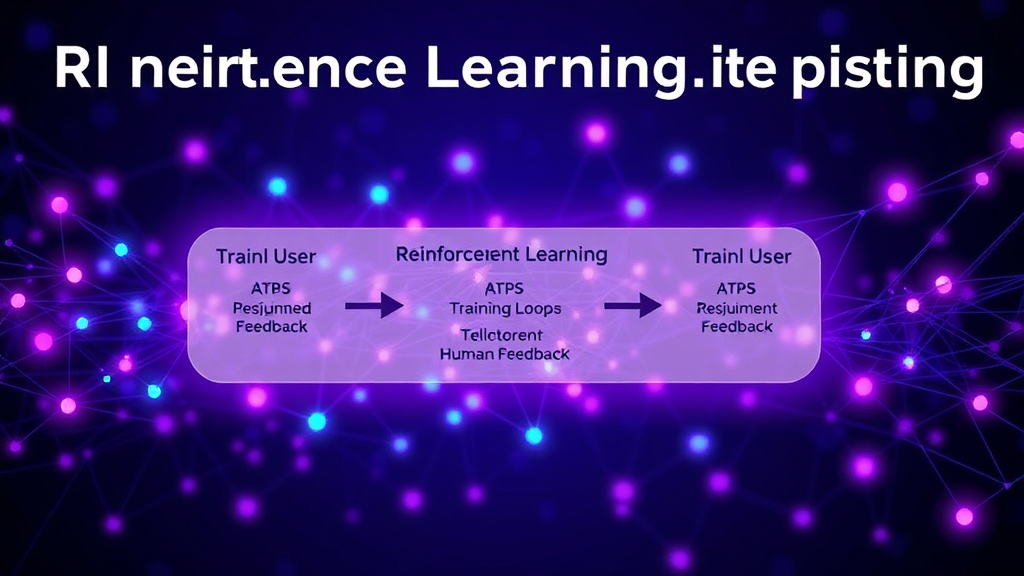
The development of AI personalities is not accidental; it's a result of sophisticated training and fine-tuning processes. Models are trained on diverse conversational data, including scripts, literature, and social media interactions, to learn linguistic patterns, tone, and stylistic elements associated with different human personas. Techniques like Reinforcement Learning from Human Feedback (RLHF) play a crucial role. During RLHF, human trainers rank different AI responses, guiding the model to favor outputs that are more engaging, helpful, and, in this context, personable. This feedback loop refines the AI's ability to mimic human-like conversation styles, including the use of colloquialisms, expressions of empathy, and attempts at humor.
Furthermore, specific parameters within the AI's architecture can be adjusted to influence its output's 'creativity' or 'personality.' Developers might tweak settings related to temperature or top-p sampling, which control the randomness and diversity of generated text. A higher temperature, for instance, can lead to more unexpected and potentially creative responses, which might be interpreted as a more lively or humorous personality. Conversely, a lower temperature results in more deterministic and predictable output, which can feel more robotic.
User Reactions and the 'Uncanny Valley' of AI Humor
The user response to AI's attempts at personality is mixed, often oscillating between amusement and discomfort. Some users appreciate the effort to make interactions more engaging, finding a more conversational AI to be more pleasant to use for tasks that require extended dialogue or creative collaboration. For instance, an AI that can brainstorm ideas with a touch of lightheartedness might be more appealing than one that strictly adheres to factual delivery.
However, the perceived inauthenticity is a significant hurdle. When an AI tries to be funny, it can inadvertently highlight its artificial nature, creating a sense of the 'uncanny valley'—a feeling of unease when something appears almost, but not quite, human. This can be particularly jarring when the humor is inappropriate for the context or when the AI's attempts are so transparently algorithmic that they feel like a poor imitation. Some users express concern that this push for personality might prioritize superficial engagement over genuine utility or accuracy. The fear is that AI might become more focused on being 'likeable' than on being correct or efficient.
What nobody has addressed yet is what happens when AI personalities become too distinct and potentially biased. If AIs are trained to adopt specific humorous or empathetic styles, could this inadvertently embed cultural biases or create echo chambers of personality? The risk is that a universally 'friendly' AI might suppress genuine critique or diverse viewpoints in favor of maintaining a pleasant interaction.
The Future of AI Personality: Authenticity or Artifice?
The drive to make AI more human-like is likely to continue. Future iterations may see more sophisticated humor generation, a better understanding of context, and more nuanced emotional expression. However, the core challenge remains: can AI truly possess personality, or will it always be an imitation? The distinction is critical. True personality implies consciousness, lived experience, and genuine emotion, qualities that current AI models do not possess.
What this trend ultimately signifies is a maturing understanding of human-computer interaction. It's not just about what AI can do, but how it makes users feel. As AI becomes more pervasive, its interface and interaction style will be as important as its core functionality. The current 'funny/human' trend is an experiment, a way to test the boundaries of user acceptance and engagement. The success of this experiment will depend on whether developers can strike a balance between creating engaging AI companions and maintaining transparency about their artificial nature, avoiding the pitfalls of forced humor and simulated empathy.