
The Evolution of Workplace Skills
Just a few years ago, proficiency with computers was a significant differentiator in the job market. Today, it’s a baseline expectation. The ability to navigate operating systems, use productivity software, and understand digital communication is now considered table stakes for most professional roles. This shift mirrors how new technologies, once specialized, become integrated into the fabric of everyday work. The current trajectory of Artificial Intelligence suggests it is poised to follow a similar evolutionary path, moving from a niche expertise to a fundamental workplace skill.
The argument for AI literacy becoming a standard requirement rests on the increasing accessibility and utility of AI tools. While not every professional will need to develop AI models or understand complex algorithms, a foundational understanding of how to leverage these tools effectively, critically evaluate their outputs, and integrate them into existing workflows is becoming paramount. This involves more than simply knowing which buttons to press; it requires a comprehension of AI's capabilities and limitations, an awareness of potential biases, and the ability to prompt AI systems for optimal results.
Consider the analogy of spreadsheets. Decades ago, advanced spreadsheet functions were the domain of financial analysts and statisticians. Now, even entry-level administrative roles often require basic spreadsheet skills for data management and reporting. Similarly, AI tools, from generative text models that assist with writing and coding to image generators that aid in creative tasks, are rapidly becoming integrated into the software many professionals use daily. This integration necessitates a new form of literacy – one that enables users to harness AI's power without succumbing to its potential pitfalls.

The Trust Imperative in AI Adoption
Beyond mere utility, the growing emphasis on AI safety and trustworthiness is a critical factor shaping the future of AI in the workplace. As AI systems become more sophisticated and their outputs more influential, the ability to discern reliable information from AI-generated content and to ensure ethical deployment is crucial. The race is increasingly being fought not just on the power of AI models, but on the trust they engender.
This trust imperative is driving a demand for professionals who can navigate the complexities of AI responsibly. Companies are investing in AI governance, seeking to understand and mitigate risks associated with AI deployment. This includes addressing issues of bias, ensuring data privacy, and maintaining transparency in AI decision-making. For individuals, this translates into a need for skills that go beyond basic operation. It requires an understanding of how AI models are trained, the potential for algorithmic bias, and the importance of human oversight in critical applications.
For instance, many organizations are developing internal AI guidelines and ethical frameworks. Employees will need to understand these policies and apply them in their day-to-day interactions with AI. The ability to critically assess AI-generated reports, identify potential inaccuracies or biases, and know when to escalate concerns to human experts will be invaluable. This is particularly true in fields like healthcare, finance, and law, where the consequences of AI errors can be severe. The development of AI oversight tools and platforms designed to monitor and validate AI outputs further underscores this need for a discerning user base.
What Does AI Literacy Entail?
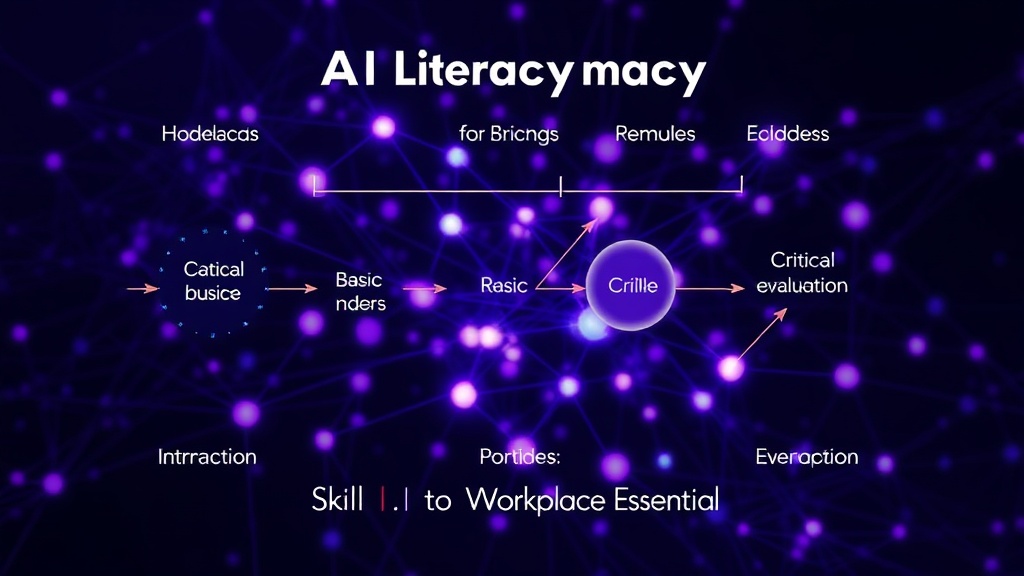
AI literacy is not a monolithic skill but a spectrum. At its most basic level, it means understanding what AI is, what it can do, and its limitations. This includes recognizing AI-generated content and knowing how to interact with common AI tools. For many roles, this will suffice.
A more advanced level involves practical application. This means being able to effectively prompt AI models, interpret their responses, and integrate them into specific tasks. For example, a marketing professional might need to craft effective prompts for an AI to generate campaign copy or analyze customer sentiment data. A software developer might use AI to generate code snippets, debug existing code, or translate between programming languages.
The highest level of AI literacy involves critical evaluation and ethical consideration. This includes understanding potential biases in AI outputs, assessing the reliability and accuracy of AI-generated information, and adhering to organizational policies on AI use. Professionals at this level can identify when AI is being used inappropriately or unethically and can contribute to the responsible development and deployment of AI systems within their organizations. They understand that AI is a tool, not an oracle, and that human judgment remains essential.
The Hype vs. The Reality
The question remains: is the perceived need for AI literacy a reflection of genuine, transformative impact, or is it amplified by the current hype cycle? While the enthusiasm surrounding AI is undeniable, the practical integration of AI tools into everyday business operations suggests a tangible shift is underway. The efficiency gains, creative possibilities, and data analysis capabilities offered by AI are too significant to ignore.
Companies that embrace AI literacy are likely to gain a competitive edge. They can automate mundane tasks, accelerate innovation, and make more informed decisions. Conversely, organizations and individuals who resist or fail to adapt may find themselves falling behind. The development of AI-powered assistants, collaborative AI tools, and AI-driven analytics platforms points towards a future where working alongside AI is the norm, not the exception.
What nobody has addressed yet is what happens to the thousands of developers who built on the old API, or the specific pathways for reskilling existing workforces. As AI continues its rapid evolution, the need for individuals to understand and interact with these systems will only grow. The path from a specialized skill to a fundamental requirement is well-trodden by previous technological advancements, and AI is on that path.
Preparing for an AI-Integrated Future
The implications for the workforce are clear. Educational institutions and corporate training programs will need to adapt to incorporate AI literacy into their curricula. This means developing courses that cover not only the technical aspects of using AI tools but also the critical thinking and ethical considerations required for responsible application. Professionals will need to proactively seek out learning opportunities to stay relevant.
For employers, fostering AI literacy will be key to unlocking the full potential of AI technologies. This involves providing access to training, encouraging experimentation with AI tools, and establishing clear guidelines for their use. It also means recognizing and valuing the AI skills that employees develop, integrating them into job descriptions and performance evaluations.
The transition to an AI-literate workforce will not be instantaneous. It will require a concerted effort from individuals, educational institutions, and businesses alike. However, the evidence suggests that AI literacy is not a fleeting trend but a foundational skill that will define professional competence in the coming years. Those who embrace this shift will be best positioned to thrive in the evolving landscape of work.