
The AI Hype Cycle Hits a Snag
Over the past year, a narrative has solidified: artificial intelligence is poised to automate vast swathes of the workforce, leading to significant layoffs. Companies across industries, from tech to media, have cited AI as a primary driver for workforce reductions. This trend, amplified by headlines and corporate statements, painted a picture of an inevitable shift towards an AI-dominated labor market. However, a growing number of these same forward-thinking companies are now quietly backtracking, realizing that the promised efficiency of AI comes with significant caveats, and that human experience and context remain indispensable.
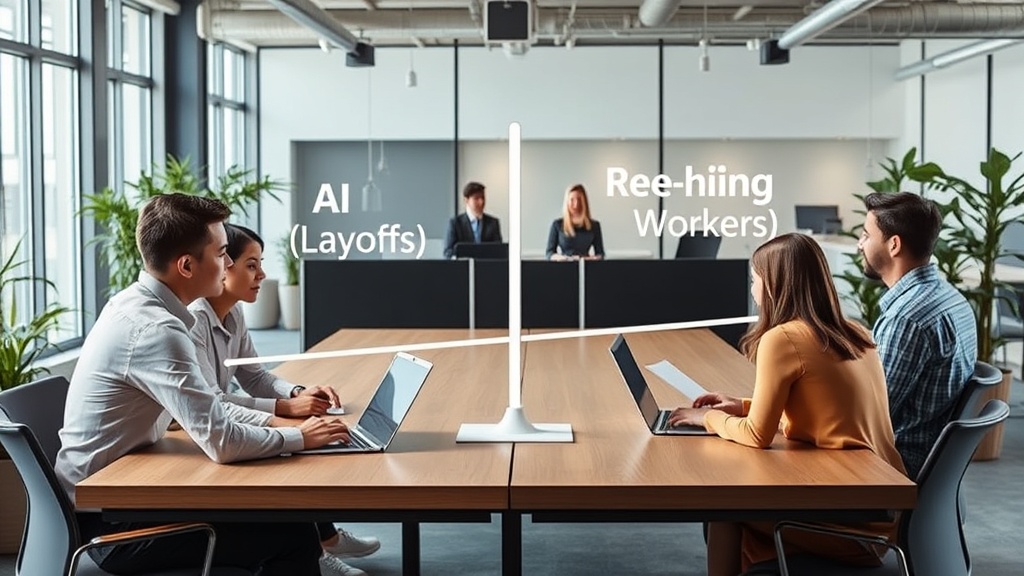
The Wall Street Journal reported a notable shift: some firms that previously shed employees due to AI advancements are now re-hiring. The underlying reason is a stark realization that AI, while powerful, cannot fully replicate the nuanced understanding, critical thinking, and contextual awareness that human workers bring to complex tasks. In many cases, the decision to lay off staff was premature, driven by a desire to appear cutting-edge rather than a pragmatic assessment of AI's current capabilities. Now, the pendulum is swinging back as these companies confront the practical limitations of their AI-driven strategies.
When Experience Outperforms Algorithms
One of the most significant drivers for this reversal is the undeniable value of human experience. AI models, particularly large language models (LLMs), are trained on vast datasets, enabling them to perform specific tasks with remarkable speed. However, their effectiveness is often confined to the boundaries of their training data and the explicit instructions they receive. They struggle with ambiguity, novel situations, and the implicit knowledge that seasoned professionals possess. For many roles, this means that while AI can assist, it cannot replace the depth of understanding and problem-solving capabilities of an experienced human.
Consider the realm of content creation or customer service. While AI can draft articles or generate canned responses, it often lacks the creative flair, emotional intelligence, or ability to navigate complex, multi-faceted customer issues that a human can. Companies that rushed to replace writers, editors, or support staff with AI are finding that the quality of output has dipped, or that customer satisfaction is suffering. The realization is dawning that AI is best utilized as a tool to augment human capabilities, not as a wholesale replacement. The "context-constrained" nature of current AI means that it can miss critical nuances, leading to errors or suboptimal outcomes that experienced humans would readily avoid.
The Cost of AI Overestimation
The rush to embrace AI and cut human staff has also revealed hidden costs. Beyond the immediate impact on employee morale and the loss of institutional knowledge, there's the expense of re-training or re-hiring. When companies realize their AI bet has fallen short, they must then invest time and resources to bring back the very talent they let go, often at a higher cost due to market demand or the need to re-establish trust.
Furthermore, the narrative around AI-driven layoffs can damage a company's reputation. It can signal to potential employees that the company prioritizes automation over its people, making it harder to attract top talent in the future. For founders, this trend highlights a critical strategic misstep: overestimating AI's current readiness for complex, human-centric roles and underestimating the enduring value of their human workforce. This isn't to say AI has no place; rather, its implementation requires a more balanced approach, focusing on areas where it genuinely enhances productivity without sacrificing essential human judgment and creativity.
What This Means for the Future of Work
The current re-evaluation of AI's role in the workplace suggests a more realistic and collaborative future. Instead of a binary choice between human or AI, the trend points towards a hybrid model. AI will likely handle repetitive, data-intensive tasks, freeing up human workers to focus on strategy, creativity, complex problem-solving, and interpersonal interactions. This shift requires a strategic recalibration for companies, moving from a cost-cutting automation mindset to an augmentation strategy.
For developers and engineers, this means a continued demand for building and refining AI tools that truly complement human abilities. For founders, it underscores the importance of a phased, evidence-based approach to AI integration, prioritizing pilot programs and rigorous testing before making significant workforce decisions. The surprise here isn't that AI is less capable than some proclaimed, but that the speed at which companies jettisoned human expertise has outpaced the actual development and integration maturity of AI solutions for many critical business functions. The lesson learned is that while AI is a powerful force, it is not a panacea, and human insight remains a critical component of business success.
The question now is what happens to the companies that doubled down on full automation without considering the human element. Will they face a talent deficit and a quality gap that proves even more costly in the long run? The current re-hiring trend suggests that many are already beginning to answer that question for themselves, albeit through trial and error.