The CRM Data Deluge, Not the CRM Itself, is the Bottleneck
The prevailing narrative in AI-powered B2B SaaS is to replace existing Customer Relationship Management (CRM) systems with an entirely new, AI-native platform. This approach, while seemingly innovative, often overlooks a fundamental reality: the problem isn't the CRM itself, but the friction in accessing and deriving insights from the vast amounts of data it holds. For sales teams, this friction translates directly into lost productivity and missed opportunities.
Consider a typical sales agent. They need to answer a straightforward question: "Which leads from University X haven't been followed up in the last seven days?" The current process involves navigating a CRM, applying multiple filters, waiting for the data to load, exporting it to a CSV file, and then sharing it via a communication tool like Slack. This entire sequence can easily consume three minutes. When multiplied across hundreds of agents performing dozens of such queries daily, the cumulative time wasted becomes astronomical. The data exists within the CRM, but the path from question to actionable answer is severely broken. This is the core problem that many AI startups are failing to address by proposing a complete system replacement.
Building a new AI-native CRM from scratch is a monumental undertaking. It requires migrating all existing data, retraining users on a new interface and workflow, and ensuring parity with the features and integrations of established CRM systems. This path is fraught with risk and often results in a system that is initially less functional and more disruptive than the one it aims to replace. The argument for an AI layer on top of existing CRMs is that it bypasses these complexities. Instead of replacing the engine, it adds a sophisticated navigation system that can instantly process the existing map data and provide precise directions.
Augmenting vs. Replacing: A More Pragmatic Path
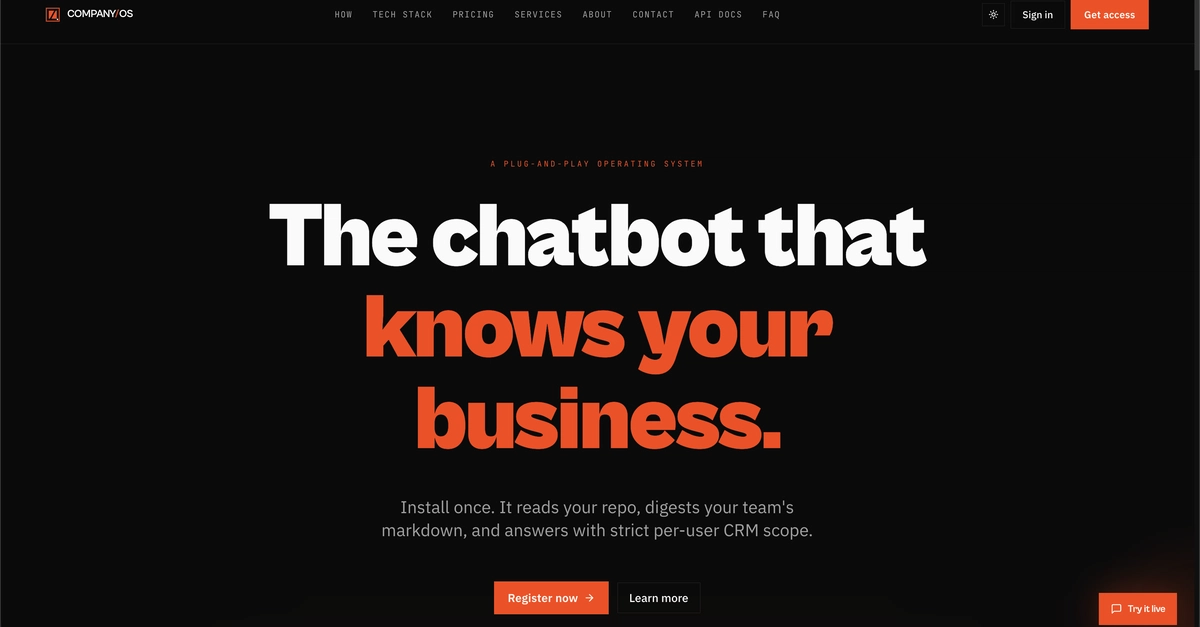
The alternative, and arguably more effective, approach focuses on augmenting the existing CRM infrastructure. This involves building an AI layer that sits on top of the current CRM, acting as an intelligent interface. This layer can understand natural language queries, process complex data requests instantaneously, and deliver insights directly to the user without requiring them to become data analysts or export cumbersome files. This is akin to adding a smart assistant to your existing filing cabinet, rather than throwing out the cabinet and building a new, AI-powered one from scratch.
Such an AI layer would function by understanding the schema and data points within the CRM. Users could then ask questions in plain English, such as "Show me all hot leads in the healthcare sector that haven't been contacted in the last 48 hours," or "What is the average deal size for clients in the manufacturing industry this quarter?" The AI would parse these requests, query the CRM's backend (or a replicated data store for performance), and return the precise information almost instantly. This dramatically reduces the time-to-insight from minutes to seconds.
Furthermore, this layer can proactively surface relevant information. For instance, as an agent views a lead's profile, the AI could automatically highlight key engagement metrics, suggest optimal next steps based on historical data, or flag any outstanding follow-ups that are due. It transforms the CRM from a passive data repository into an active, intelligent sales tool. This is not about replacing the trusted, entrenched system that sales teams already use, but about making that system vastly more powerful and responsive.
The Technical Underpinnings of an AI Layer
Implementing such an AI layer requires sophisticated natural language processing (NLP) capabilities to understand user queries. It also necessitates robust data integration and querying mechanisms to efficiently access and process data from the underlying CRM. The AI model needs to be trained on sales-specific language and CRM data structures to accurately interpret requests and generate relevant responses. This involves a combination of large language models (LLMs) fine-tuned for sales contexts and a backend architecture capable of high-speed data retrieval.
The development of such a system is not without its challenges. Ensuring data security and privacy is paramount, as the AI layer will have access to sensitive customer information. Performance is also critical; slow response times will defeat the purpose of making data access faster. This is where principles from load testing, even for internal tools, become relevant. While not directly about free AI servers, the need to ensure a system can handle concurrent requests efficiently is universal. A robust AI layer must be designed to scale and respond quickly under typical sales team usage patterns.
The architecture would likely involve an API gateway that receives user requests, routes them to the NLP engine for interpretation, and then translates the interpreted query into a format that can be efficiently queried against the CRM data. The results are then processed by the AI to provide a coherent and actionable answer to the user. This could be delivered through a dedicated dashboard, integrated directly into the CRM interface, or surfaced via communication channels like Slack or Microsoft Teams.
The Real-World Impact: Empowering Sales Teams
By focusing on augmenting existing CRMs, developers can deliver value much faster than by attempting to replace them. This approach respects the established workflows and data investments companies have already made. The benefits are tangible: agents spend less time wrestling with data and more time selling. Managers gain better visibility into team performance and pipeline health through more accessible data analysis.
This strategy also lowers the barrier to entry for AI adoption within organizations. Instead of a complete, high-stakes CRM overhaul, companies can pilot and adopt an AI augmentation layer incrementally. This allows teams to experience the benefits of AI-driven insights without the disruption and cost of a full system migration. It’s a pragmatic evolution, not a disruptive revolution, that leverages the strengths of existing tools while addressing their core limitations.
What nobody has addressed yet is how this layered approach might impact the long-term evolution of CRM platforms themselves. Will CRM vendors eventually integrate these AI capabilities natively, or will third-party AI layers become the standard way to unlock true intelligence from established sales databases?